




Water coming through the ceiling
Dripping from a light fixture, a spreading stain or water running down a wall means the roof is open somewhere above. Water follows rafters and pipes, so the opening may be several feet from the drip.

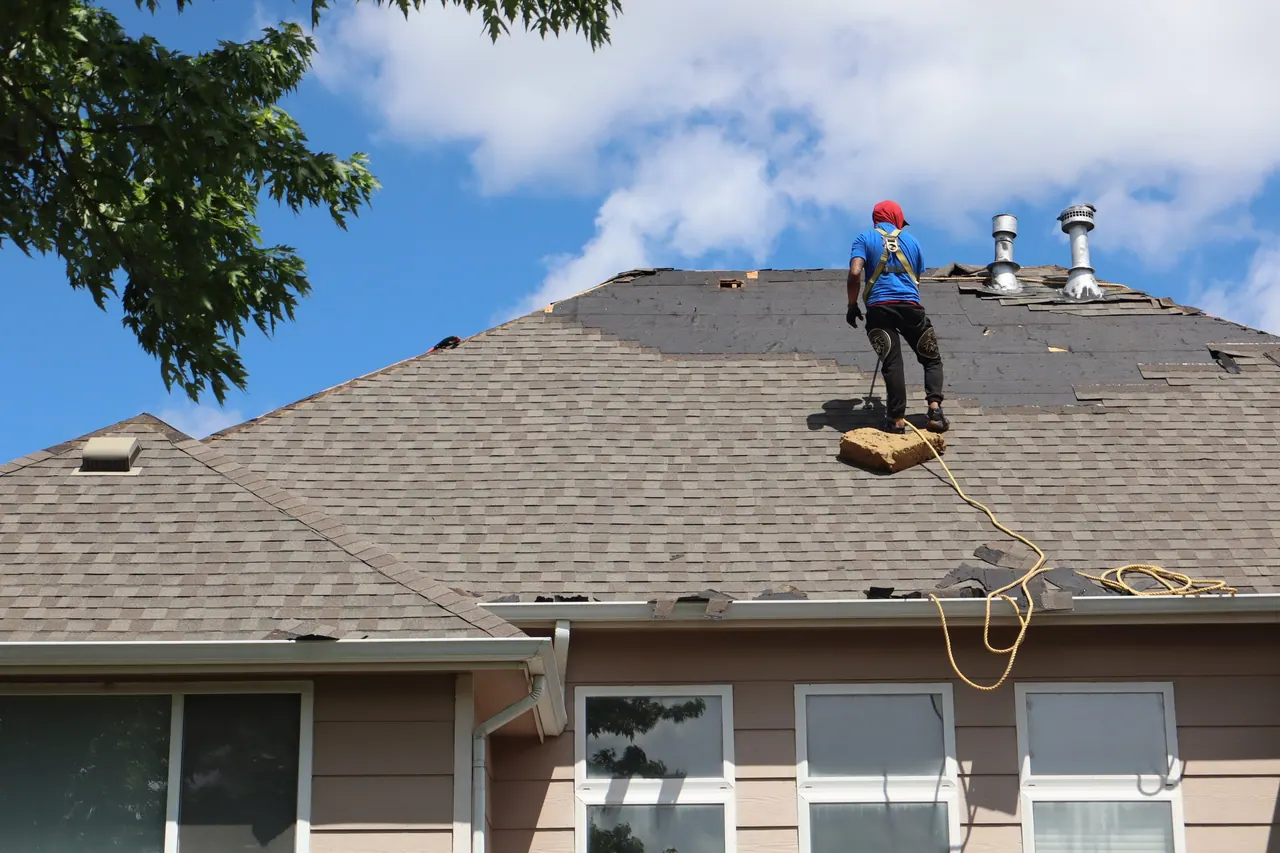
When a storm tears shingles loose, a limb comes through the roof or water starts dripping from the ceiling, the first job is to stop more water from getting in.
Tell us what you are seeing and we will set up a time to inspect your roof, explain the practical options and give you a written price.
Prefer to talk? Call (316) 742-1900
Our office will contact you shortly to confirm a time. Prefer to talk now? Call (316) 742-1900.
Need help sooner? Call (316) 742-1900. Hablamos Español.
When a storm tears shingles loose, a limb comes through the roof or water starts dripping from the ceiling, the first job is to stop more water from getting in. Wichita Roofing Pros provides emergency tarping and temporary protection, documents the damage with photos, and then explains the permanent repair in writing. Call (316) 742-1900.
Some roof problems can wait for a scheduled visit. These cannot, because every hour lets more water into the house.
Dripping from a light fixture, a spreading stain or water running down a wall means the roof is open somewhere above. Water follows rafters and pipes, so the opening may be several feet from the drip.
Drywall that holds water can give way without warning. Keep everyone out of the room beneath it and call right away.
When wind strips shingles from a slope, the underlayment or bare decking is exposed. The next rain can soak straight through.
Branches can puncture decking, crack rafters and tear flashing. Do not climb up to remove a limb. Weight and broken framing make that dangerous.
Very large hail can crack shingles through, split vents and break skylight glazing. Any opening you can see from the ground needs protection before the next storm.
Wind can peel metal flashing away from a chimney, wall or roof edge. That leaves a joint wide open to wind-driven rain.
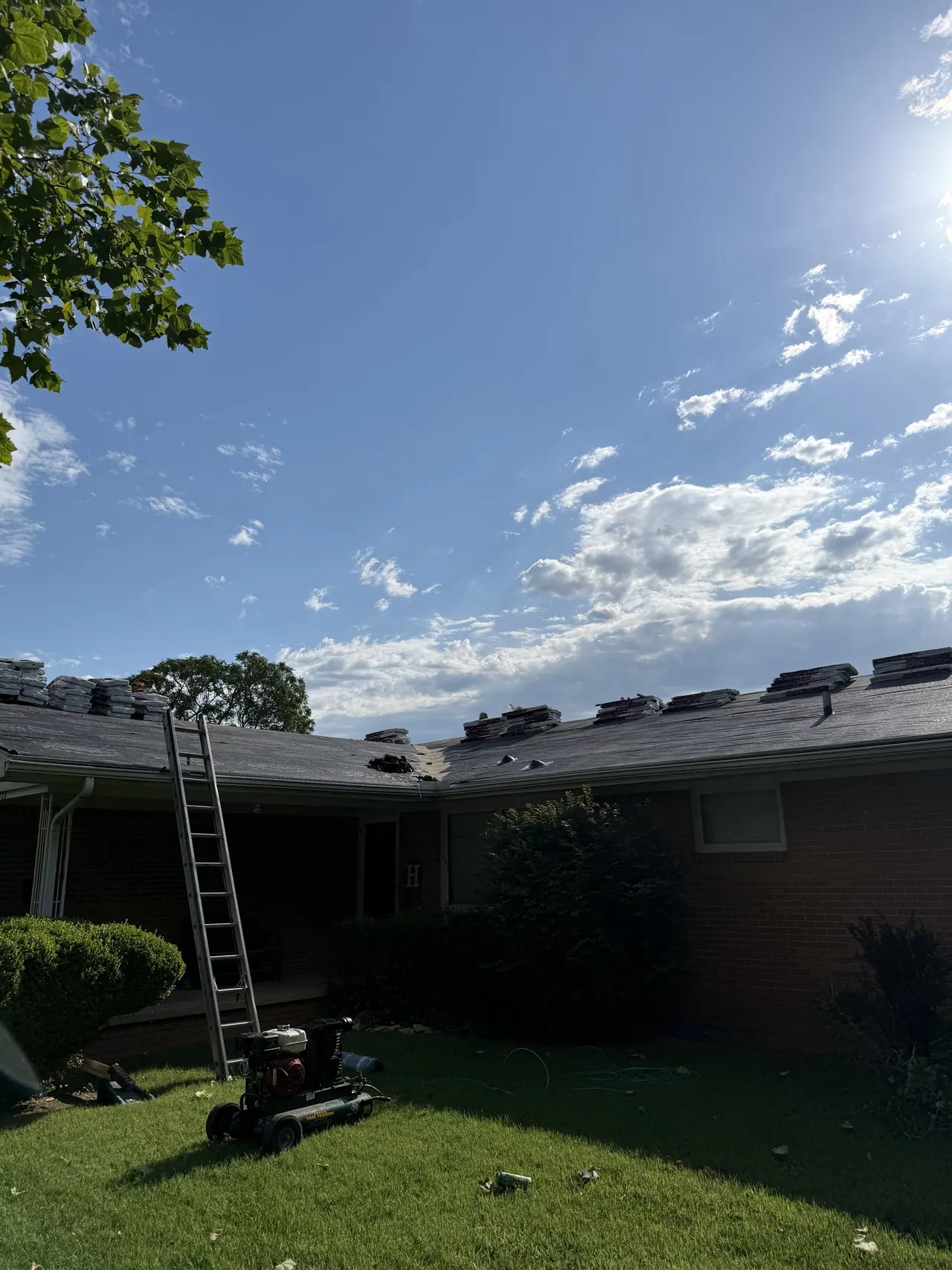
Your safety comes first, then protecting the inside of the house. Leave the roof itself to a crew with the right equipment.
Do not go on the roof during or right after a storm. Wet shingles, wind and hidden damage make falls likely. If water is near light fixtures, outlets or the electrical panel, keep clear and turn off power to that area only if you can do so safely.
Move furniture, electronics and rugs away from the leak. Put down towels and catch drips in buckets or bins. Keep people and pets out of any room with a sagging ceiling.
Photograph water stains, the drip, damaged items and anything you can see on the roof from the ground. Note the date and time of the storm. These photos help with both the repair and any insurance claim.
Call (316) 742-1900 and tell us what you see. We will ask a few questions, tell you how soon a crew can come out, and explain what to do until we arrive.
Most homeowners policies expect you to take reasonable steps to keep damage from getting worse. Keep every receipt for emergency work. The Kansas Insurance Department has storm resources for policyholders.
Emergency work happens in two parts: stop the water now, then fix the roof properly.
We ask where the water is, what the storm did and whether anyone is at risk. That tells us what to bring and how urgent the visit is.
A crew member checks the roof from the ground and, when it is safe, from the roof. We also look at the attic or ceiling where water is coming in.
Depending on the damage, we tarp the area, seal a temporary patch, or replace a few shingles right away. The goal is to keep the next rain out.
We photograph the damage before and after the temporary work. You get those photos for your records and your insurer.
Once the roof is protected, we explain what the permanent fix involves and send the scope and price in writing.
Permanent repairs happen when the weather allows and, for insurance claims, after you have talked with your adjuster.
Each one has a place. Knowing the difference helps you understand what you are paying for.
A heavy tarp is secured over the damaged area and fastened so wind does not lift it. Tarping is the fastest way to cover a large opening, such as a section stripped by wind or a hole from a fallen limb. It is meant to hold for a short time, not for months. Read more about emergency roof tarping.
For a small opening, such as a few missing shingles or a lifted flashing, a crew can seal the spot with membrane, sealant or replacement shingles. This keeps water out until the full repair is done.
The permanent repair replaces damaged decking, underlayment, shingles and flashing so the area matches the rest of the roof and carries the workmanship warranty. On a badly damaged roof, the permanent fix may be a roof replacement.
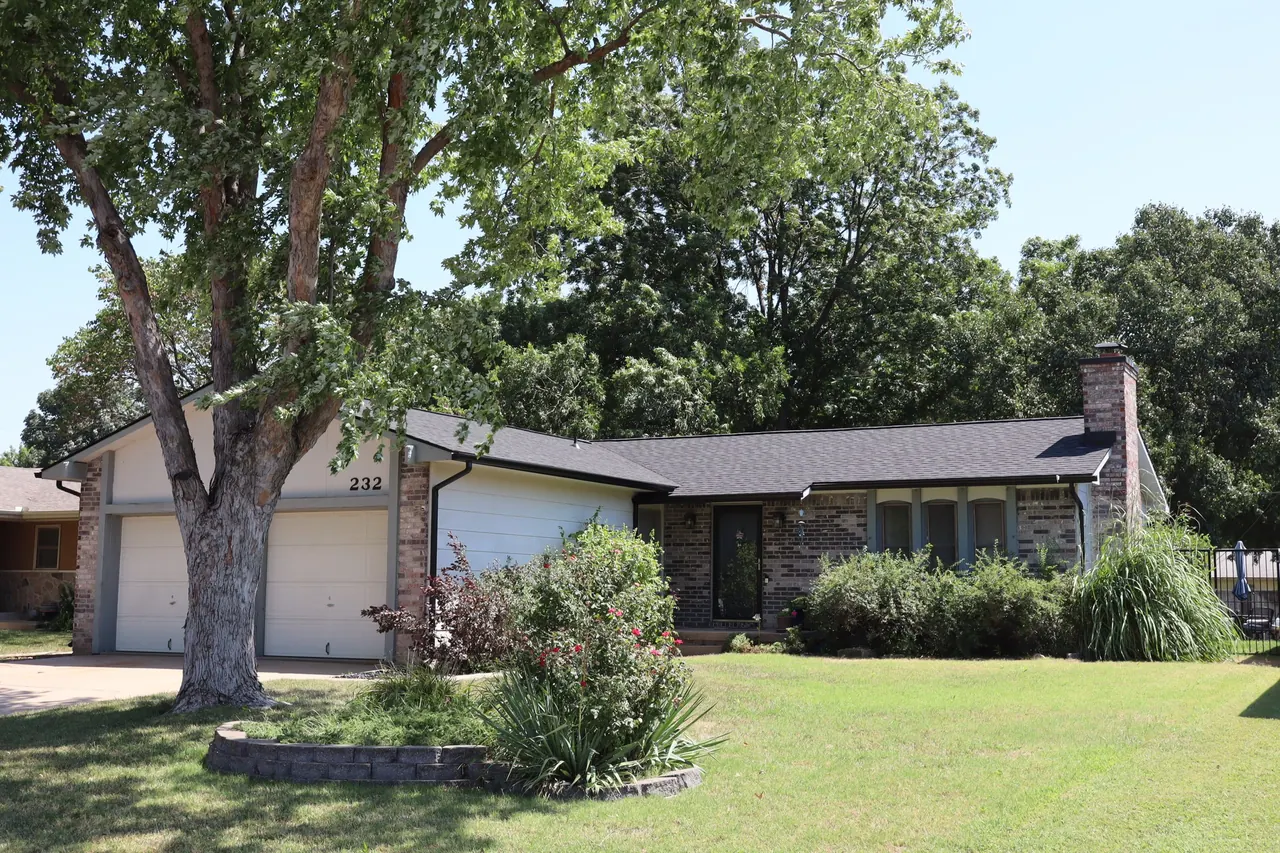
Our weather is the reason. Spring and summer storms cause most emergency calls, but winter has its own risks.
Thunderstorm winds can lift shingle tabs, break the seal strips and peel whole sections away, especially on older roofs where the sealant has aged. Ridge caps and roof edges go first.
South-central Kansas sees frequent hail. Small hail bruises shingles. Very large hail can fracture shingles, dent vents and break skylights, which can turn into an active leak during the same storm. The National Weather Service hail size reference shows how hail sizes compare.
Mature trees in older Wichita neighborhoods are beautiful, but heavy limbs over a roof are a risk in high wind and during ice storms.
A winter storm can leave ice along the eaves. Water backing up behind that ice can find its way under shingles and into the walls.
Not every emergency is caused by a storm. A cracked pipe boot or failed chimney flashing can leak for weeks inside the attic before it shows up on a ceiling during a heavy rain.
Emergency work and the insurance claim happen side by side. A few habits make that process easier.
Policies generally ask homeowners to take reasonable steps to prevent more damage. Tarping or a temporary patch is that kind of step.
Save the invoice for emergency work and the photos taken before and after. Your insurer may reimburse reasonable emergency costs under the claim, depending on your policy.
Talk with your insurer before the permanent repair or replacement, so the adjuster can see the damage. Temporary protection does not stop an adjuster from evaluating the roof.
Coverage, deductibles and timelines depend on your policy. If you have questions about how your claim works, ask your insurer or agent. We can explain what we found on the roof and share photos. See how we help with insurance claim roof replacement.
After big storms, out-of-town crews knock on doors across Wichita. Emergencies make it easy to rush. A few checks protect you.
Kansas requires roofing contractors to register with the Attorney General. You can look up any company in the roofing registration directory.
Even emergency work should come with a written description of what was done and what it cost.
Be careful with paperwork that hands control of your insurance claim to a contractor you just met. Read everything before you sign.
A real local office and phone number mean someone will still be here when you need warranty work. Our office is at 1809 S Hoover Rd Suite 101, Wichita, KS 67209.
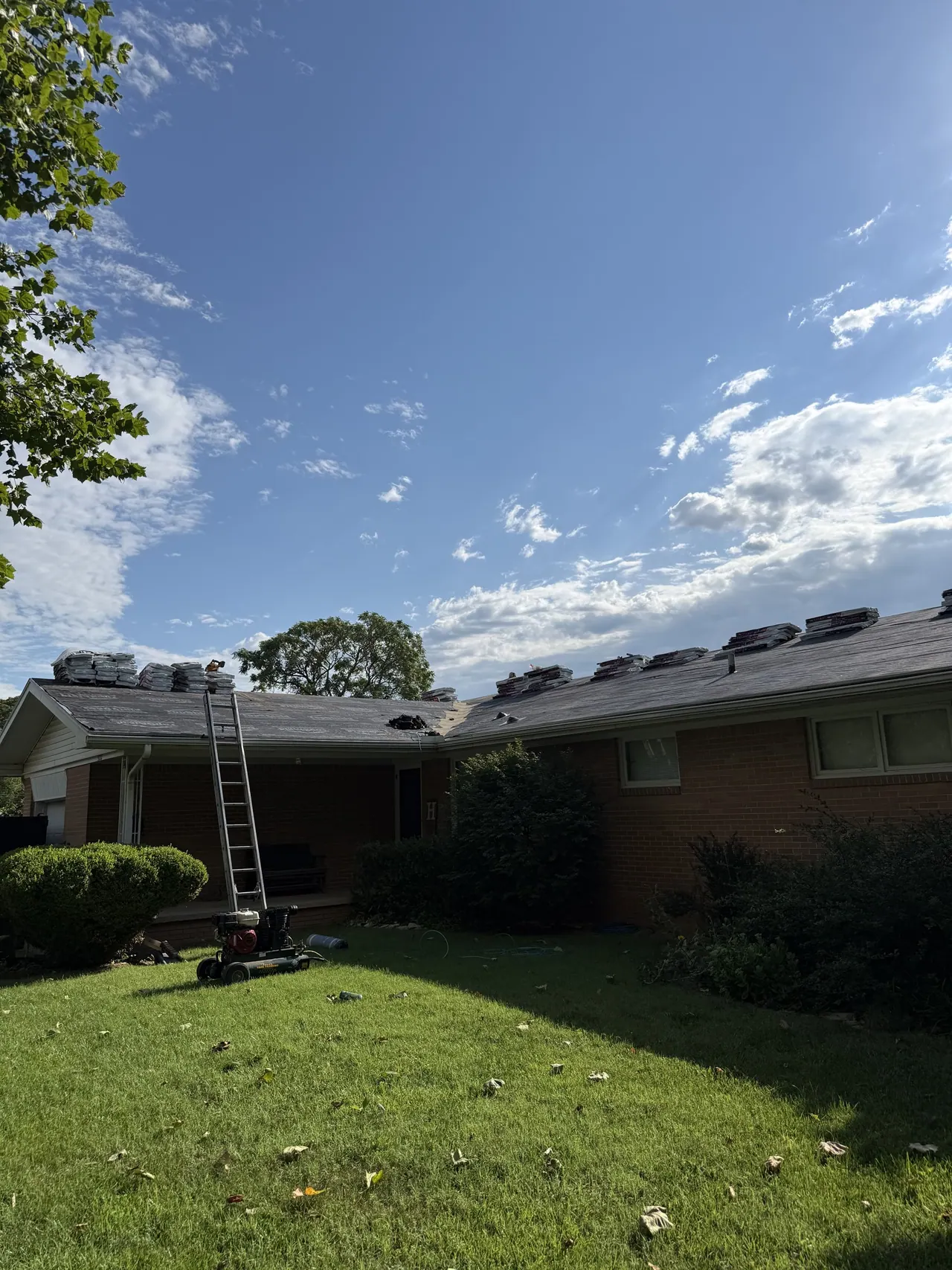
Call for emergency help, or book a free inspection and we will photograph everything we find.
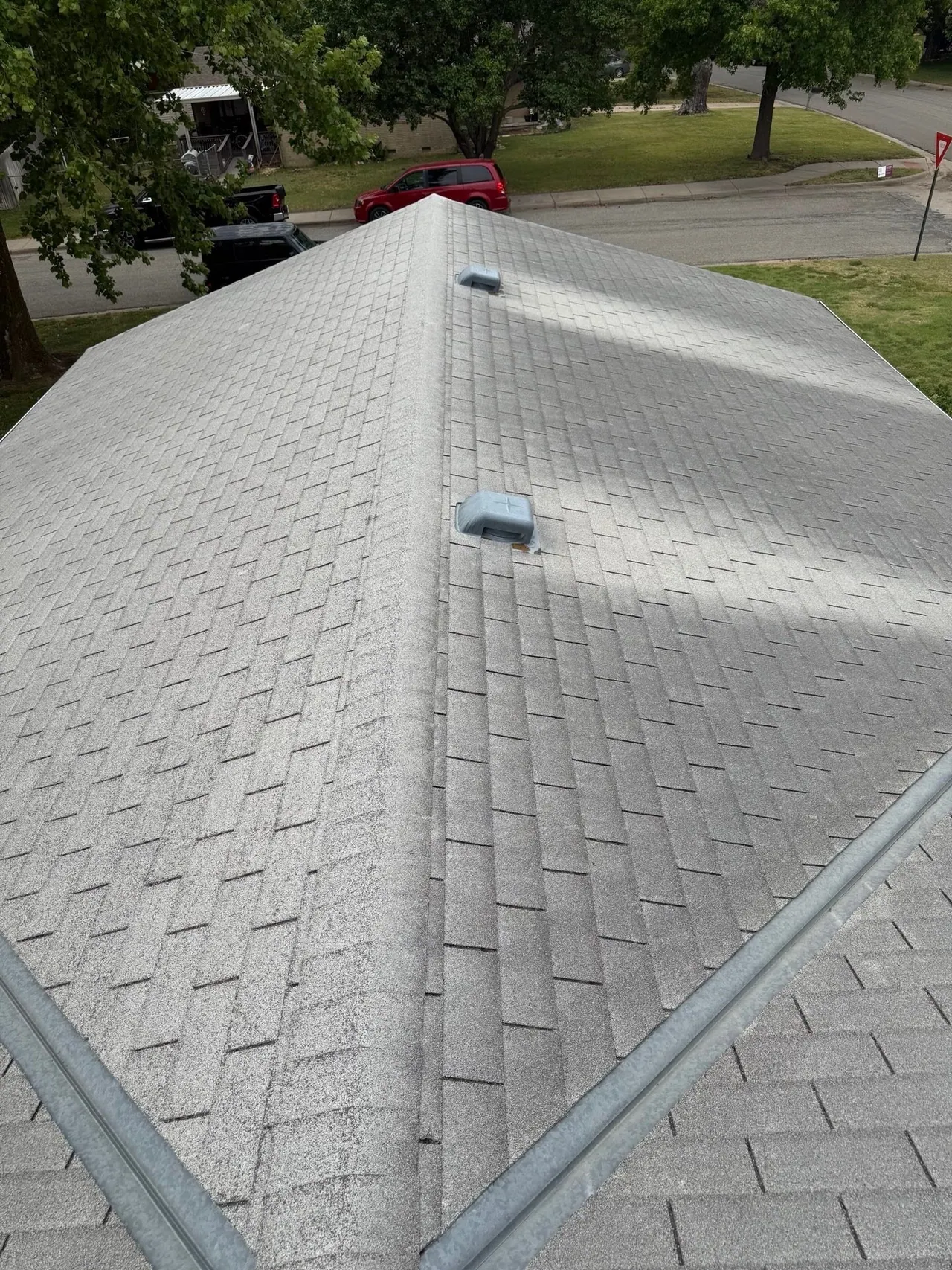
Stopping the water is only the first step. The rest of the house and roof still need attention.
Wet drywall, insulation and carpet should be dried as soon as possible. Materials that stay wet for more than a day or two are at risk of mold. For large areas, a water mitigation company can help.
A storm strong enough to cause one opening often causes damage elsewhere. We look at every slope, the flashing, the vents, the gutters and the ridge so nothing is missed. That full look is part of our free roof inspection.
Wet insulation loses much of its value and can hold moisture against the decking. Damaged insulation may need to be removed and replaced.
We will explain whether a repair, a section replacement or a full replacement makes sense, and why. Every option comes with a written price.
No roof is storm-proof, but these steps reduce the odds and the damage.
Have heavy branches over the house cut back before storm season.
Small parts wear out before shingles do. Replacing them early prevents many slow leaks.
Class 4 impact-rated shingles hold up better to hail. Ask about them when it is time for a new roof. See asphalt shingles.
Clogged gutters overflow at the roof edge and can push water under shingles during heavy rain. See gutter repair.
A check in spring and fall catches loose shingles and failing flashing before storms find them. See roof maintenance.
Save (316) 742-1900 in your phone so you are not searching for a roofer during a storm.

Tell us what you are seeing — a leak, missing shingles, hail damage, gutter overflow or an aging roof. We’ll inspect it, explain the practical options and help you decide what should happen next.
Our office will contact you shortly to confirm a time. Prefer to talk now? Call (316) 742-1900.
Need help sooner? Call (316) 742-1900. Hablamos Español.
Answers come from this website’s information. For an exact price or diagnosis, book a free inspection.