




Ponding water
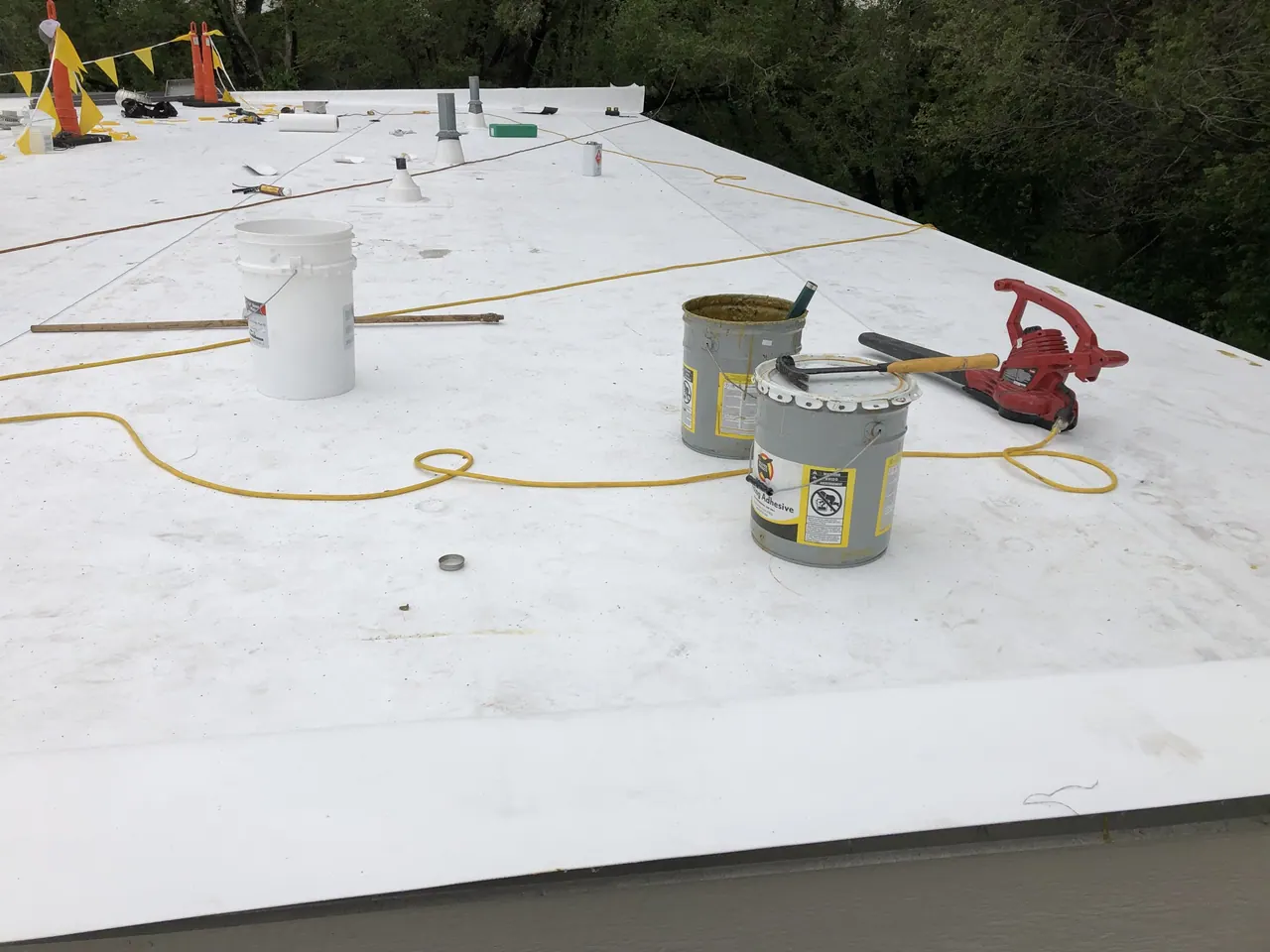
Water that stays in low spots long after a rain stresses the membrane, collects dirt and adds weight to the deck. NRCA defines ponding as water that remains more than 48 hours after rain under drying conditions.

Flat and low-slope roofs fail in different ways than shingle roofs.
Tell us what you are seeing and we will set up a time to inspect your roof, explain the practical options and give you a written price.
Prefer to talk? Call (316) 742-1900
Our office will contact you shortly to confirm a time. Prefer to talk now? Call (316) 742-1900.
Need help sooner? Call (316) 742-1900. Hablamos Español.
Flat and low-slope roofs fail in different ways than shingle roofs. Water sits longer, seams and flashings carry more of the load, and a leak inside can be far from the opening above. Wichita Roofing Pros finds the source, repairs TPO and modified bitumen roofs, and tells you plainly whether repair, restoration or replacement is the better use of your budget.
Flat roofs are built to hold up under standing water for short periods, but they have weak points that need attention.
Water that stays in low spots long after a rain stresses the membrane, collects dirt and adds weight to the deck. NRCA defines ponding as water that remains more than 48 hours after rain under drying conditions.
Seams join the sheets of membrane together. Heat, movement and age can open a seam, and an open seam lets water travel under the membrane.
Flashing at walls, curbs, parapets and edges carries much of the load on a flat roof. Loose or cracked flashing is one of the most common leak sources.
Trapped moisture or air under the membrane can form blisters. Wrinkles can open into cracks over time.
Foot traffic, dropped tools, HVAC service work and hail can puncture the membrane.
Leaves, debris and silt can block drains and scuppers, which turns a normal rain into a ponding problem.
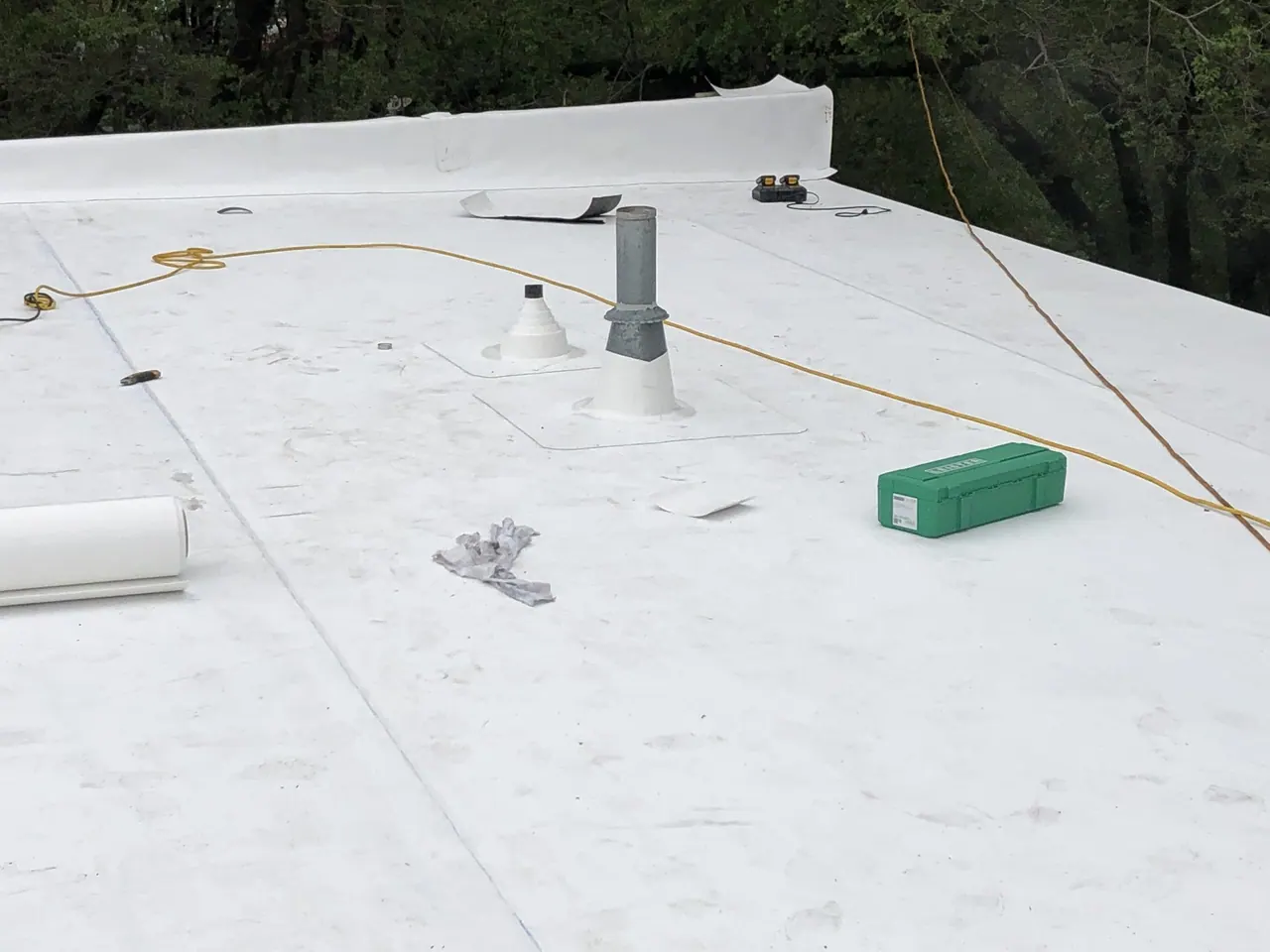
On a flat roof, the stain inside is often nowhere near the opening above.
Once water gets through a seam or puncture, it can run along the deck or through insulation before it finds a joint to drip from. The leak inside may be far from the actual entry point.
Many flat roofs have insulation boards under the membrane. Wet insulation can hold water for a long time and spread it across a wide area.
HVAC units, pipes, vents, skylights and roof hatches all pass through the membrane. Each one has flashing that can fail.
We start with the interior stain, check the roof above it, then look at nearby seams, penetrations, drains and edges. We photograph what we find and explain how water is likely getting in.
We repair the low-slope systems we install, and we tell you plainly when a roof is outside what we service.
Thermoplastic polyolefin is a white single-ply membrane with heat-welded seams. TPO repairs usually involve cleaning the area and welding new membrane over the damage. See TPO roofing.
Modified bitumen is a multi-layer asphalt-based system, often with a granule surface. Repairs patch the damaged area with compatible material and seal the laps. See modified bitumen.
Many Wichita houses have a flat or low-slope section over a porch, addition or garage. These small roofs leak for the same reasons as commercial roofs and need the same care.
If your roof uses a membrane we do not work with, we will tell you during the inspection rather than guess at a repair.
The answer depends on how much of the roof is affected and what is happening under the membrane.
Best when damage is limited to specific spots, such as a punctured area, a few open seams or a failed flashing, and the rest of the roof is sound.
When the membrane is aging but the insulation and deck are dry, a broader restoration of seams, flashings and problem areas may extend the life of the roof. We explain what is realistic for your system.
When large areas are wet, the membrane has failed in many places, or the roof has reached the end of its life, replacement is usually the better long-term choice. See commercial roofing.
Flat roofs are not truly flat. They need slope to move water to drains, scuppers or gutters.
Codes generally call for a minimum slope of one-quarter inch per foot for most membrane roofs, according to NRCA’s guidance on slope and drainage.
Deck deflection, crushed insulation and settling can create low spots where water collects. Each time water sits there, it adds weight and wear.
Clogged drains and scuppers are one of the easiest flat roof problems to prevent. Keeping them clear is a basic maintenance step.
During repairs or replacement, tapered insulation or crickets can be added to steer water toward drains and away from walls and curbs.
Our climate is hard on low-slope roofs in several ways.
Large hail can puncture or bruise membranes, crack flashing and damage rooftop equipment. Check the roof after major hail.
High winds pull on roof edges and corners. Loose edge metal can let wind get under the membrane.
Strong summer sun ages membranes and sealants. Reflective white roofs reduce heat on the surface.
Water trapped in seams or cracks expands when it freezes and widens the opening.
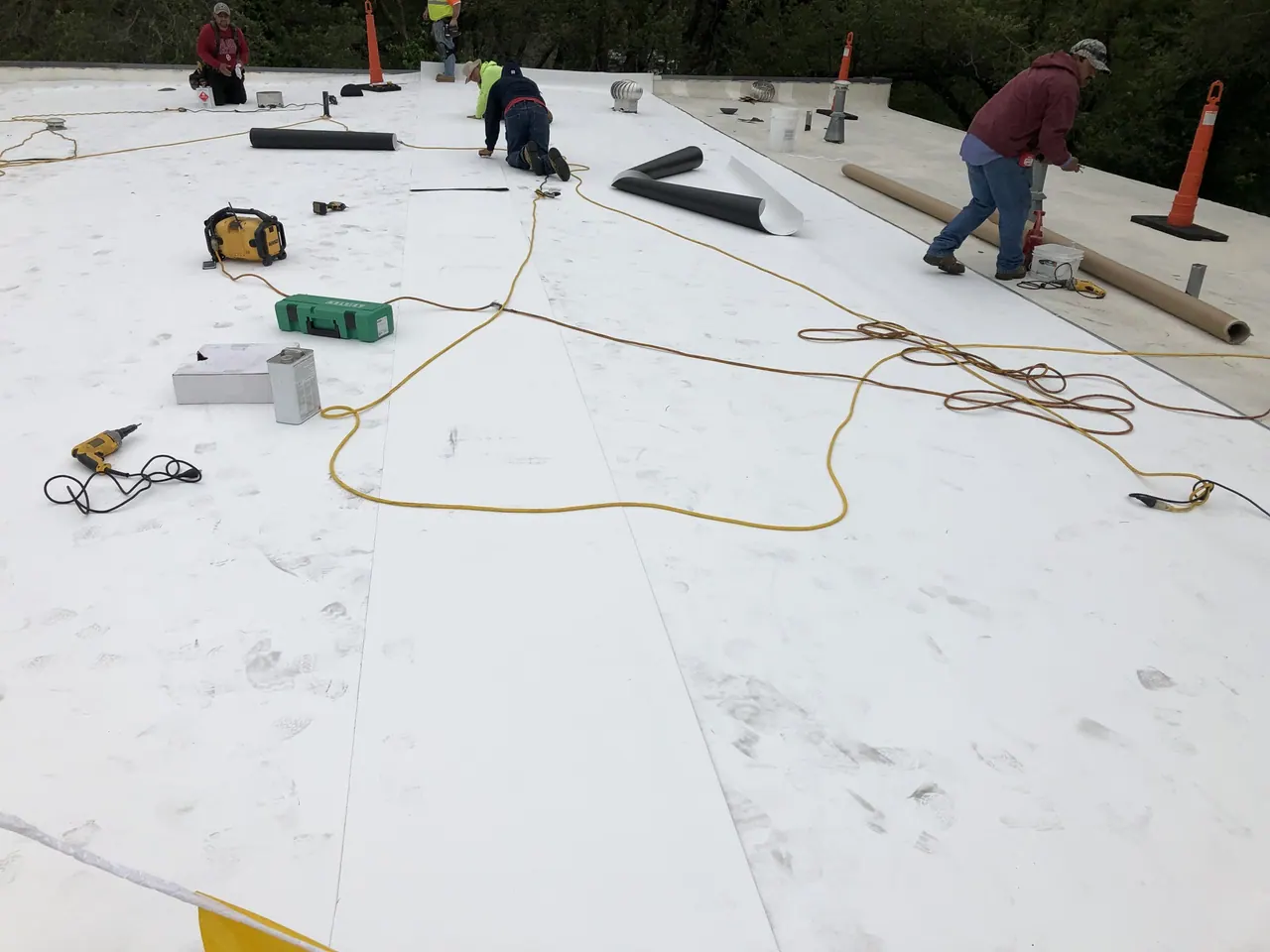
Commercial roof repairs need to work around tenants, equipment and business hours.
Our crews need safe access to the roof. Let us know about roof hatches, ladders, locked areas and tenant schedules.
Rooftop equipment service is a common cause of punctures. We can point out areas where walkway pads would protect the membrane.
A record of repairs, photos and inspection reports helps with budgeting, insurance and warranty questions.
Spring and fall inspections, plus checks after big storms, catch problems early. See commercial inspections and maintenance.
Some membrane manufacturers require specific repair methods to keep a warranty in place. Bring your warranty paperwork to the inspection.
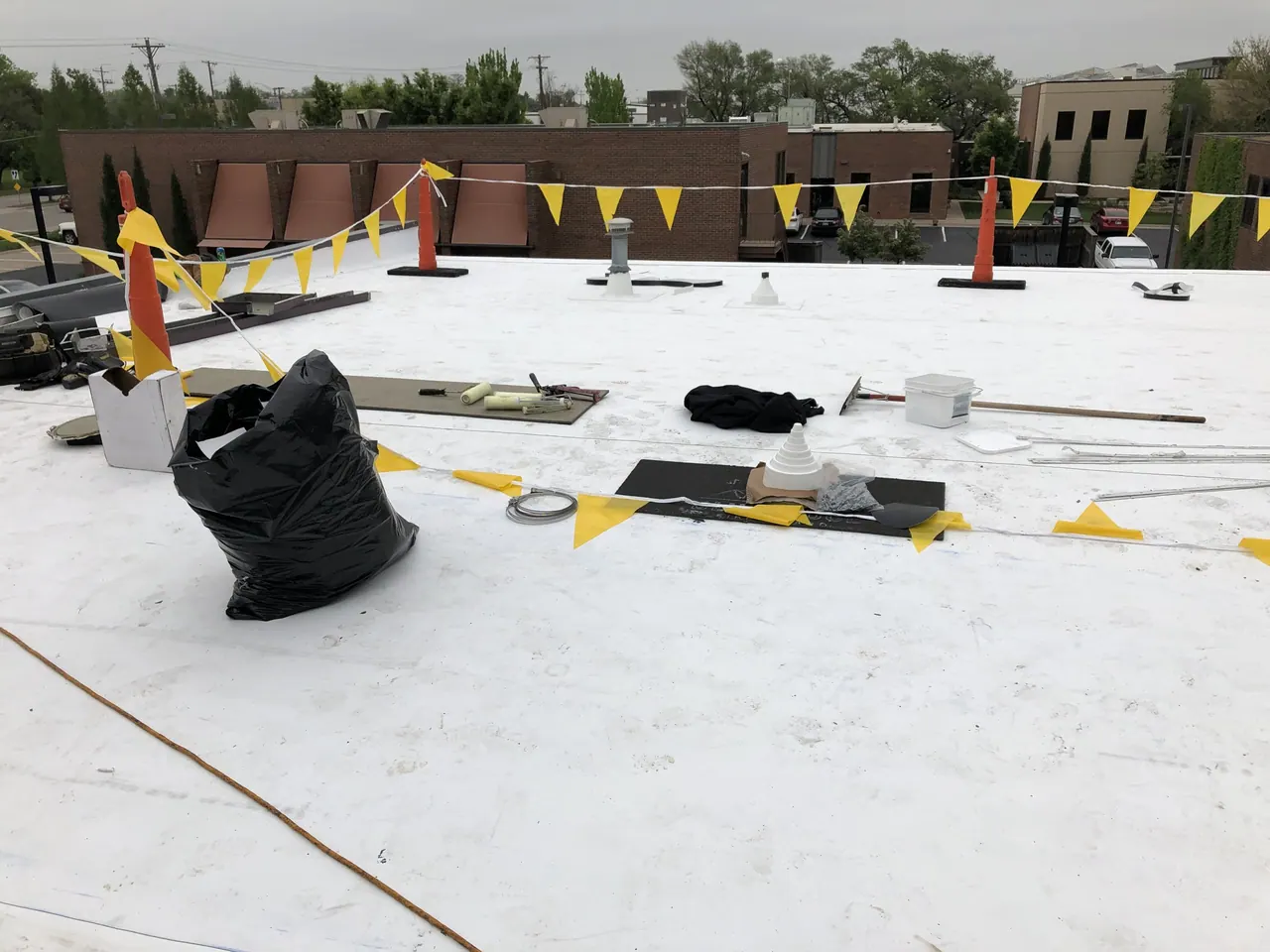
We find the source, photograph it and tell you plainly whether repair, restoration or replacement makes sense.
Here is what to expect from start to finish.
We inspect the interior symptom, the roof above it and the surrounding seams, flashings, penetrations and drains.
We photograph the damage and mark the areas that need work.
We explain the cause, the repair and whether the roof would benefit from broader work.
You get the scope and price in writing before any work begins.
Crews clean and prepare the area, then repair it with materials compatible with your roof system.
We show you the completed repair and keep the photos for your records.
Every pipe, curb and unit that passes through a flat roof is a place where the membrane has to be sealed around something.
Curbs that hold rooftop heating and cooling units need flashing that runs up the sides and is sealed at the top. Vibration and service traffic loosen it over time.
Gas lines, plumbing vents and conduit need boots or flashing sleeves. Sealant around them dries out in the sun.
Older roofs sometimes use pitch pans filled with sealant around odd-shaped penetrations. The filler shrinks and needs topping off or replacement.
Curbed skylights and roof hatches need sound flashing on all four sides and a working seal on the lid.
Air conditioning condensate that drains onto the roof can wear the membrane and collect algae. It should be routed to a drain.
Mounts added after the roof was installed are a frequent source of leaks when they were fastened through the membrane without proper flashing.
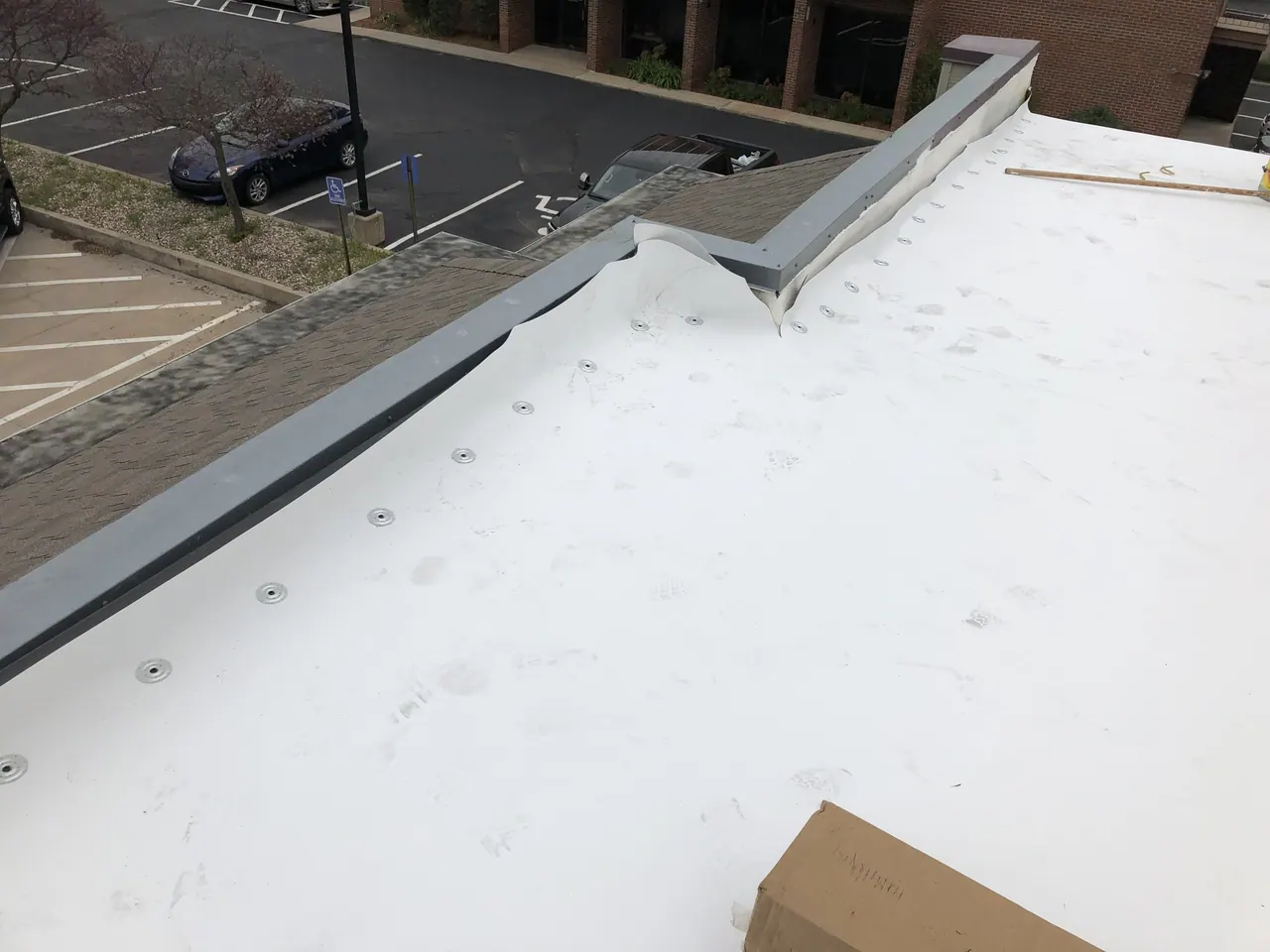
The edges of a flat roof take the most wind and often the most water.
Many commercial buildings have short walls around the roof. The membrane turns up the inside of the wall and is capped or counter-flashed at the top. Cracked coping, open joints and failed counter flashing let water behind the membrane.
On roofs without parapets, edge metal holds the membrane at the perimeter. Loose or bent edge metal gives wind a place to grab, and once wind gets under the membrane at the edge, it can peel back a large area.
Water leaving the roof through scuppers or edge gutters passes through openings in the wall or edge. Those openings need sealed, well-fastened flashing to stay watertight.
Brick or block walls above a low-slope roof can let water in through cracked mortar. That water may show up as a roof leak even though the roof itself is sound.
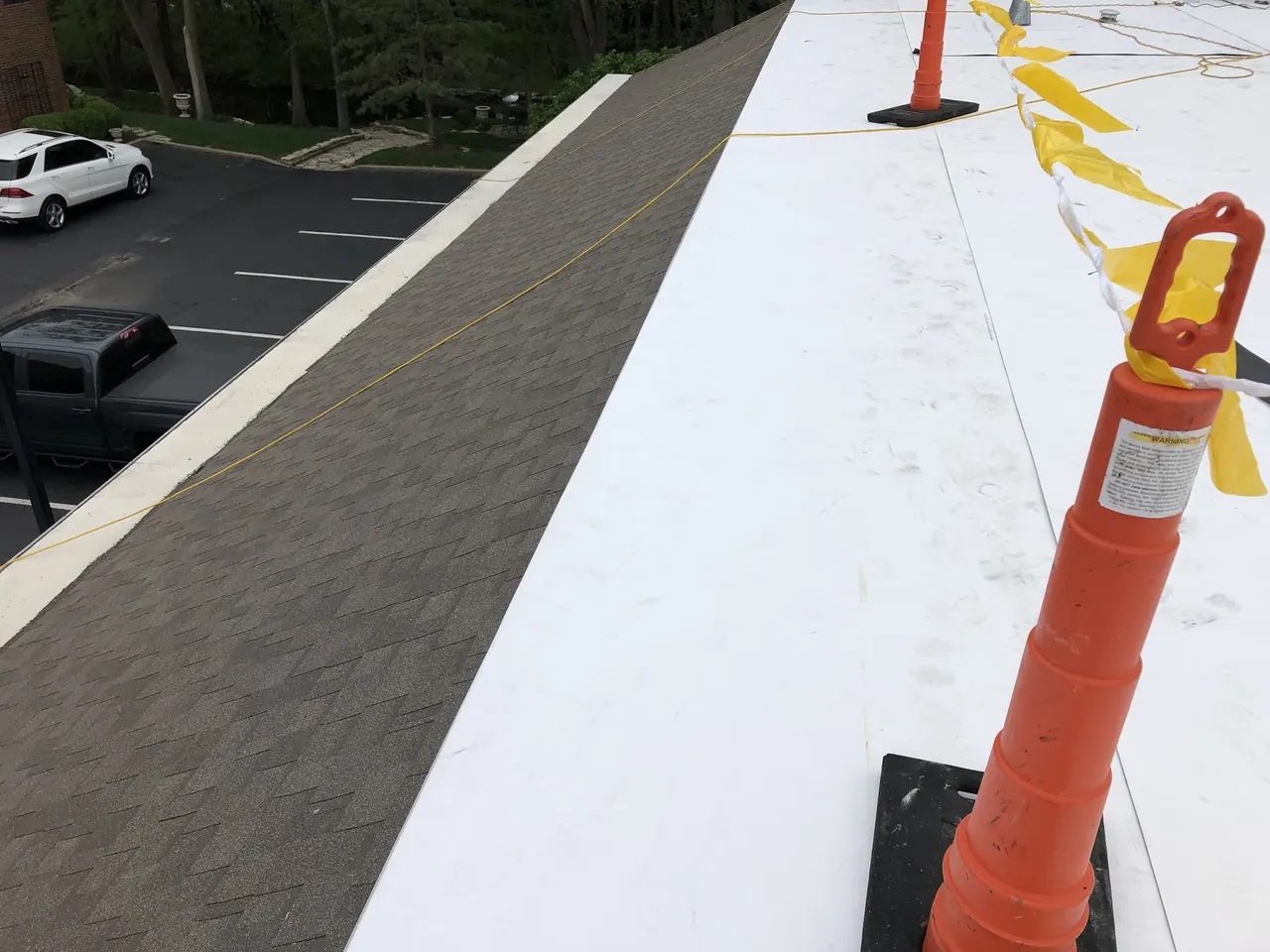
Wet insulation changes the repair conversation, so we look for it before recommending a fix.
Soaked insulation boards lose much of their insulating value and add weight to the deck.
Water moving through insulation can show up across a wide area of ceiling, even from a single small opening.
A patch over a dry area can work well. A patch over wet insulation traps the moisture and often fails. Wet sections usually need to be cut out and replaced with dry material.
Areas that feel soft or spongy underfoot, along with blisters, can mean water has reached the insulation. We note these during the inspection and explain what they mean for your roof.
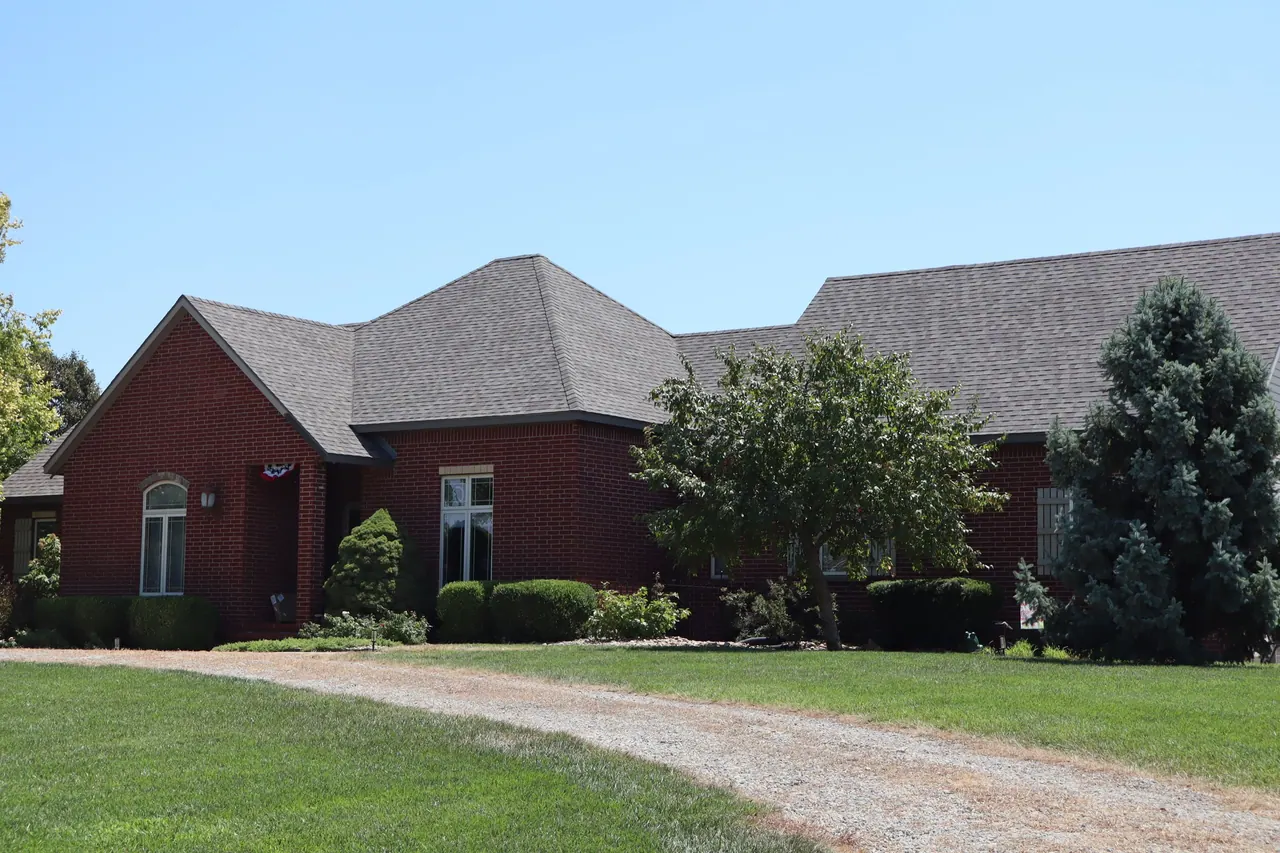
Tell us what you are seeing — a leak, missing shingles, hail damage, gutter overflow or an aging roof. We’ll inspect it, explain the practical options and help you decide what should happen next.
Our office will contact you shortly to confirm a time. Prefer to talk now? Call (316) 742-1900.
Need help sooner? Call (316) 742-1900. Hablamos Español.
Answers come from this website’s information. For an exact price or diagnosis, book a free inspection.