
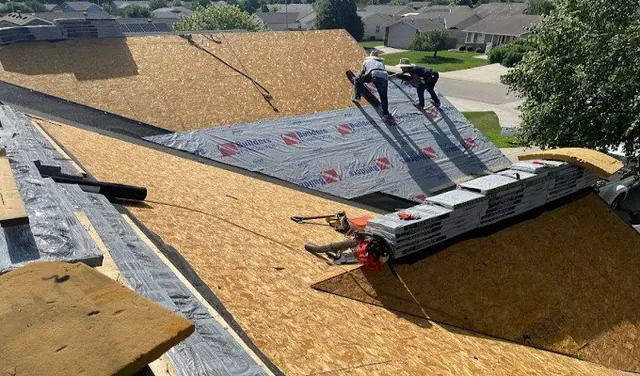
Quick answerEmergency roof tarping is the process of covering a storm-damaged or structurally compromised section of a roof with a heavy-duty polyethylene tarp to prevent water from entering the home. In Wichita, where the NWS Wichita regularly issues severe thunderstorm and tornado warnings from spring through early fall, the gap between storm damage and a permanent repair can stretch days or even weeks during peak season.
A sudden storm can leave a Wichita home with a gaping hole in its roof and no time to wait for a full repair. Emergency roof tarping is the first line of defense—it seals the opening, stops water intrusion, and buys time for a proper roof repair in Wichita, KS. Done correctly, a tarp installation can prevent thousands of dollars in secondary damage to insulation, drywall, and structural framing.
What Is Emergency Roof Tarping and Why Does It Matter in Wichita?
Emergency roof tarping is the process of covering a storm-damaged or structurally compromised section of a roof with a heavy-duty polyethylene tarp to prevent water from entering the home. In Wichita, where the NWS Wichita regularly issues severe thunderstorm and tornado warnings from spring through early fall, the gap between storm damage and a permanent repair can stretch days or even weeks during peak season. A properly installed tarp closes that gap.
Worried about your roof?Wichita Roofing Pros will check it for free and explain what we find in plain words.Book a Free Inspection or call (316) 742-1900
Sedgwick County homeowners face a particular challenge: storm events here rarely arrive alone. A hail cell that strips shingles on a Tuesday can be followed by a second round of rain by Thursday. Without a tarp in place, every subsequent rainfall compounds the interior damage. Wet insulation loses its R-value, mold can begin colonizing within 24 to 48 hours, and ceiling drywall can sag or collapse entirely. The tarp does not fix the roof—it simply stops the bleeding until a licensed contractor can complete a full roof replacement in Wichita or targeted repair.
On Wichita roof inspections after storm events, the pattern we look for first is where water has already tracked—staining on rafters, wet insulation at the eaves, and dark tide lines on interior sheathing tell us how long the roof has been open to the sky. That information shapes both the tarp placement and the scope of the repair estimate to follow.
When Should Wichita Homeowners Call for Emergency Tarping?
Call for emergency tarping immediately after any event that creates an opening in the roof membrane, whether from a fallen tree limb, wind-lifted shingles, or direct hail impact severe enough to puncture decking. Waiting overnight—or through a weekend—routinely turns a moderate repair into a comprehensive remediation project.
The most common triggers for emergency tarping calls in Wichita include: tornado or straight-line wind events that physically remove shingle fields or ridge caps; large-diameter hail (1.5 inches or larger) that cracks or punctures older shingle systems; falling tree branches or limbs that break through the decking; and fire damage that burns away a section of the roof assembly. If you can see daylight from inside the attic, or if water is actively entering through the ceiling, those are unambiguous signs that tarping needs to happen before the next rain event—not after your insurance adjuster visits.
It is worth noting that your homeowner’s insurance policy likely requires you to make reasonable efforts to prevent further damage after a covered loss. Documenting the damage with photographs and promptly securing a tarp satisfies that obligation and strengthens your claim. Contact your insurer the same day the damage occurs and schedule a professional roof inspection in Wichita as soon as access is safe.
Emergency roof tarping is the process of covering a storm-damaged or structurally compromised section of a roof with a heavy-duty polyethylene tarp to prevent water from entering the home.
How Is an Emergency Tarp Properly Installed on a Wichita Roof?
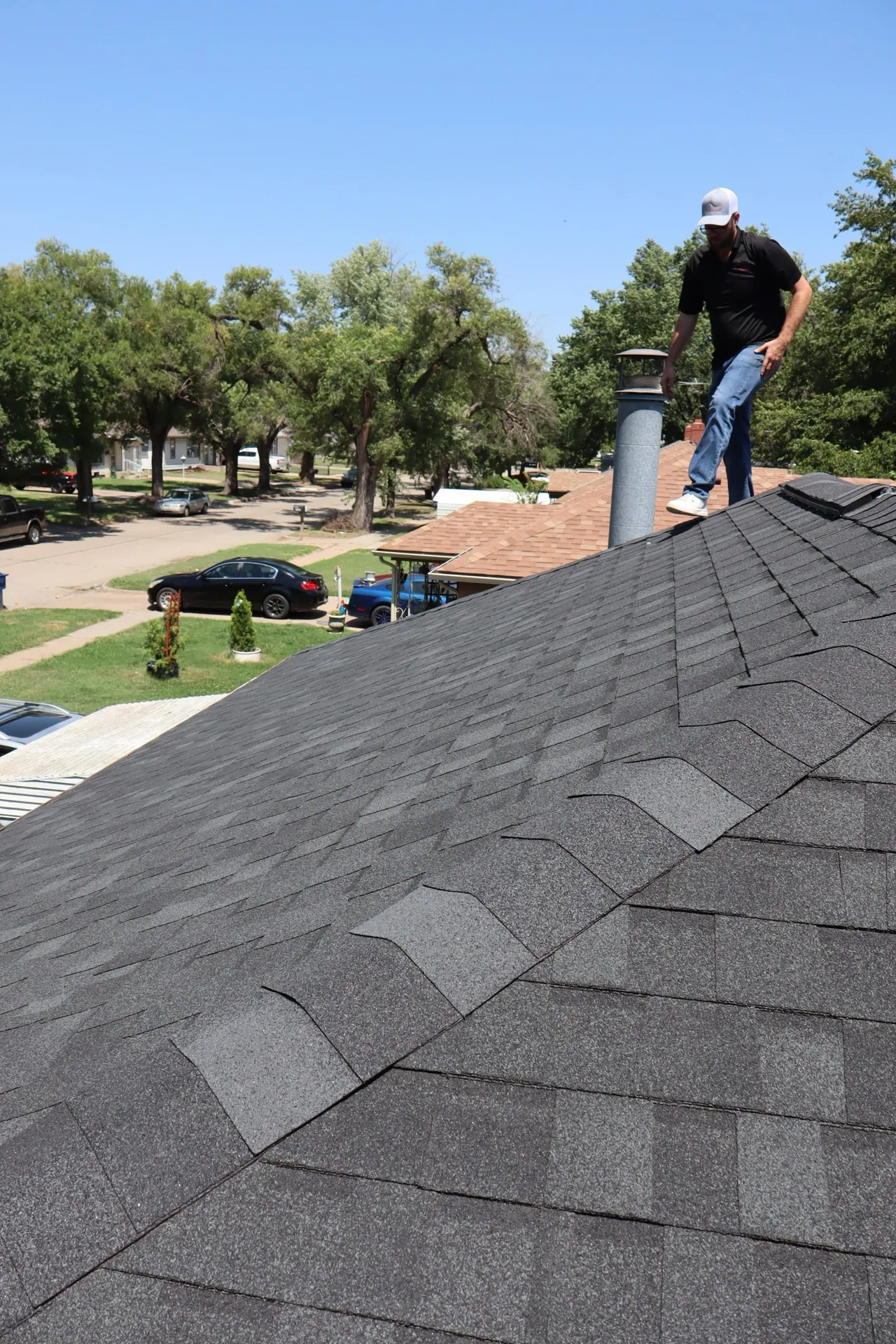
A proper emergency tarp installation anchors the tarp over the damaged area and extends it well beyond the ridge and down both sides so wind cannot catch an edge and peel it back. Improper installations—tarps held down with loose sandbags or nailed only at the corners—routinely fail in the first Kansas wind event after installation.
The correct method involves cutting the tarp to extend at least four feet beyond every edge of the damaged area. Cap boards—typically 2×4 lumber—are placed along the tarp edges and screwed through the tarp into the existing decking or into the ridge board itself. This creates a mechanical fastening system that distributes wind load across the board rather than concentrating it at individual nail holes. For steep-slope roofs common in Wichita neighborhoods built in the 1970s and 1980s, additional mid-span cap boards prevent the tarp from ballooning in high winds.
Avoid stapling tarps directly to shingles with construction staples; this creates additional penetrations and rarely holds through a 40-mph wind gust. Also avoid standard blue poly tarps for anything expected to stay in place longer than a week—they degrade rapidly under Kansas UV exposure. A 6-mil or heavier silver or white polyethylene tarp significantly outperforms the standard blue variety in heat resistance and durability. If your repair timeline extends beyond 30 days, ask your contractor about reinforced woven poly tarps or temporary roofing membranes.
What Does Emergency Tarping Cost in Wichita, KS?
Emergency tarping in the Wichita area typically ranges from $200 to $600 depending on roof pitch, accessibility, the size of the damaged area, and whether after-hours response is required. Steep roofs and complex multi-section layouts cost more because they require additional safety equipment and labor time.
Many Wichita roofing contractors—including our team—will apply the tarping cost toward the final repair or replacement invoice when we complete the permanent work. This arrangement is worth confirming upfront. If you receive a quote for tarping alone that significantly exceeds $600, ask for an itemized breakdown. Some storm-chasing contractors inflate emergency service fees knowing homeowners are under pressure after a storm.
When comparing costs, also factor in what tarping prevents. A single evening of unprotected rain entering through a 10-square-foot roof opening can saturate insulation, ruin drywall on multiple ceiling panels, and create conditions for mold remediation—a job that can easily run $2,000 to $8,000. The math on a $300 tarp installation is straightforward. For a full picture of what repair work will follow, request a written estimate. Our guide on roof repair costs in Wichita, KS explains what to expect line by line.
Can Wichita Homeowners Install a Roof Tarp Themselves?
Homeowners can install a roof tarp themselves, but the risks—both physical and financial—are significant enough that professional installation is strongly recommended, especially on any roof with a pitch steeper than 4:12 or when the damaged area is near the ridge or eaves.
Falls from roofs are among the leading causes of fatal home improvement injuries in the United States. Wet, storm-damaged decking is particularly treacherous. If you choose DIY tarping, use a safety harness anchored to a ridge hook, work with a second person on the ground, and never access a roof during wet conditions or when wind speeds exceed 15 mph. FEMA’s post-disaster home repair guidance recommends professional contractors for all roof-level emergency repairs when safe access cannot be guaranteed.
Beyond safety, improper DIY tarp installations can create insurance complications. If a tarp fails because it was not properly anchored and additional interior damage results, insurers may dispute whether the homeowner met their duty to mitigate. A professional installation comes with documentation that you took reasonable protective steps—something a poorly placed DIY tarp cannot provide. If roof access is not safe, the right call is always to call a licensed contractor rather than risk injury.
How Does Emergency Tarping Fit Into the Insurance Claims Process in Wichita?
Emergency tarping is typically covered as a mitigation expense under the dwelling coverage portion of a standard homeowner’s insurance policy, separate from the roof repair or replacement cost itself. Documenting it correctly from the start protects that coverage.
Take timestamped photographs of the damage before the tarp goes on, during installation, and after. Get a written receipt from the contractor that specifies the scope of work, materials used, and square footage covered. Submit those documents to your insurer along with your initial damage claim. Most Wichita-area insurers process tarping reimbursement relatively quickly because it is a low-dollar, clear-cut mitigation measure.
When the adjuster visits, the tarp should still be in place so they can see the scope of the underlying damage when it is removed. Ask your contractor to be present during the adjuster’s inspection—they can point out structural damage that a non-roofing professional might miss, such as damaged decking beneath intact shingles or compressed soffit caused by impact. After the inspection, your next step is a formal repair estimate. Visit our contact page to schedule yours, or learn more about the full scope of hail damage roof repair in Wichita that often follows emergency tarping events.
Does insurance cover emergency roof tarping in Wichita?
Yes, most standard homeowner’s insurance policies cover emergency tarping as a necessary mitigation expense following a covered storm event. Submit photos, contractor invoices, and a written description of the cause of damage when filing your claim to ensure proper reimbursement.
How long can a roof tarp stay in place before permanent repair?
A properly installed heavy-duty tarp can protect a roof for 30 to 90 days in typical Wichita conditions. UV exposure and wind degrade tarps over time, so schedule your permanent repair or replacement as quickly as possible—do not rely on a tarp as a long-term solution.
What size tarp do I need for a Wichita roof repair?
The tarp must extend at least four feet beyond every edge of the damaged area, including over the ridge if the damage is near the peak. For most residential punctures or shingle loss areas, a 20×30-foot tarp covers common damage zones, but your contractor will assess the specific situation on-site.
Will emergency tarping void my roof warranty?
A professionally installed tarp that avoids unnecessary fastener penetrations into undamaged roofing materials will not void most manufacturer warranties. DIY installations with improper fastening patterns can create warranty issues. Always confirm with your roofing contractor before the tarp goes on if your roof is under an active material warranty.
What should I do if a Wichita storm damages my roof at night?
Place buckets under active leaks inside the home, move valuables away from wet areas, and photograph all visible damage from safe ground-level vantage points. Call a 24-hour emergency roofing contractor as soon as conditions allow safe roof access—typically once sustained winds drop below 15 mph. Avoid entering the attic if structural damage is suspected.
How do I find a reputable emergency tarping contractor in Wichita?
Look for contractors with a verified Wichita-area physical address, active Kansas contractor registration, and documented experience with storm damage work. Ask for references from recent emergency response jobs and confirm that the tarping cost can be applied toward permanent repair. Be cautious of out-of-state contractors who arrive in large numbers immediately after major storm events in Sedgwick County.
Emergency roof tarping is not a permanent solution, but it is one of the most cost-effective protective steps a Wichita homeowner can take in the immediate aftermath of storm damage. Getting it done quickly, done correctly, and documented properly sets the foundation for a smooth insurance claim and a permanent repair that restores your roof’s full protective function. Contact Wichita Roofing Pros for 24-hour emergency tarping response across Sedgwick County, or explore our full range of roof repair services in Wichita, KS.
How Kansas weather turns a small leak into a big repair
Hot summers dry out sealants and rubber boots, winter freeze-thaw opens gaps, and spring storms push rain sideways. A drip that shows up once a year can still be soaking decking and insulation every time it rains hard.
Leak warning signs inside and outside your home
Water travels before it shows up, so the stain is rarely right under the problem. Watch for these signs.
- Brown rings or bubbling paint on ceilings
- Damp or musty smell in the attic
- Daylight visible through attic boards
- Dark streaks on rafters or decking
- Cracked or lifted pipe boots
- Rusted or loose flashing at chimneys and walls
- Shingles that feel soft underfoot (reported by a pro)
- Peeling exterior paint near roof edges
What to do the moment you find a leak
A few quick steps limit the damage while you wait for the inspection.
- Contain the water. Buckets, towels and moved furniture.
- Relieve a bulging ceiling safely. Puncture only if it is safe, with a bucket underneath.
- Photograph it. Inside stains and any outside damage.
- Call for a tarp if needed. Emergency tarping stops more water while repairs are planned.
- Book a leak inspection. We trace the source, not just the stain.
Leak repair mistakes that cost more later
- Caulking over a leak without finding the source
- Painting over a ceiling stain
- Ignoring a drip that only appears in heavy storms
- Replacing drywall before the roof is fixed
- Skipping an attic check for wet insulation
What affects the cost of a leak repair
Price depends on the source, roof access and pitch, the material, and whether decking or insulation got wet. A pipe-boot or flashing repair is very different from a repair that needs decking replaced. You get the scope and price in writing after the inspection.
From our work: Wood Shake Leak Tarping

Dan tarps active leak spots on a wood shake roof while the homeowner’s insurance claim is underway, keeping interior damage from getting worse until the roof can be replaced.
Watch: Wood shake roof leak tarping
What Should Wichita Homeowners Know About Emergency Roof Tarping? The honest answer depends on your roof’s age, material and the damage we can document. A free inspection from Wichita Roofing Pros gives you photos, a plain-English explanation and a written next step — with no obligation. Hablamos Español.
Schedule a Free Roof InspectionCall (316) 742-1900Frequently Asked Questions
Can a roof leak be repaired in winter?
Often, yes. Many repairs can be done on dry, mild days, and emergency tarping can protect the home until then.
Is a small leak an emergency?
Any active leak should be addressed quickly. Small leaks soak decking and insulation and can lead to mold.
Do you offer emergency tarping?
Yes. Call (316) 742-1900 if water is coming in.



