
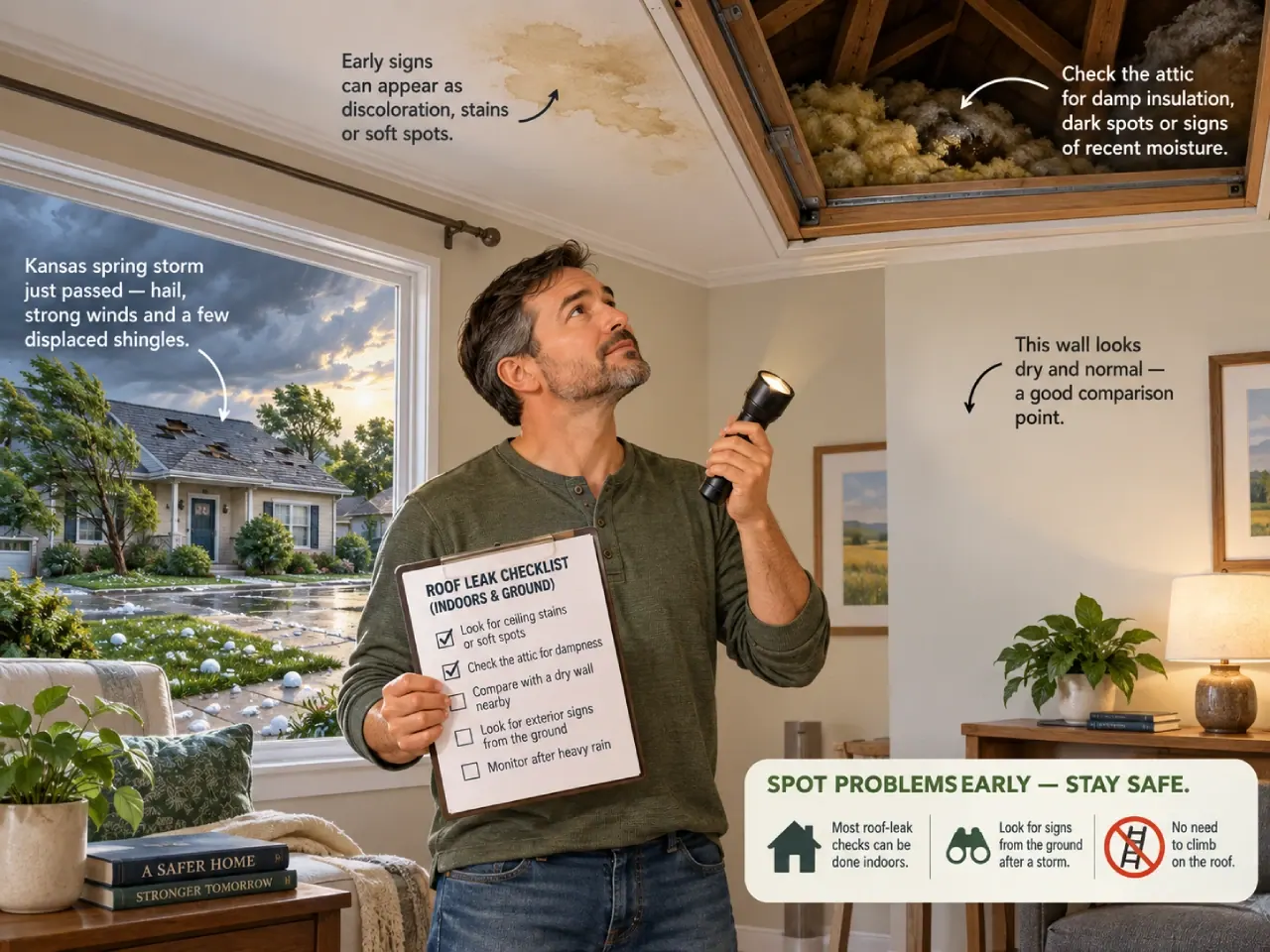
Quick answerThe most common signs of water damage from a roof are ceiling stains, bubbling paint, damp or darkened attic wood, musty odors, and damaged shingles or flashing outside. One sign alone doesn’t confirm a leak.
Most roof leaks don’t announce themselves with a drip. They start quietly, with a faint ceiling stain, a musty attic, or a shingle that shifted during the last storm. Knowing the signs of water damage early gives you time to act before moisture reaches insulation, framing, or drywall. At Wichita Roofing Pros, we see how Kansas hail, wind, and heavy spring rain combine with summer heat to open small gaps that let water in.
This guide shows what to look for inside and outside your home, how to separate a roof problem from other moisture sources, and when a professional look makes sense. It focuses on safe, ground-level and indoor checks. You should never need to climb onto the roof to spot most warning signs.
Worried about your roof?Wichita Roofing Pros will check it for free and explain what we find in plain words.Book a Free Inspection or call (316) 742-1900
What Are the Signs of Water Damage From a Roof?
The most common signs of water damage from a roof are ceiling stains, bubbling paint, damp or darkened attic wood, musty odors, and damaged shingles or flashing outside. One sign alone doesn’t confirm a leak. Several signs together, especially near the same area, are worth taking seriously.
Water rarely enters where you see it. It can land on the roof deck, run along the underlayment or a rafter, and show up several feet away. That’s why the stain on your bedroom ceiling might trace back to a vent pipe, a valley, or a chimney on the other side of the attic.
Your roof works as a residential roofing system: shingles, underlayment, decking, flashing, and ventilation all share the job of keeping water out. When one part weakens, the others carry more of the load.
7 Signs of Water Damage to Check For
1. Stains or Discoloration on the Ceiling
Ceiling stains are often the first thing homeowners notice. They usually look like yellow, brown, or gray rings, sometimes with darker edges where water dried and left minerals behind.
Among the early signs of water damage on ceiling surfaces, faint rings near exterior walls, light fixtures, or below roof penetrations deserve attention. Stains can also come from plumbing, a leaking HVAC drain line, or attic condensation. A professional will compare the stain’s location with what sits above it.
2. Bubbling Paint, Sagging Drywall, or Soft Spots
When water soaks into drywall, paint can blister or peel, and the surface may feel soft or bow downward. A sagging ceiling means water is pooling or the drywall has lost strength.
Don’t press on or poke a sagging area. If it looks heavy or swollen, move belongings out from under it and have it checked promptly. This condition should not be monitored and left alone.
3. Signs of Water Damage in the Attic
The attic often tells the real story. If you can look in safely from the hatch or a floored walkway, use a flashlight and scan for:
- Dark streaks or water trails on the underside of the roof deck or rafters
- Compressed, stained, or clumped insulation
- Rusty nail tips, or frost on nails during cold months
- Daylight showing through the deck
Stay off open joists and exposed insulation, since a misstep can go through the ceiling below. Some attic moisture comes from poor ventilation rather than a roof opening. Warm, humid air from the living space can condense on a cold deck and mimic a leak. That’s a ventilation concern, not necessarily a material failure, and a roofer can tell the difference.
4. Musty Odors, Mold, or Mildew
A damp, earthy smell in an upstairs room, closet, or attic can point to moisture you can’t see yet. These are some of the most common signs of hidden water damage, because water can sit inside insulation or wall cavities for weeks before a stain appears.
Mold spots on ceilings, walls, or attic wood suggest moisture has been present for a while. Odors alone can also come from humidity, a bathroom fan venting into the attic, or plumbing leaks. Treat them as a reason to investigate, not a diagnosis.
5. Damaged, Missing, or Shifted Shingles
From the ground, binoculars work well. Look for missing shingles, lifted or curled edges, cracked tabs, and dark patches where granules have worn away. Heavy granule buildup in gutters or at downspout exits can signal aging asphalt shingle roofing.
Granule loss is normal on a new roof for a short time and on older roofs as they age. It doesn’t automatically mean water is getting in. What matters is whether the protective mat is exposed or shingles no longer lie flat and seal.
6. Flashing, Vent, and Roof-Edge Problems
Flashing seals the joints where the roof meets chimneys, walls, skylights, and vent pipes. From the ground, watch for bent, lifted, or rusted metal and cracked sealant around penetrations.
At the roof edge, peeling paint, dark stains, or soft wood can point to water getting behind the drip edge. Rotting boards often signal soffit and fascia damage caused by water that overflowed or backed up. Clogged or sagging gutters make this worse, so gutter drainage problems belong on the same checklist.
7. New Stains or Drips After Heavy Weather
Signs of water damage after a severe storm can appear within hours or take days. Check ceilings, closets, and the attic after strong wind, hail, or a long soaking rain.
Hail can bruise or fracture shingles. High wind can lift them and break the seal strip, so the next rain drives water underneath. If new spots appear right after a storm, the cause may be storm-related roof damage rather than gradual wear, and documenting it with dated photos is helpful.
This guide shows what to look for inside and outside your home, how to separate a roof problem from other moisture sources, and when a professional look makes sense.

How to Tell If Your Roof Is Leaking or It’s Something Else
The quickest way to learn how to tell if your roof is leaking is to connect the timing to the weather. A stain that grows during or right after rain points toward the roof. A stain that spreads on dry days points toward plumbing, HVAC condensate, or condensation.
Common leaking roof symptoms include spots on top-floor ceilings, water near chimneys or skylights, and damp attic wood directly below a roof feature. Stains under a bathroom or beside a water heater are more likely plumbing. If you’re unsure, a trained eye can trace water-entry concerns back to their source without opening your ceiling.
How to Tell If Water Damage Is New or Old
Judging the age of a stain helps you decide how urgent it is. Fresh damage usually feels damp or soft and looks darker in the middle. Old damage is dry and firm, with defined rings or multiple layers from repeated wetting.
Multiple rings suggest an ongoing leak that returns with each rain. A single dry stain may come from a problem that was already fixed. Mark the edges with a pencil and date it. If the stain grows after the next storm, the source is still active.
Can a Small Leak Cause Serious Water Damage?
Yes. A small leak can cause serious damage over time, because slow drips often go unnoticed while they soak insulation, rot decking, and feed mold. A small, active leak repeated over many rains can do more harm than one obvious drip you catch fast.
Wet insulation loses much of its value, and repeated wetting can weaken decking and framing. Addressing localized roofing problems early is usually simpler than fixing hidden rot later. Not every small leak means major repairs, but it should not be ignored.
Why Wichita Roofs Are Prone to Water Entry
For homeowners across Wichita, roof water damage often starts with a combination of stresses rather than one event. Spring hail and straight-line winds can loosen shingles and flashing. Long, hot summers then dry out sealants and speed up material aging.
Big day-to-night temperature swings add expansion and contraction around nails and seams. A roof that took minor hail two years ago may not leak until a later storm finds the weakened spot. That’s why signs of roof water damage in Wichita, KS, often show up months after the weather that caused them.
Roof age, slope, shade, attic ventilation, and installation quality all affect how each roof responds. Two houses on the same street can age very differently.
When Should You Have Your Roof Evaluated?
Arrange a professional look if you notice active drips, a sagging ceiling, rot along the roof edge, or several signs of water damage together. It also makes sense after a major hail or wind event, or if your roof is older and stains keep returning.
A single faint stain that stays dry and doesn’t grow can often be monitored. Photograph it, mark it, and check after the next few rains.
If the roof looks steep, damaged, or unsafe, stay off it. A professional can check the decking, flashing, seal points, and attic from the right angles. A roof condition assessment can tell you whether you’re seeing a real leak, normal aging, or a ventilation issue. Homeowners in Wichita and nearby Kansas communities can reach out to Wichita Roofing Pros for help understanding what their roof needs.
Frequently Asked Questions
What does water damage look like on a ceiling?
It usually looks like yellow or brown rings, dark blotches, bubbling paint, or sagging drywall. Fresh spots often look darker and feel damp, while older stains are dry with defined edges.
What are the first signs of a roof leak?
Early clues include faint ceiling stains, musty attic odors, damp insulation, and granules or shingle pieces in gutters. These can appear before any dripping.
Can a roof leak without visible stains?
Yes. Water can soak into insulation or run along rafters for weeks before reaching drywall. That’s why attic checks and odor clues matter.
Should I check my roof after every storm?
Checking indoors and from the ground after hail, high wind, or heavy rain is a smart habit. You don’t need to climb up. Look for new stains, loose shingles on the lawn, and debris in gutters.
Is attic moisture always a roof leak?
No. Attic moisture can also come from poor ventilation, bathroom fans venting into the attic, or warm indoor air condensing on the roof deck. A professional can tell which one you’re dealing with.
How quickly should I act on signs of water damage?
Act quickly on active drips, soft or sagging ceilings, or damage after a storm. A small, dry stain that isn’t growing can be monitored, but it’s still worth tracking.
How Kansas weather turns a small leak into a big repair
Hot summers dry out sealants and rubber boots, winter freeze-thaw opens gaps, and spring storms push rain sideways. A drip that shows up once a year can still be soaking decking and insulation every time it rains hard.
Leak warning signs inside and outside your home
Water travels before it shows up, so the stain is rarely right under the problem. Watch for these signs.
- Brown rings or bubbling paint on ceilings
- Damp or musty smell in the attic
- Daylight visible through attic boards
- Dark streaks on rafters or decking
- Cracked or lifted pipe boots
- Rusted or loose flashing at chimneys and walls
- Shingles that feel soft underfoot (reported by a pro)
- Peeling exterior paint near roof edges
What to do the moment you find a leak
A few quick steps limit the damage while you wait for the inspection.
- Contain the water. Buckets, towels and moved furniture.
- Relieve a bulging ceiling safely. Puncture only if it is safe, with a bucket underneath.
- Photograph it. Inside stains and any outside damage.
- Call for a tarp if needed. Emergency tarping stops more water while repairs are planned.
- Book a leak inspection. We trace the source, not just the stain.
Leak repair mistakes that cost more later
- Caulking over a leak without finding the source
- Painting over a ceiling stain
- Ignoring a drip that only appears in heavy storms
- Replacing drywall before the roof is fixed
- Skipping an attic check for wet insulation
What affects the cost of a leak repair
Price depends on the source, roof access and pitch, the material, and whether decking or insulation got wet. A pipe-boot or flashing repair is very different from a repair that needs decking replaced. You get the scope and price in writing after the inspection.
From our work: Wood Shake Leak Tarping

Dan tarps active leak spots on a wood shake roof while the homeowner’s insurance claim is underway, keeping interior damage from getting worse until the roof can be replaced.
How to Check for Signs of Water Damage on Your Roof? The honest answer depends on your roof’s age, material and the damage we can document. A free inspection from Wichita Roofing Pros gives you photos, a plain-English explanation and a written next step — with no obligation. Hablamos Español.
Schedule a Free Roof InspectionCall (316) 742-1900More Questions
Can you find a leak that others missed?
We trace water from the stain back to the entry point, check the attic and photograph what we find.
Why is my ceiling stain not under the leak?
Water runs along decking, rafters and insulation before it drips, so the entry point is often several feet away from the stain.
Can a roof leak be repaired in winter?
Often, yes. Many repairs can be done on dry, mild days, and emergency tarping can protect the home until then.


