
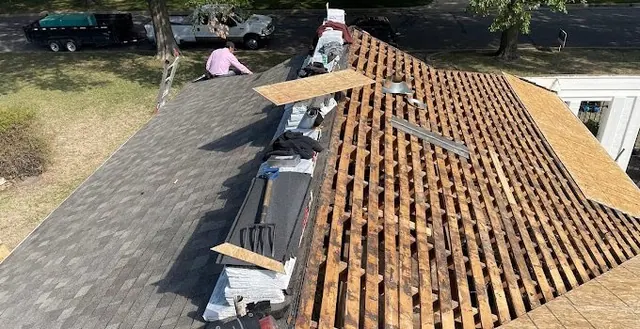
Quick answerWind damages shingles through a combination of uplift pressure, edge peel, and lateral shear that progressively breaks the adhesive bond holding shingles in place. Unlike hail, which leaves obvious impact craters, wind damage is often subtle at first—a lifted corner here, a broken seal strip there—before escalating to full shingle loss.
Wind is Wichita’s most consistent roofing threat—more frequent than tornado events and just as capable of leaving a roof in a compromised state. Wind-damaged shingles create immediate vulnerabilities that worsen with each subsequent rain, and many homeowners do not recognize the damage until a leak appears inside the home. Understanding what wind does to shingles, and how quickly it becomes a serious problem, is the first step toward protecting your Wichita home.
How Does Wind Actually Damage Shingles on Wichita Roofs?
Wind damages shingles through a combination of uplift pressure, edge peel, and lateral shear that progressively breaks the adhesive bond holding shingles in place. Unlike hail, which leaves obvious impact craters, wind damage is often subtle at first—a lifted corner here, a broken seal strip there—before escalating to full shingle loss.
Worried about your roof?Wichita Roofing Pros will check it for free and explain what we find in plain words.Book a Free Inspection or call (316) 742-1900
The physics of wind uplift are straightforward: as wind accelerates across a roof surface, it creates negative pressure (suction) on the upwind slopes and positive pressure on the downwind side. The edges, ridge, hips, and corners of a roof experience the highest localized pressures because wind changes direction and velocity at those transition points. Kansas winds—frequently exceeding 50 to 60 mph during severe thunderstorm events, as tracked by NWS Wichita—routinely exceed the design wind resistance ratings of standard three-tab shingles and challenge even architectural shingle installations.
The seal strip is the primary defense against wind uplift. Most asphalt shingles have a factory-applied thermally activated adhesive strip on the underside that bonds the shingle to the course below when warmed by sunlight after installation. When that bond fails—either because it never fully cured, was damaged by previous wind events, or has aged past its effective lifespan—the shingle becomes vulnerable to lifting. Once a shingle lifts even slightly, wind can get under it and either seal it back down in a deformed position or rip it free entirely.
On Wichita wind inspections, the pattern we look for first is creasing across the shingle face parallel to the eaves—a crease tells us the shingle lifted far enough to fold, which permanently breaks the fiberglass mat and creates a failure point even if the shingle is still physically present on the roof.
What Are the Signs of Wind-Damaged Shingles Wichita Homeowners Can Spot?
The most recognizable signs of wind-damaged shingles are missing shingles, lifted or curled shingle tabs visible from the ground, and debris on the lawn or gutters that includes shingle granules or torn shingle fragments. Less obvious signs require a professional inspection to identify accurately.
From the ground, look for: shingles with corners or edges that appear raised or separated from the course below; exposed black substrate where shingles have partially lifted, revealing the tar paper beneath; shingles that appear misaligned relative to adjacent courses; and ridge cap shingles that are missing or sitting at an angle. After any Sedgwick County windstorm event, walk the perimeter of your home and check the lawn, flowerbeds, and gutters for granule accumulation or physical shingle fragments.
From inside the attic, signs of wind damage include daylight visible through the decking, fresh water staining on rafters or sheathing, and insulation that is wet or displaced near the eaves. If you notice any of these interior signs, schedule a professional roof inspection in Wichita before the next rain event. Wind damage that remains unaddressed almost always allows water infiltration, turning a straightforward shingle repair into a larger project involving decking, insulation, and interior finishes.
Wind damages shingles through a combination of uplift pressure, edge peel, and lateral shear that progressively breaks the adhesive bond holding shingles in place.
Why Are Wichita Roofs Particularly Vulnerable to Wind Shingle Damage?
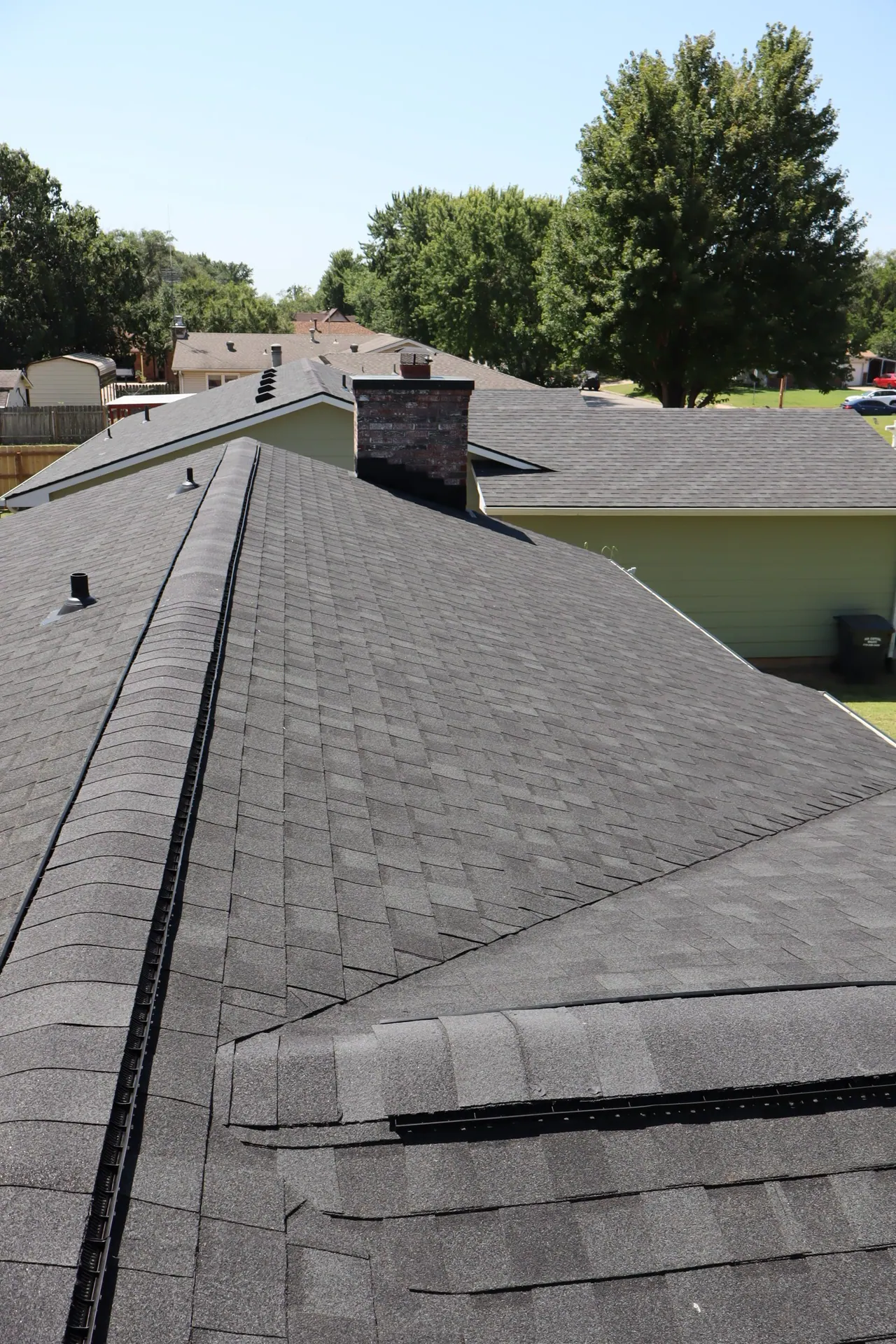
Wichita roofs face elevated wind shingle risk because of the region’s combination of high baseline wind speeds, wide temperature swings that stress shingle seal strips, and a large stock of aging housing that predates current wind-resistance standards. These factors compound each other in ways that make Wichita more demanding than many other markets.
The flat terrain of south-central Kansas provides little natural wind break, meaning sustained winds that would be moderated by topography in other regions arrive at Wichita homes at nearly full speed. Homes in the northwest quadrant of Wichita—including neighborhoods like Maize, Goddard, and northwest Sedgwick County—see particularly high exposure because they face the prevailing southwest-to-northwest wind corridor with minimal obstruction.
Temperature extremes are equally damaging over time. Wichita sees summer highs above 100°F and winter lows below 0°F. These swings cause asphalt shingles to expand and contract repeatedly, which fatigues the fiberglass mat, cracks the granule-embedded surface, and degrades the seal strip adhesive. A shingle that passed a 90 mph wind uplift test when new may be effectively down to 60 mph capacity after ten years of Kansas temperature cycles. The IBHS FORTIFIED Home program addresses exactly this vulnerability through enhanced fastening patterns and sealed roof deck requirements that significantly reduce wind-induced shingle loss.
How Do Wind-Damaged Shingles Lead to Bigger Roof Problems?
Wind-damaged shingles that are not repaired promptly create a cascading failure sequence: lifted shingles allow water under the shingle course, wet underlayment loses its water-shedding ability, moisture reaches the decking, and rot or delamination begins in the structural layer of the roof assembly. What starts as a $300 shingle repair can become a $4,000 decking replacement.
The sequencing matters because each component in the roofing assembly is designed to shed water, not to stop it. Shingles are the primary barrier; underlayment is the secondary barrier; decking is structural and is not designed to resist sustained moisture exposure. When shingles are missing or lifted, rain drives underneath and wets the underlayment during every subsequent storm. Underlayment—particularly felt paper—deteriorates rapidly when repeatedly wetted and dried. Once underlayment is compromised, water reaches the OSB or plywood decking, where it causes swelling, delamination, and eventually wood rot that extends into the framing members below.
In addition to structural damage, wind-lifted shingles create an entry point for wind-driven rain that can bypass the underlayment entirely—particularly at the eaves and rakes where uplift pressures are highest. A timely roof repair in Wichita, KS that addresses a handful of damaged shingles is exponentially cheaper than a full roof replacement in Wichita driven by deferred maintenance on wind damage.
What Repair Options Exist for Wind-Damaged Shingles in Wichita?
Wind-damaged shingle repair options range from spot replacement of individual shingles to partial re-roofing of an entire roof section, depending on the extent of damage and the age and condition of the overall system. Your contractor’s recommendation should be based on a documented inspection, not a cursory visual from the driveway.
For isolated damage—typically fewer than ten missing or severely lifted shingles on a roof that is otherwise in good condition—spot replacement is appropriate. The contractor removes the damaged shingles, inspects the underlying felt and decking, makes any necessary repairs at those layers, and installs new shingles that match the existing profile as closely as possible. Color matching is imperfect on aged shingles, but the functional result is a properly sealed, wind-resistant repair.
For more extensive damage—or when a wind event reveals that an aging shingle system has widespread seal strip failure across multiple roof sections—a full replacement is often the more economical long-term choice. Installing a new impact-rated or wind-rated architectural shingle system with a proper starter course, enhanced fastening pattern, and sealed roof deck provides substantially better wind performance than patching an aging system. Ask about the differences when you request an estimate; our team covers both paths in detail. You can also review your options for hail and wind damage roof repair in Wichita on our services page.
How Should Wichita Homeowners Document Wind Shingle Damage for Insurance?
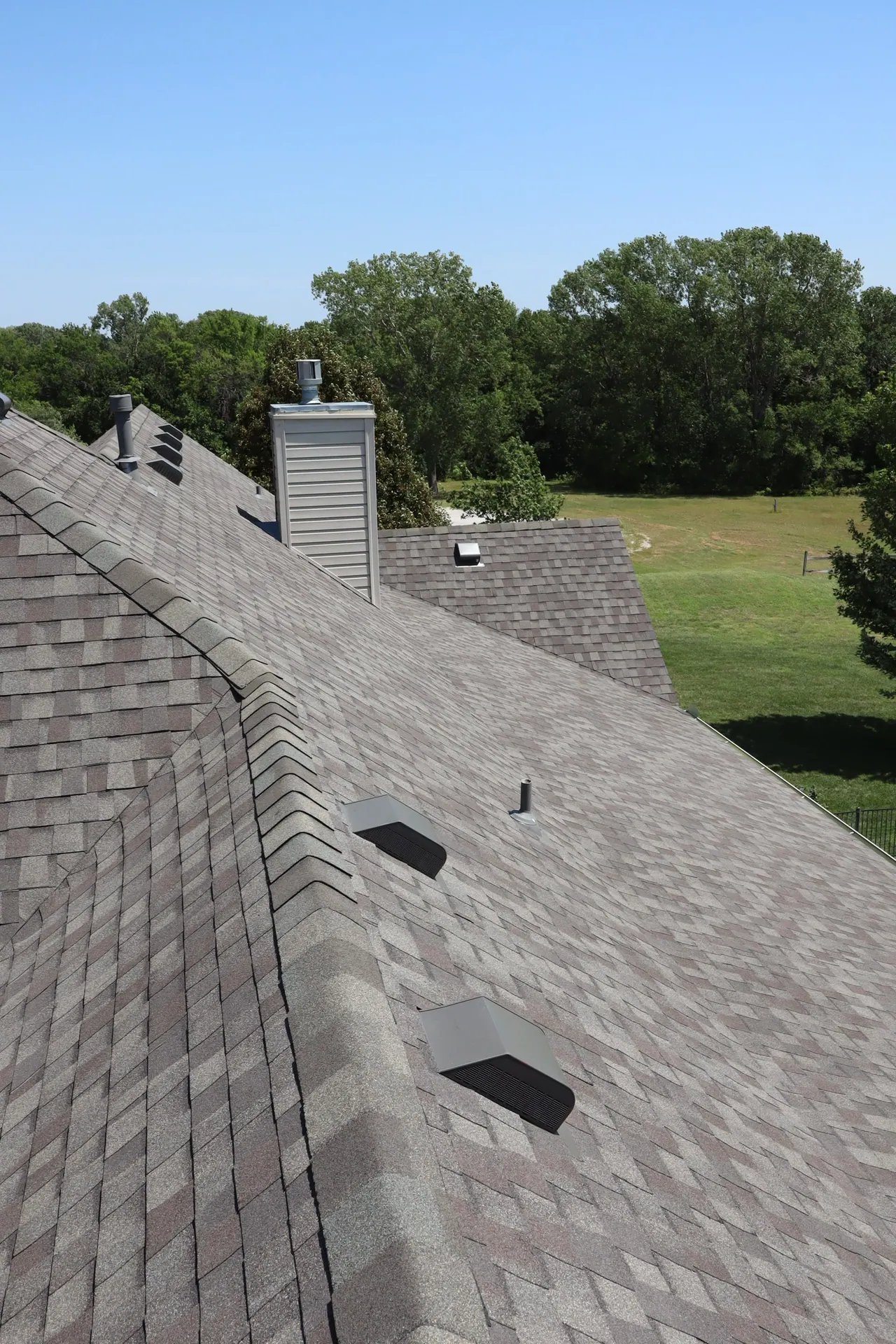
Document wind-damaged shingles with timestamped photographs taken from the ground and, when safe, from the roof perimeter immediately after the storm event. Good documentation—showing the condition of the roof before and after a specific storm—is the foundation of a successful wind damage insurance claim in Kansas.
Start with ground-level photos showing the overall roof condition from all four sides of the home. Capture any shingle debris on the lawn, granules in gutters, and visible lifted or missing sections from the ground. If you have pre-storm photos from a previous inspection, those become highly valuable for establishing that the damage is new. Note the date and approximate time of the storm and cross-reference it with local weather records—NWS Wichita maintains a searchable archive of storm event data that can confirm wind speeds at your location on the day of the event.
Once you have documentation in hand, file your claim promptly and request a professional inspection before any repairs are made. Insurers in Kansas typically want to send an adjuster before the roof is repaired. A qualified roofing contractor can be present during the adjuster’s visit to ensure all wind-related damage is identified and included in the claim scope. For more information on what to expect from start to finish, visit our contact page to speak with our Wichita storm damage team, or review our gutter installation services in Wichita for information on addressing wind damage to the full roofing system.
What wind speed damages shingles in Wichita?
Standard three-tab shingles are typically rated to 60 mph; architectural shingles to 110–130 mph when properly installed. However, aged shingles with degraded seal strips can begin lifting at wind speeds as low as 45 mph. Wichita routinely sees severe thunderstorm gusts exceeding 60 mph, making wind shingle damage a frequent occurrence.
Can wind-damaged shingles be repaired without replacing the whole roof?
Yes, when the damage is limited to a small section and the underlying decking and underlayment are intact, spot shingle replacement is a cost-effective and durable repair. If the wind event revealed widespread seal strip failure across the whole roof, a full replacement is often the better investment.
How soon after a wind storm should I get my Wichita roof inspected?
Schedule a professional inspection within 24 to 48 hours of a significant wind event, before any subsequent rain. Wind damage that remains open to moisture compounds quickly. Many Wichita roofing contractors offer priority scheduling after major storm events affecting Sedgwick County.
Does homeowner’s insurance in Kansas cover wind-damaged shingles?
Most standard homeowner’s policies in Kansas cover wind damage as a named peril. Coverage amounts and deductibles vary by policy, and some policies have a separate wind/hail deductible. Review your policy before a storm occurs so you understand your out-of-pocket exposure and the documentation requirements.
How can I prevent wind shingle damage on my Wichita home?
Use architectural shingles rated for 110 mph or higher winds, ensure a proper starter course is installed at all eaves and rakes, use six nails per shingle rather than four in high-wind zones, and consider a sealed roof deck product. Periodic inspections that identify and re-seal lifting shingles before they fail completely are the most cost-effective prevention strategy.
What is the difference between wind damage and hail damage on Wichita shingles?
Wind damage typically causes shingles to lift, crease, or separate entirely, often concentrating at roof edges, ridges, and corners. Hail damage leaves impact marks—soft spots, bruising, or granule displacement—distributed more randomly across the shingle field. Both can occur in the same storm event, and a professional inspection is the most reliable way to distinguish and document each type for insurance purposes.
Wind-damaged shingles in Wichita are not a cosmetic problem—they are an active threat to the integrity of your entire roofing assembly. Prompt inspection, accurate documentation, and timely repair protect both your home and your insurance claim. Contact Wichita Roofing Pros after any severe wind event in Sedgwick County, or schedule a proactive roof inspection in Wichita to assess your current wind resistance before storm season peaks.
Why storm damage is different in Wichita
Wichita sits in one of the most active hail corridors in the country, and spring and early-summer storms can bring hail, straight-line wind and heavy rain in the same afternoon. Damage is often uneven: one slope can take the hit while the opposite side looks untouched, which is why a ground-level look is rarely enough.
Storm damage checklist: what to look for from the ground for Wichita homeowners
You do not need to climb a ladder to spot the first clues. Walk the property in daylight and note anything on this list.
- Dents or dings on gutters, downspouts, vents and window wraps
- Granules collecting at downspout outlets or on driveways
- Missing, creased or lifted shingles, especially on the windward side
- Dented AC condenser fins or damaged patio furniture
- Cracked or split siding and damaged window screens
- New water stains on ceilings or walls after the storm
- Debris or tree limbs resting on the roof
- Shingle pieces in the yard
Hail size and what it usually means for a roof
Hail size is a useful first clue, but roof age, material and wind direction matter just as much. Use this as a rough guide only, then have the roof checked.
| Reported hail size | Common comparison | What we often check for |
|---|---|---|
| Under 1" | Pea to quarter | Granule loss, soft-metal dents, aging shingles |
| 1"–1.75" | Quarter to golf ball | Bruised or cracked shingles, damaged vents and gutters |
| 2" and up | Hen egg and larger | Fractured shingles, punctures, decking and skylight damage |
Common mistakes after a hail storm
- Waiting until a leak appears before getting an inspection
- Signing with a door-to-door contractor before checking Kansas roofing registration
- Climbing onto a wet or damaged roof
- Throwing away damaged gutters or vents before they are photographed
- Assuming no visible damage from the ground means no damage
How storm repairs are usually paid for
If your policy covers the event, your insurer pays according to your policy after the deductible. If damage is minor or not covered, a targeted repair may be the most cost-effective fix. We put the scope and price in writing either way, and financing is available for qualifying projects.
From our work: Brick Ranch Roof Replacement
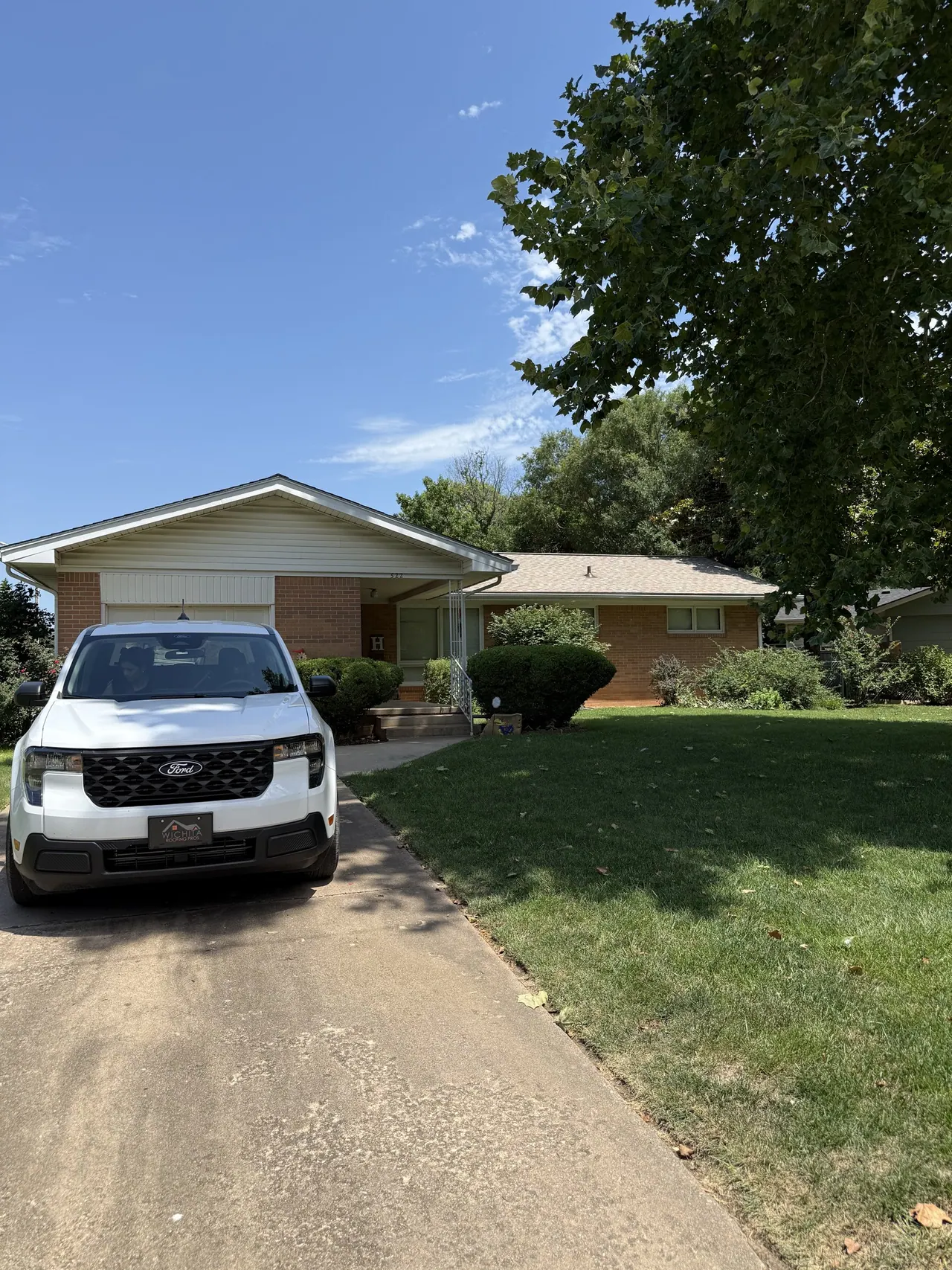
The original gray shingles on this brick ranch were weathered along the ridge and edges. The crew tore the roof off, installed new architectural shingles and a straight new ridge line, and the home was photographed again from the same spots after completion.
Watch: Drone view: crew installing shingles
How Do Wind-Damaged Shingles Put Wichita Roofs at Risk? The honest answer depends on your roof’s age, material and the damage we can document. A free inspection from Wichita Roofing Pros gives you photos, a plain-English explanation and a written next step — with no obligation. Hablamos Español.
Schedule a Free Roof InspectionCall (316) 742-1900Frequently Asked Questions
What if only one side of my roof was hit?
That is common with wind-driven hail. We inspect every slope and explain whether repair or replacement makes more sense.
Should I get impact-resistant shingles after a storm?
They are worth considering in Wichita. Ask your insurer whether a Class 4 shingle affects your premium before you choose.
How soon after a hail storm should I get my roof inspected?
As soon as it is safe, ideally within days. Early documentation helps both repairs and claims, and many policies have time limits for reporting damage.




