Quick answerRoof flashing repair Wichita KS addresses the metal system that bridges the joint between the roof surface and any vertical element — chimneys, vent pipes, skylights, dormers, and adjacent walls. It also protects roof valleys where two slopes converge and forms a drip edge at eaves and rakes to direct water away from the fascia and soffit.
Roof flashing repair is one of the most common roofing service calls in Wichita KS, and for good reason: flashing is the roof system component most likely to fail before the shingles do. Flashing consists of thin strips of metal — typically aluminum, galvanized steel, or lead — installed at every roof penetration, transition, and edge where water would otherwise find a direct path into the structure. When flashing fails, it rarely announces itself loudly or visibly. A small gap at a chimney base or a lifted piece of step flashing beside a dormer can allow water to enter slowly and silently, causing damage that accumulates for months before a ceiling stain finally appears. This guide walks through the most common roof flashing problems found in Wichita homes, explains why they develop under south-central Kansas conditions, and describes what proper repair involves from start to finish.
What Is Roof Flashing and Why Does It Fail on Wichita Homes?
Roof flashing repair Wichita KS addresses the metal system that bridges the joint between the roof surface and any vertical element — chimneys, vent pipes, skylights, dormers, and adjacent walls. It also protects roof valleys where two slopes converge and forms a drip edge at eaves and rakes to direct water away from the fascia and soffit. Flashing fails for three primary reasons: physical movement from thermal cycling, corrosion, and improper original installation. South-central Kansas experiences wide temperature swings — from below zero in January to over 100°F in August — that cause all metal components to expand and contract repeatedly throughout the year. Over years and decades, that cycling works fasteners loose, cracks sealant lines, and can actually buckle or curl flashing pieces out of their intended position. Corrosion affects galvanized steel flashing as the protective zinc coating wears away over time, and aluminum can develop galvanic corrosion where it contacts certain cementitious materials in chimney mortar or concrete. Improper original installation — using undersized metal, skipping the counterflashing layer on chimney work, or relying on sealant alone without mechanical fastening — accelerates failure across all material types and is common in homes where roofing was done by crews unfamiliar with flashing best practices. Our team handling Roof Repair in Wichita identifies flashing failures on a significant majority of leak investigation calls, often finding failures that predate the current homeowner’s occupancy.
Worried about your roof?Wichita Roofing Pros will check it for free and explain what we find in plain words.Book a Free Inspection or call (316) 742-1900
Which Roof Flashing Locations Most Commonly Leak in Wichita?
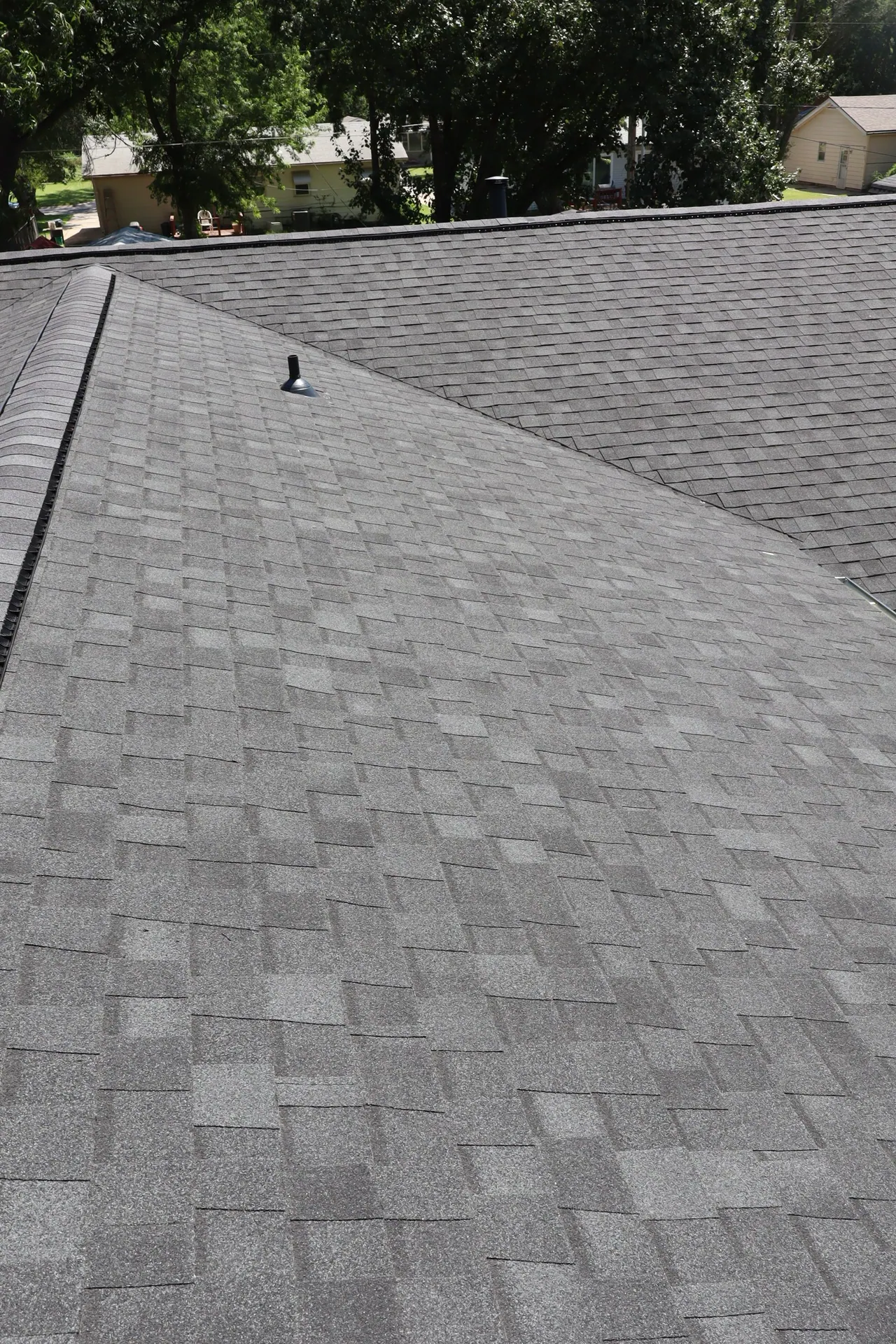
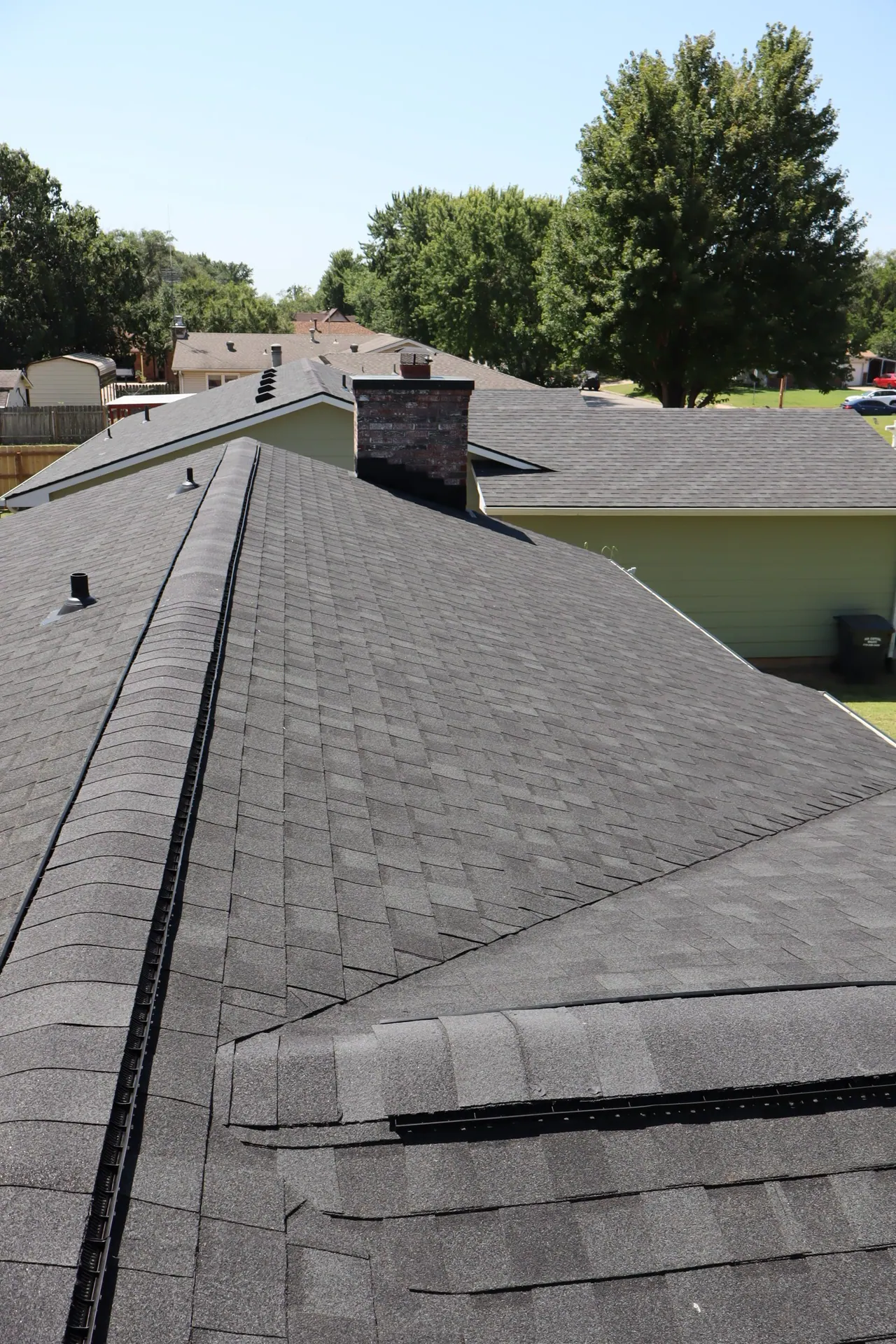
Chimney flashing is the highest-frequency leak source in Wichita homes because chimneys present four separate flashing interfaces — two side walls, a front apron, and a rear saddle or cricket — and are subject to constant thermal and structural movement independent of the roof deck movement around them. Step flashing along dormers and wall abutments ranks second in frequency; when individual step-flashing pieces lift, rust through, or are installed with insufficient overlap relative to the shingle exposure, water penetrates at the seam during any storm with a wind component. Valley flashing failures are particularly damaging because valleys concentrate the highest water flow volume on any given roof slope; a gap or rust hole in valley metal introduces water intrusion during even moderate rainfall events. Pipe boot flashings around plumbing vent stacks are a commonly overlooked source because the boots are often made of rubber or EPDM material that cracks within 10 to 15 years under the intense UV exposure Kansas summers deliver. Skylight flashing is another elevated-risk location, especially on older Wichita homes where original installations used butyl tape and foam rather than proper counterflashing systems integrated into the roof assembly. Contact our Leak Detection and Repair in Wichita team if you have identified any of these locations as a potential leak source on your home.
This guide walks through the most common roof flashing problems found in Wichita homes, explains why they develop under south-central Kansas conditions, and describes what proper repair involves from start to finish.
How Do Roofers Diagnose Roof Flashing Problems in Wichita?
Professional flashing diagnosis in Wichita starts with understanding where the water appears inside the home and working backward methodically to the entry point on the exterior. Because water travels on decking panels, along rafter lines, and across underlayment before it drips into visible areas, the interior stain location is rarely directly below the actual flashing breach. A stain that appears 6 feet from a dormer may originate at step flashing 12 feet up the adjacent roof slope. Inspectors typically examine the interior stain pattern to establish a probable entry zone, then methodically inspect all flashing within that zone for gaps, lifting, rust penetration, failed sealant, and separation from masonry or substrate. On chimneys, counterflashing embedded in mortar joints is probed for cracks and separation at the mortar line. Pipe boots are flexed to check for cracking in the rubber collar. Step flashing is examined for proper lap dimension and nail placement. In cases where the entry zone is not clearly established from static inspection, controlled water testing — running water systematically over specific zones with an observer in the attic — definitively confirms which flashing piece is the active source. Our Free Roof Inspection in Wichita uses this methodical approach rather than relying on surface guesses or treating every possible location at once.
What Does Proper Roof Flashing Repair in Wichita Involve?
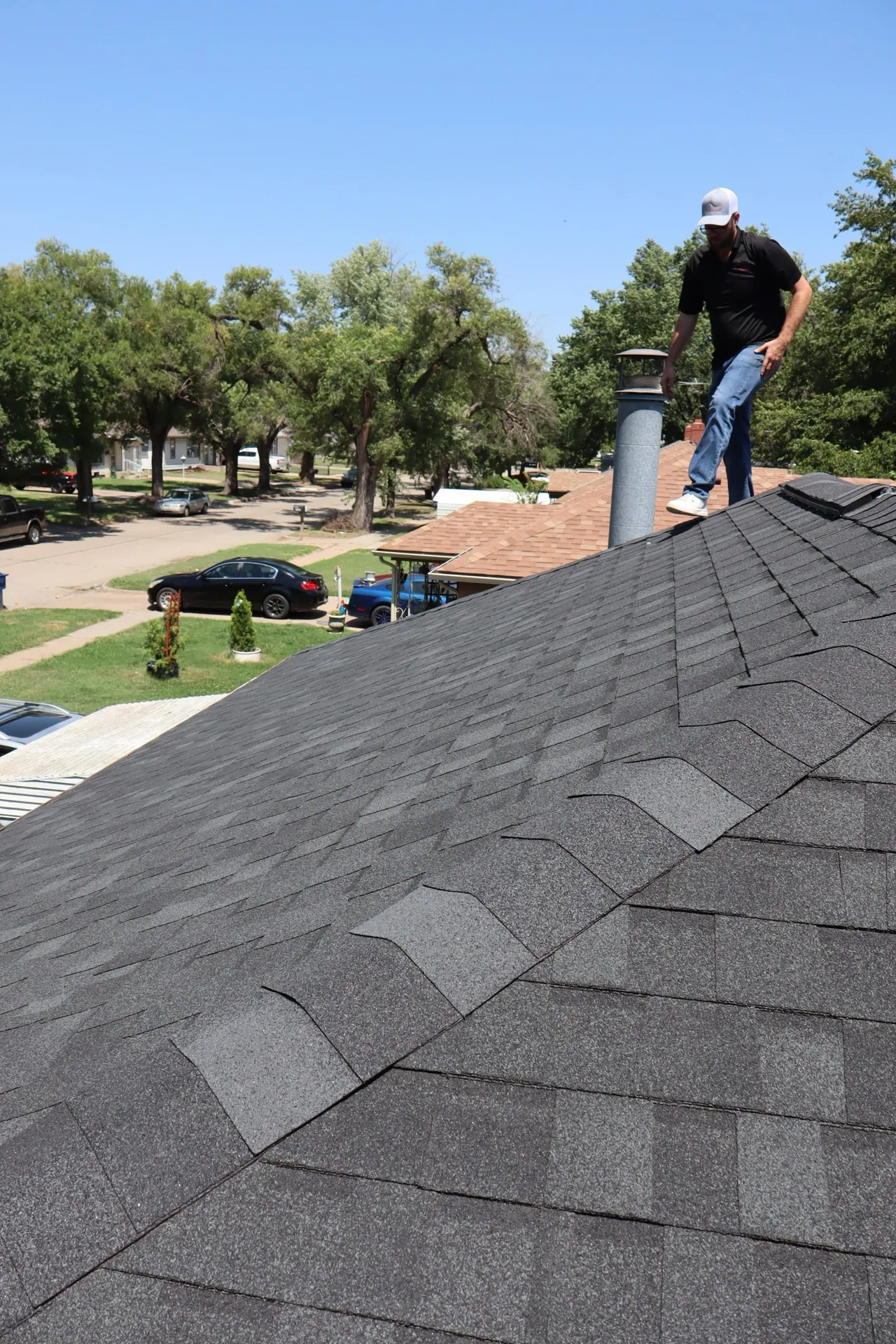
Proper roof flashing repair in Wichita KS requires more than applying a bead of sealant over the visible problem area. While roofing caulk is a legitimate part of flashing maintenance, it functions as a supplement to mechanical repair rather than a substitute for it. A correct chimney flashing repair, for example, involves removing the failed step and counterflashing components, cleaning and repointing the masonry joints that held the counterflashing, installing new base flashing pieces integrated into the adjacent shingle courses, cutting new reglet grooves into the mortar if needed, embedding new counterflashing metal before sealing. Step flashing repair along a wall involves removing the affected shingle courses above, replacing individual step pieces that are rusted, deformed, or incorrectly sized, confirming proper nail placement with each piece nailed to the deck only and not through the overlapping shingle, and then re-integrating shingle courses back over the corrected metal. Pipe boot replacement is a straightforward but complete repair: remove the two or three shingle courses over the base of the boot, pull the old boot free, slide a new correctly-sized boot over the pipe stack, nail the base flanges to the deck, and re-install the shingle courses in the correct layering sequence. Repairs executed correctly deliver years of service without recurrence. Our Wichita roofing team follows current manufacturer installation specifications on every flashing repair project and does not shortcut mechanical steps with sealant substitutions.
Can Wichita Homeowners Temporarily Address Flashing Leaks Themselves?
Homeowners can apply roofing sealant or self-adhering flashing tape as a short-term emergency measure to slow an active leak until a professional repair can be scheduled, but several important risks accompany amateur flashing work. Applying sealant incorrectly — bridging two surfaces that need to move independently, for instance — can actually trap water behind the sealant rather than deflecting it, accelerating the damage it was meant to stop. Working on a wet or steep roof without proper fall protection equipment creates serious safety risk that outweighs the benefit of a temporary fix. Temporary repairs that are later discovered by an insurance adjuster may complicate an otherwise straightforward claim if the adjuster determines the original damage was materially altered before documentation. For most Wichita homeowners, the better short-term approach is managing the interior effect with towels and temporary ceiling protection while scheduling a professional inspection promptly rather than attempting roof surface modifications without the training and equipment to do them safely. The FEMA guidance on post-storm roof damage — available at FEMA.gov — recommends homeowners focus on documentation and temporary interior protection while awaiting professional exterior assessment.
How Much Does Roof Flashing Repair Cost in Wichita?
Flashing repair costs in Wichita vary with the location of the failure, the extent of damage, and the material specified for the repair. Pipe boot replacement runs $150 to $350 per boot including all labor and material. Step flashing repair on a dormer or wall section averages $300 to $700 depending on the number of shingle courses affected and the length of the wall run. Full chimney flashing replacement — removing old base and counterflashing and installing a completely new integrated system — typically runs $800 to $1,800 in Wichita, depending on chimney width, height above the roof deck, and accessibility from the ground or scaffolding. Valley flashing replacement is typically priced by the linear foot, running $12 to $20 per linear foot of valley including underlayment replacement beneath. These figures reflect current Sedgwick County labor and material costs; always request a written line-item estimate to allow accurate comparison across contractors. Ask specifically whether the estimate includes re-integrating the surrounding shingle courses or whether that work is priced as a separate line item. Our Asphalt Shingle Roofing team includes all shingle re-integration in every flashing repair scope as standard practice, with no surprise add-ons at invoice.
Are There Building Code Requirements for Roof Flashing in Wichita?
Wichita follows the International Residential Code as adopted and amended by the State of Kansas, which specifies minimum flashing requirements at all roof-to-wall intersections, penetrations, valleys, and eave edges. Aluminum flashing must meet minimum thickness requirements under the IRC; step flashing must be installed with each individual piece overlapping the piece below by the full step dimension equal to the shingle exposure; valley flashing must extend a minimum width on each side of the valley center line to handle design rainfall volumes. Permit-required re-roofing projects in Wichita are subject to inspection for code compliance including flashing installation details. When comparing repair bids, asking each contractor which IRC sections govern their proposed work provides a useful quality signal — contractors who can cite specific code requirements are less likely to produce flashing installations that fail prematurely because of shortcuts on details that are not visible once shingles are replaced. Our Free Roof Inspection includes a review of existing flashing against current IRC requirements and flags any code-deficient installations found during the evaluation.
Why Wichita roofs leak where they do
Most leaks we find around Wichita start at transitions, not in the middle of a slope: pipe boots, chimney and wall flashing, valleys, skylights and roof edges. Wind-driven rain and freeze-thaw cycles push water into small gaps that stay dry in a gentle shower.
Common leak sources and typical fixes
Every roof is different, but these are the patterns we see most often.
| Leak source | What it looks like | Typical fix |
|---|---|---|
| Pipe boot | Stain near a bathroom or kitchen vent | Replace the boot and reseal |
| Chimney or wall flashing | Stain on a wall or near the chimney | Reflash or counter-flash |
| Valley | Stain where two roof planes meet | Repair valley shingles or metal |
| Skylight | Drips around the frame | Reflash or replace the skylight curb |
| Worn field shingles | Multiple stains, granule loss | Section repair or replacement |
What to do the moment you find a leak
A few quick steps limit the damage while you wait for the inspection.
- Contain the water. Buckets, towels and moved furniture.
- Relieve a bulging ceiling safely. Puncture only if it is safe, with a bucket underneath.
- Photograph it. Inside stains and any outside damage.
- Call for a tarp if needed. Emergency tarping stops more water while repairs are planned.
- Book a leak inspection. We trace the source, not just the stain.
Leak repair mistakes that cost more later
- Caulking over a leak without finding the source
- Painting over a ceiling stain
- Ignoring a drip that only appears in heavy storms
- Replacing drywall before the roof is fixed
- Skipping an attic check for wet insulation
What affects the cost of a leak repair
Price depends on the source, roof access and pitch, the material, and whether decking or insulation got wet. A pipe-boot or flashing repair is very different from a repair that needs decking replaced. You get the scope and price in writing after the inspection.
From our work: Wood Shake Leak Tarping
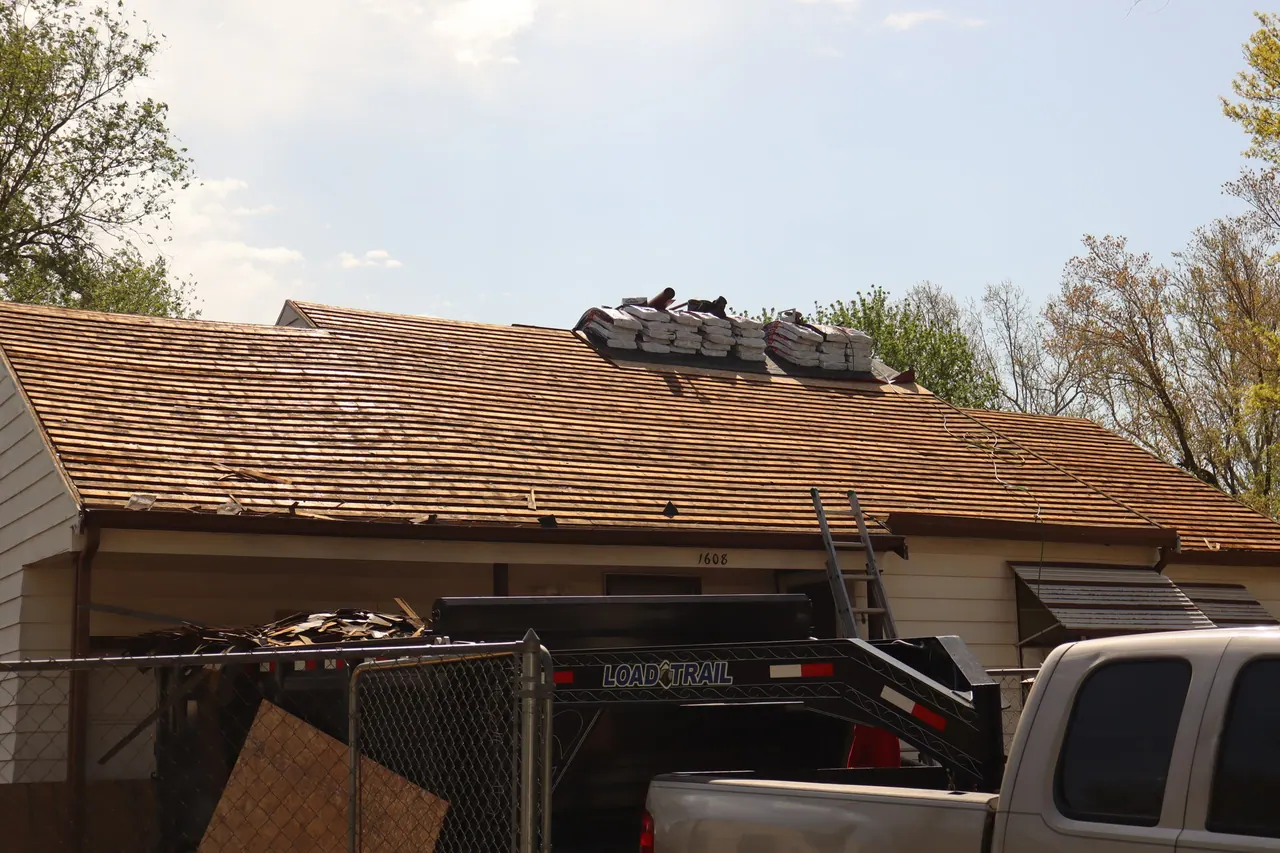
Dan tarps active leak spots on a wood shake roof while the homeowner’s insurance claim is underway, keeping interior damage from getting worse until the roof can be replaced.
What Roof Flashing Problems Cause Leaks in Wichita Homes? The honest answer depends on your roof’s age, material and the damage we can document. A free inspection from Wichita Roofing Pros gives you photos, a plain-English explanation and a written next step — with no obligation. Hablamos Español.
Schedule a Free Roof InspectionCall (316) 742-1900Frequently Asked Questions About Roof Flashing Repair in Wichita KS
How long does roof flashing last on a Wichita home?
Properly installed aluminum or galvanized steel flashing should last 20 to 30 years under normal conditions in Wichita. Copper flashing can last 50 or more years but is rarely specified on residential work due to material cost. Rubber and EPDM pipe boots typically last 10 to 15 years under Kansas UV exposure and should be inspected proactively once they reach that age range.
Can flashing be repaired without replacing the shingles around it?
Often yes, especially for isolated repairs such as a pipe boot replacement or a small chimney counterflashing repair. Shingles immediately above the affected area may need to be carefully lifted and reinstalled, which experienced roofers can accomplish without damaging them if the shingles are still supple and have not become brittle from age.
What is the difference between step flashing and counterflashing?
Step flashing consists of individual metal pieces integrated one-by-one with each shingle course alongside a vertical wall or chimney, forming a stair-step pattern that redirects water away from the joint. Counterflashing overlaps the exposed top edge of the step flashing from above, typically embedded in mortar joints on a chimney, creating a two-piece system where each layer can move slightly without breaking the water seal between them.
Does wind damage affect flashing on Wichita homes?
Yes, and frequently. High-wind events are common in south-central Kansas and can lift the top edges of flashing pieces, break sealant bonds that were holding marginal conditions together, and in severe cases pull step flashing pieces completely out of position. After any storm with sustained winds above 60 mph, a flashing inspection is a worthwhile precaution even when no shingle damage is visible.
Should flashing be replaced when getting a new roof in Wichita?
Most roofing professionals recommend replacing pipe boots and valley flashing with every full roof replacement because the labor cost to access them later is identical to the cost of replacing them during the re-roof. Chimney step and counterflashing can sometimes be reused if they are structurally sound and correctly dimensioned, but this should be assessed piece by piece rather than assumed as a blanket cost-cutting policy.
Why is my ceiling stain not under the leak?
Water runs along decking, rafters and insulation before it drips, so the entry point is often several feet away from the stain.
Can a roof leak be repaired in winter?
Often, yes. Many repairs can be done on dry, mild days, and emergency tarping can protect the home until then.
Is a small leak an emergency?
Any active leak should be addressed quickly. Small leaks soak decking and insulation and can lead to mold.