
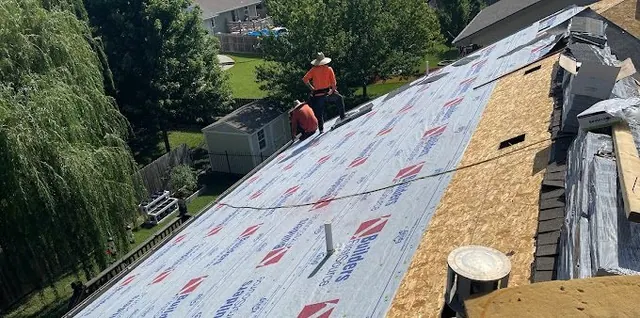
Quick answerA routine roof inspection conducted by a roofing contractor is a proactive maintenance tool. The inspector evaluates the overall condition of the roof system—shingle granule retention, flashing integrity, ridge cap condition, gutter attachment, decking integrity where accessible, and attic ventilation performance.
When a Wichita homeowner schedules a routine roof inspection, the goal is a comprehensive condition report that informs maintenance decisions. When an insurance company sends an adjuster to inspect after a storm, the goal is specific: determine whether a covered loss occurred, quantify its scope, and establish a claim value. These are fundamentally different objectives, and they shape what each type of inspection covers, how thoroughly it is documented, and what the homeowner should do to prepare. Understanding the difference matters in Wichita where hail and wind events trigger thousands of claims each year and where the outcome of an insurance inspection directly affects whether a damaged roof gets properly repaired or replaced.
What Is the Purpose of a Regular Roof Inspection in Wichita?
A routine roof inspection conducted by a roofing contractor is a proactive maintenance tool. The inspector evaluates the overall condition of the roof system—shingle granule retention, flashing integrity, ridge cap condition, gutter attachment, decking integrity where accessible, and attic ventilation performance. The output is a condition report that categorizes issues by urgency: items requiring immediate repair, items to monitor over the next one to two years, and items approaching end of useful life. A good routine inspection also documents the roof system’s age, current estimated remaining lifespan, and any factors—previous storm damage, installation quality issues, or ventilation problems—that could affect longevity. This type of inspection is performed on the homeowner’s behalf to inform their own decisions. The Free Roof Inspection provided by Wichita Roofing Pros follows this comprehensive approach and includes a written report of findings.
Worried about your roof?Wichita Roofing Pros will check it for free and explain what we find in plain words.Book a Free Inspection or call (316) 742-1900
How Does an Insurance Adjuster’s Inspection Differ in Focus and Method?
An insurance adjuster inspects to establish claim scope for the insurance company’s purposes, not the homeowner’s. The adjuster is trained to identify covered loss items—hail spatter patterns, wind uplift damage, impact bruising on shingles—and to distinguish storm damage from pre-existing wear. Adjusters use specific documentation protocols: measuring hail impact density per 10-square-foot test square, recording impact patterns across different roof planes, and noting the presence or absence of damage indicators on soft metals (gutters, downspouts, AC condenser fins, metal flashings) that corroborate storm event severity. The adjuster’s findings determine the scope of approved repairs or replacement and the claim payment amount. Adjusters work under time pressure and may spend 30 to 60 minutes on a roof that a contractor inspection would cover in 90 to 120 minutes with more granular documentation. Having a contractor’s independent assessment—performed before or concurrently with the adjuster visit—provides a comparison point if the adjuster’s scope is narrower than the actual damage. Contact the Storm & Hail Damage team to schedule an independent inspection in advance of or alongside an adjuster visit.
A routine roof inspection conducted by a roofing contractor is a proactive maintenance tool.
What Specific Items Does a Roof Insurance Inspection Evaluate in Wichita?
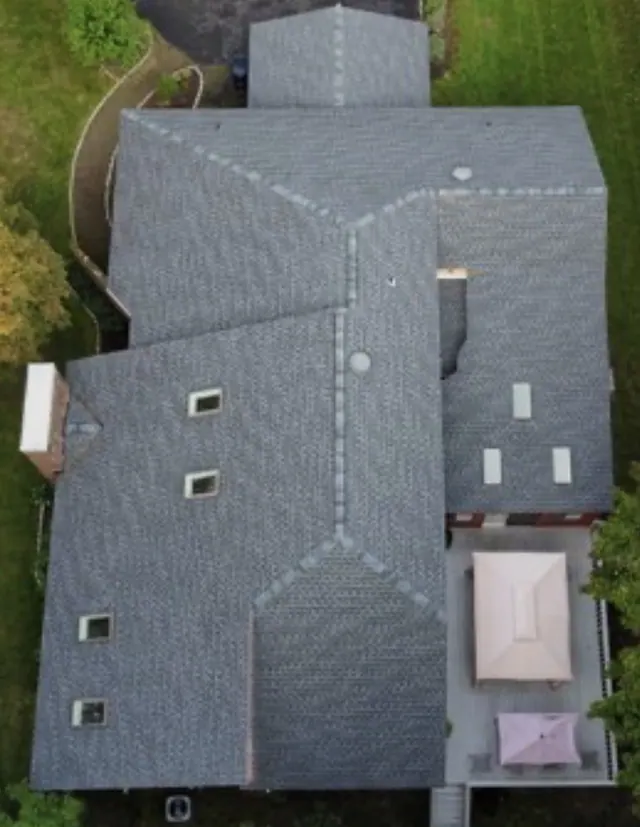
Insurance inspections for Wichita storm damage focus on four primary categories. First, hail impact evidence: bruising on shingles visible as dark circles with granule displacement in a center pattern, impact density sufficient to compromise the granule coating, and corroborating soft-metal denting. Second, wind damage: missing shingles, lifted tabs with broken sealant strips, displaced ridge cap, and exposed decking. Third, interior leak evidence: ceiling staining, attic moisture indicators, and any structural damage that can be attributed to weather rather than pre-existing conditions. Fourth, system condition relative to age: adjusters assess whether damage was caused by the storm event or whether pre-existing deterioration was the primary factor. FEMA’s guidance on property damage documentation recommends that homeowners maintain before-and-after records for exactly this reason—adjusters can argue that pre-existing conditions reduce claim value if no baseline record exists. The Insurance Claim Replacement process is built around this documentation framework.
How Should Wichita Homeowners Prepare for an Insurance Roof Inspection?
Preparation significantly affects claim outcomes. Before the adjuster arrives, compile any documentation of the pre-storm roof condition: photos taken during prior inspections, receipts for recent repairs, and the date and report from any contractor inspection performed after the storm. Verify the adjuster’s appointment time and plan to be present or to have a knowledgeable representative—typically your roofing contractor—on-site during the inspection. A contractor presence during the adjuster visit ensures that no damage items are overlooked and that the adjuster can be directed to specific areas of concern. Have the storm date, any hail size observations, and the NWS storm report reference ready. The National Weather Service Wichita publishes storm event records by date and location that serve as official documentation of qualifying weather events. Providing this reference to the adjuster at the start of the inspection establishes the weather-event baseline for the claim.
What Happens When a Homeowner’s Contractor and the Insurance Adjuster Disagree on Scope?
Scope disagreements between contractors and adjusters are common in Wichita after significant storm events. The adjuster may approve partial replacement while the contractor believes full replacement is warranted, or the adjuster may miss damage on less accessible roof planes. When this occurs, the homeowner has the right to request a re-inspection and to submit a contractor’s detailed written scope as a supplement to the claim. Most policies include an appraisal or dispute resolution process for scope disagreements. A contractor’s written scope should itemize damage by roof plane, include measurements, reference hail impact density counts, and specify material quantities—all in the same format adjusters use—to facilitate a direct comparison. If a re-inspection still produces an inadequate scope, a licensed public adjuster can be engaged to represent the homeowner’s interests independently. The Insurance Claim Replacement team has extensive experience navigating scope disputes on behalf of Wichita homeowners.
Can a Regular Roof Inspection Be Used to Support a Future Insurance Claim?
Yes, and this is one of the most underutilized strategies for Wichita homeowners in a high-storm environment. A documented inspection report from before a storm establishes baseline condition and distinguishes pre-existing wear from new storm damage—a critical distinction when an adjuster questions whether damage is covered or pre-existing. Homes with documented baseline inspections in the past 12 to 24 months are in a significantly stronger position when a storm occurs because the contractor can point to a before-and-after comparison. The FORTIFIED Home program from the Insurance Institute for Business & Home Safety recommends documentation-based risk management as a homeowner best practice precisely because it supports both proactive maintenance and post-storm insurance outcomes. Scheduling a routine inspection during calm periods—not just after storms—is a proactive risk management step for any Wichita homeowner in Sedgwick County’s active weather zone.
What Are the Most Common Reasons Insurance Claims Are Underpaid in Wichita?
Several patterns lead to underpaid or denied roof claims in Wichita. The most common is inadequate damage documentation at the time of the adjuster inspection—either the homeowner was not present, no contractor was on-site, or damage on difficult-to-access roof planes was not verified. A second common issue is delay: waiting more than 30 to 60 days after a storm to file a claim allows weathering of evidence, making it harder to distinguish storm damage from subsequent deterioration. A third issue is misclassification: adjusters may record damage as wear and tear if hail impact density is below the threshold typically used to justify full replacement, even when the cumulative damage has compromised the roof’s ability to perform. Working with a contractor who is experienced with Wichita insurance claims processes helps ensure all relevant damage is identified and documented at the right time. The Roof Repair team can also advise on whether a partial repair scope or full claim replacement scope is more appropriate for your situation.
How Does the Insurance Inspection Outcome Affect the Repair or Replacement Process?
Once an adjuster approves a scope, the insurance company issues an initial payment based on actual cash value (ACV)—the current replacement cost minus depreciation. Homeowners typically receive a second payment (recoverable depreciation) after the work is completed and the final invoice is submitted. Understanding this two-payment structure prevents confusion when the initial check appears to cover only a portion of the contractor’s estimate. Wichita Roofing Pros is experienced with this process and guides homeowners through each stage, from initial inspection documentation to the recoverable depreciation supplement. Service areas include Wichita, Andover, and Sedgwick County broadly. The team’s hands-on experience across hundreds of Wichita-area storm claim projects informs every step of the insurance inspection and repair process.
Why storm damage is different in Wichita
Wichita sits in one of the most active hail corridors in the country, and spring and early-summer storms can bring hail, straight-line wind and heavy rain in the same afternoon. Damage is often uneven: one slope can take the hit while the opposite side looks untouched, which is why a ground-level look is rarely enough.
Storm damage checklist: what to look for from the ground for Wichita homeowners
You do not need to climb a ladder to spot the first clues. Walk the property in daylight and note anything on this list.
- Dents or dings on gutters, downspouts, vents and window wraps
- Granules collecting at downspout outlets or on driveways
- Missing, creased or lifted shingles, especially on the windward side
- Dented AC condenser fins or damaged patio furniture
- Cracked or split siding and damaged window screens
- New water stains on ceilings or walls after the storm
- Debris or tree limbs resting on the roof
- Shingle pieces in the yard
Hail size and what it usually means for a roof
Hail size is a useful first clue, but roof age, material and wind direction matter just as much. Use this as a rough guide only, then have the roof checked.
| Reported hail size | Common comparison | What we often check for |
|---|---|---|
| Under 1" | Pea to quarter | Granule loss, soft-metal dents, aging shingles |
| 1"–1.75" | Quarter to golf ball | Bruised or cracked shingles, damaged vents and gutters |
| 2" and up | Hen egg and larger | Fractured shingles, punctures, decking and skylight damage |
Common mistakes after a hail storm
- Waiting until a leak appears before getting an inspection
- Signing with a door-to-door contractor before checking Kansas roofing registration
- Climbing onto a wet or damaged roof
- Throwing away damaged gutters or vents before they are photographed
- Assuming no visible damage from the ground means no damage
How storm repairs are usually paid for
If your policy covers the event, your insurer pays according to your policy after the deductible. If damage is minor or not covered, a targeted repair may be the most cost-effective fix. We put the scope and price in writing either way, and financing is available for qualifying projects.
From our work: Brick Ranch Roof Replacement
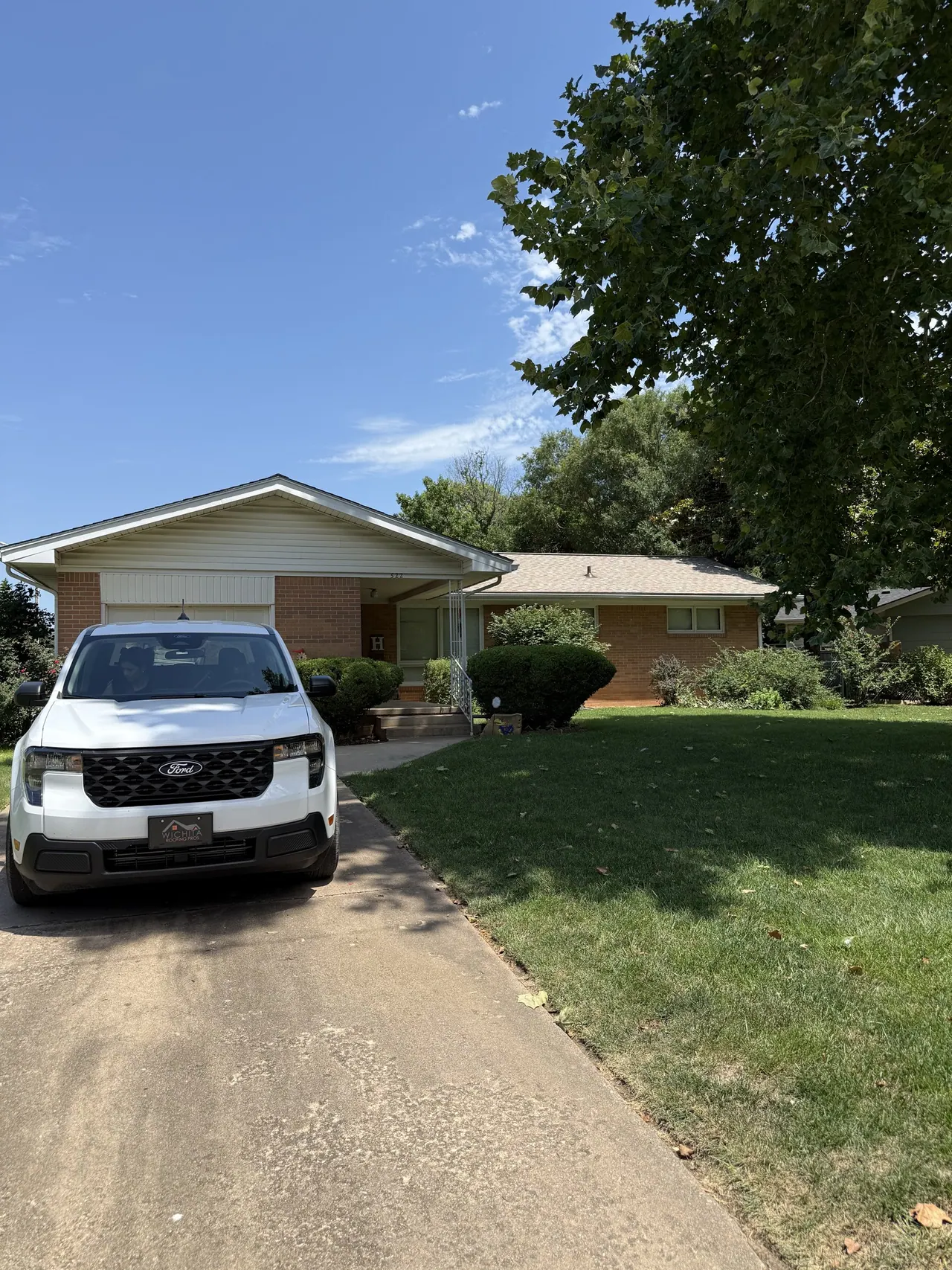
The original gray shingles on this brick ranch were weathered along the ridge and edges. The crew tore the roof off, installed new architectural shingles and a straight new ridge line, and the home was photographed again from the same spots after completion.
What Makes a Roof Insurance Inspection Different From a Regular Inspection? The honest answer depends on your roof’s age, material and the damage we can document. A free inspection from Wichita Roofing Pros gives you photos, a plain-English explanation and a written next step — with no obligation. Hablamos Español.
Schedule a Free Roof InspectionCall (316) 742-1900Frequently Asked Questions About Roof Insurance Inspections in Wichita KS
How long does a roof insurance inspection typically take in Wichita?
An insurance adjuster’s inspection on a standard single-story Wichita home typically takes 30 to 60 minutes on the roof plus 15 to 20 minutes for documentation and interior review. More complex homes with multiple roof planes, dormers, or large chimneys may take 90 minutes. A concurrent contractor inspection adds 30 to 45 minutes but is time well spent given its value to the claim outcome.
Do I need to be home during the insurance adjuster’s roof inspection in Wichita?
Being present is strongly recommended, or having your contractor present as your representative. An adjuster who inspects an unoccupied home has no guidance on which areas of concern to prioritize, no one to note damage items the adjuster may skip, and no one to ask about pre-storm condition. Homeowners or contractors who are present can direct the adjuster to specific damage areas and ensure the inspection covers all roof planes including rear slopes that may be less visible.
What is the difference between ACV and RCV in a Wichita roof insurance claim?
Actual cash value (ACV) is replacement cost minus depreciation based on the roof’s age and expected lifespan. Replacement cost value (RCV) is the full cost to replace with like-kind materials at current prices. Most standard homeowner policies pay ACV initially and release the depreciation holdback once the work is completed and invoiced. Older roofs have higher depreciation deductions, meaning the initial ACV payment covers a smaller fraction of actual repair or replacement cost.
Can a Wichita homeowner file a claim for a roof more than one year after a storm?
Kansas law requires that policyholders file claims within a reasonable time after a loss, and most policies include a specific filing deadline—commonly one to two years from the date of loss. Filing after a significant delay creates a burden of proof challenge because the damage must be attributed to the specific storm event rather than subsequent weathering. If you suspect storm damage from a past event, schedule a contractor inspection as soon as possible to document current conditions while consulting your policy for the applicable filing deadline.
Will filing a roof insurance claim in Wichita raise my homeowner’s insurance premiums?
A single weather-related claim on a home in a high-storm area like Wichita typically has less impact on premium renewal than a non-weather claim such as a water damage or liability claim, though all claims are reported to the CLUE (Comprehensive Loss Underwriting Exchange) database. The effect on your specific premium depends on your insurer, your claims history, and state regulation. Consulting your insurance agent before filing a small claim—particularly if the repair cost is only modestly above your deductible—is always advisable to understand the renewal cost implications.
How soon after a hail storm should I get my roof inspected?
As soon as it is safe, ideally within days. Early documentation helps both repairs and claims, and many policies have time limits for reporting damage.
Can hail damage a roof without causing a leak?
Yes. Hail can bruise shingles and knock off granules without an immediate leak. The damage often shows up later as premature aging or leaks.
Do you work with my insurance company?
We can document damage and meet your adjuster. Your insurance company decides what is covered under your policy.




