
Quick answerRoof decking damage in Wichita KS develops through several mechanisms that are ultimately driven by moisture reaching wood-based materials that are not designed for sustained wet-dry cycling. The most common pathway is a chronic leak — through failed flashing at a chimney or pipe boot, cracked shingles after a hail event, or an open penetration that was never properly sealed — that wets the same decking area repeatedly over months or years.
Roof decking damage in Wichita KS is one of the most consequential roofing problems a homeowner can face, because it operates invisibly beneath the shingle surface until the deterioration reaches a point where exterior symptoms finally appear. The decking — also called roof sheathing — is typically 7/16-inch or 1/2-inch OSB or plywood fastened directly to the rafters and serving as the structural substrate for every other roofing layer above it. When decking deteriorates from moisture intrusion, age, pest activity, or physical impact damage, the entire roof system above it becomes structurally compromised in ways that shingles alone cannot compensate for. Catching decking damage early, before it spreads to adjacent panels or migrates into the rafter framing below, is the difference between a targeted panel replacement and a full structural re-roof. This guide explains what warning signs Wichita homeowners can identify from inside and outside the home, and what those signs mean for repair scope and urgency.
Why Does Roof Decking Damage Occur in Wichita KS Homes?
Roof decking damage in Wichita KS develops through several mechanisms that are ultimately driven by moisture reaching wood-based materials that are not designed for sustained wet-dry cycling. The most common pathway is a chronic leak — through failed flashing at a chimney or pipe boot, cracked shingles after a hail event, or an open penetration that was never properly sealed — that wets the same decking area repeatedly over months or years. OSB, which is the most widely used decking material in Wichita homes built after 1990, swells measurably when wet and then partially shrinks during dry periods. Those repeated dimensional changes cause the wood fiber mat to delaminate from the resin binder, leaving a panel that looks structurally intact from below but has lost the compression and shear strength required to hold fasteners under wind load. Plywood decking is more resilient to repeated moisture cycling but still susceptible to rot when persistently wet along the grain lines. Poor attic ventilation contributes by trapping moisture-laden air against the underside of the decking, particularly at the ridge and eave areas where condensation tends to concentrate. Severe hail events that fracture shingles and the underlying felt underlayment without fully puncturing them can create micro-openings that allow slow moisture migration into the decking assembly over subsequent wet seasons. Our team handling Roof Repair in Wichita identifies and documents decking condition as part of every full leak investigation to ensure repairs address the actual structural state rather than treating surface symptoms only.
Worried about your roof?Wichita Roofing Pros will check it for free and explain what we find in plain words.Book a Free Inspection or call (316) 742-1900
What Are the Exterior Warning Signs of Roof Decking Damage?
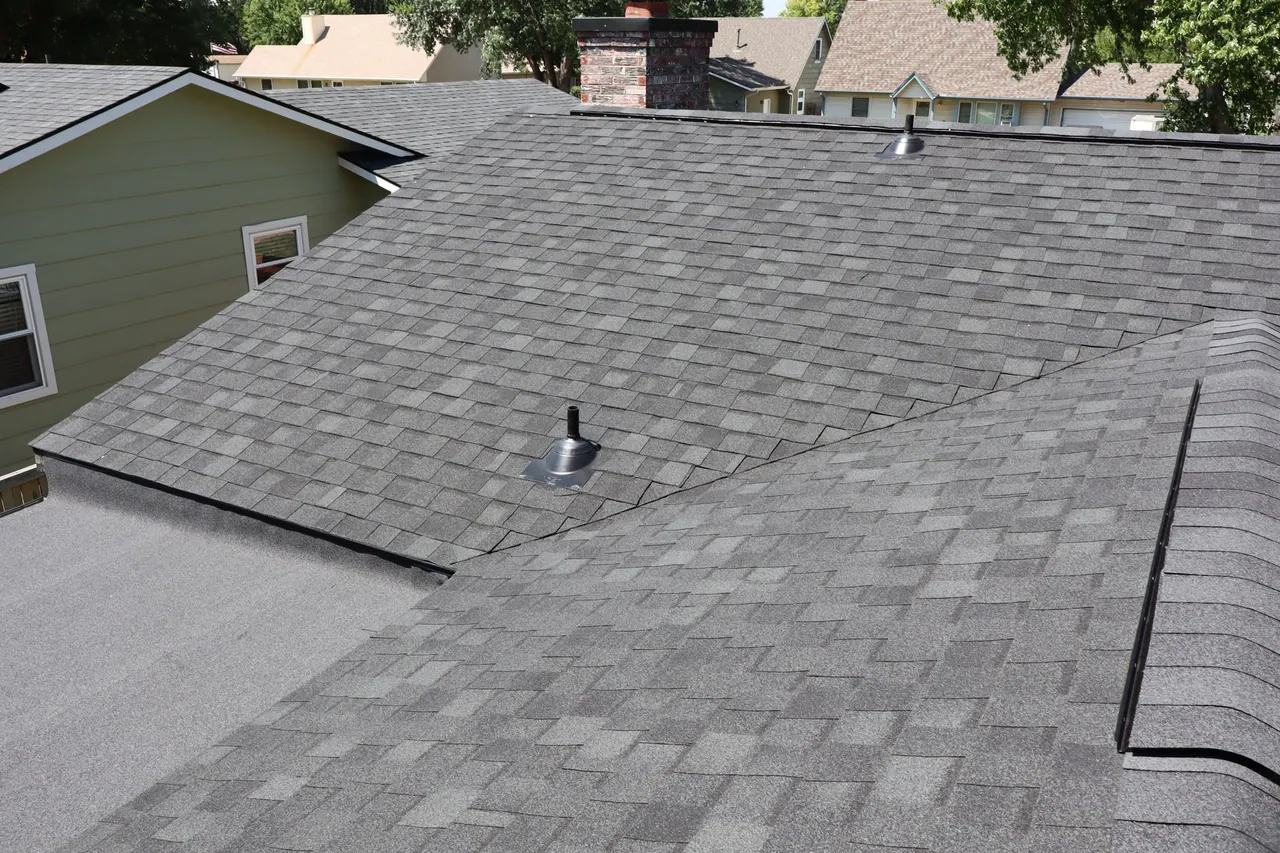
From the ground and from a roof-level inspection, several visual cues suggest decking problems beneath an otherwise intact shingle surface. Shingle waviness or unevenness — where the roof surface displays an irregular, rippled appearance rather than flat, uniform planes — is one of the most telling exterior signs of compromised decking. Healthy decking provides a flat, rigid substrate; swollen, delaminated, or rotted panels create bumps and depressions that telegraph through the shingle layer and are particularly visible with raking light in early morning or late afternoon when shadows accentuate surface irregularities. Sagging between rafter lines, visible as slight but regular dips running parallel across the roof slope, indicates that one or more decking panels have lost bending stiffness and are deflecting under the weight of the shingles above. Shingles that exhibit nail pops or buckling patterns that follow the geometric grid of the panel layout rather than appearing at random locations also suggest that decking movement is pushing fasteners upward from below. After any significant hail event in Sedgwick County, our Storm and Hail Damage inspection team evaluates specifically for hail-induced shingle and underlayment fractures that can allow slow moisture accumulation in the decking assembly over time.
This guide explains what warning signs Wichita homeowners can identify from inside and outside the home, and what those signs mean for repair scope and urgency.
What Are the Interior Warning Signs of Roof Decking Damage?
Attic access provides the clearest and earliest view of decking condition, often before exterior symptoms become pronounced enough to be noticed from the ground. Homeowners who can safely access their attic should look for dark staining on the underside of decking panels — this discoloration, typically appearing brown or black in localized areas, indicates past or active moisture exposure and is often accompanied by a distinctive musty odor when the attic hatch is first opened. Soft spots on decking panels, detectable by pressing firmly upward with a flat hand, indicate delamination or decay where the structural integrity of the panel has been reduced below acceptable levels. Visible mold growth on the decking surface, particularly in concentrated patches around penetrations, valleys, or eave zones, signals chronic moisture presence rather than a single isolated event. Any area of daylight visible through gaps in the decking panels represents an obvious structural breach that requires immediate repair. Fasteners — nails or staples — that show rust streaking radiating outward on the decking surface around the head indicate that moisture has repeatedly reached the fastener zone. The ENERGY STAR guidance on roof products notes that decking integrity is a fundamental prerequisite for any roofing system to perform as rated, which underscores why addressing decking issues is structural work rather than cosmetic maintenance. Schedule a complete evaluation through our Free Roof Inspection in Wichita to get a professional assessment of your attic and decking condition before the problem expands further.
How Extensive Does Decking Damage Need to Be Before Repair Is Required in Wichita?
Any decking section that has lost structural integrity — meaning panels that are visibly soft when pressed, delaminated at the surface, showing active rot, or penetrated through to the attic — requires replacement before new shingles can be installed above them. Nailing new shingles into rotted or delaminated decking results in fasteners that do not develop adequate withdrawal resistance under wind load, effectively creating a roof that has the visual appearance of a properly installed system while lacking the fastening performance to retain shingles in a high-wind event. Even a single soft or compromised panel in an otherwise sound deck should be cut out and replaced rather than covered over with new roofing material. The scope of the required repair depends on how far the damage has migrated. Isolated single-panel failures can typically be addressed with targeted replacement of the affected sheet. Damage that has spread to multiple adjacent panels, or that has allowed persistent moisture to reach the rafter framing below, requires a more comprehensive structural assessment before the final scope can be defined. Our Residential Roofing in Wichita team includes decking condition evaluation in every re-roofing project and provides homeowners with written documentation of which panels were replaced and the reason for replacement.
What Does Roof Decking Repair Cost in Wichita KS?
Decking repair costs in Wichita are typically quoted per panel — a standard 4-by-8-foot sheet — or as part of a per-square re-roofing estimate. Individual panel replacement during a full re-roof runs approximately $75 to $150 per panel including labor and material in current Sedgwick County pricing, which is a relatively modest increment within the context of a larger project but becomes significant when 10 or 20 panels require replacement across an extensively damaged or aged roof. Targeted decking repairs made without a concurrent full re-roof are considerably more labor-intensive: accessing specific problem areas requires carefully removing surrounding shingle courses, making the repair, and then reinstalling or replacing the disturbed shingles. Those targeted repairs typically run $400 to $900 for a small damaged section due to the additional access labor involved. When structural deterioration has migrated to one or more rafters, framing repair cost is added on top of decking replacement pricing. Homeowners evaluating the repair-versus-replacement decision should understand that widespread decking damage across a significant roof area often makes simultaneous full replacement of both sheathing and shingles the more economical combined path. Our Roof Replacement in Wichita estimates include transparent line-item accounting for all decking replacement panels discovered during tearoff inspection.

How Do Wichita Roofers Handle Decking Damage Found During a Re-Roof?
Professional roofers in Wichita assess decking condition during the tearoff phase of a re-roofing project, once old shingles and underlayment have been removed and the bare deck surface is exposed across the full roof area. Each panel is walked carefully and probed for softness, then visually inspected for staining, surface delamination, active decay, and any areas where the wood has compressed under prior fasteners without adequate remaining material around them. Compromised panels are marked with spray paint or chalk, cut out with a circular saw along the nearest rafter centers, and replaced with new OSB or plywood matching the original panel thickness. Replacement panels are shimmed to plane if needed to maintain a flat nailing surface, then fastened to the rafter framing per the nailing schedule required by the current building code — typically 6-inch on-center along panel edges and 12-inch in the field for residential OSB decking. Permit inspections for re-roofing projects in Wichita may include a review of decking replacement documentation. Homeowners should request either a photo log or a written list identifying which panels were replaced during the project, as this information supports future insurance claims and warranty verification. The professional standard of practice on any legitimate re-roof is full disclosure of decking findings rather than covering problems without disclosure. Contact our Wichita roofing service area team to discuss what a transparent, fully-documented re-roofing project scope looks like for your home.
How Kansas weather turns a small leak into a big repair
Hot summers dry out sealants and rubber boots, winter freeze-thaw opens gaps, and spring storms push rain sideways. A drip that shows up once a year can still be soaking decking and insulation every time it rains hard.
Leak warning signs inside and outside your home
Water travels before it shows up, so the stain is rarely right under the problem. Watch for these signs.
- Brown rings or bubbling paint on ceilings
- Damp or musty smell in the attic
- Daylight visible through attic boards
- Dark streaks on rafters or decking
- Cracked or lifted pipe boots
- Rusted or loose flashing at chimneys and walls
- Shingles that feel soft underfoot (reported by a pro)
- Peeling exterior paint near roof edges
What to do the moment you find a leak
A few quick steps limit the damage while you wait for the inspection.
- Contain the water. Buckets, towels and moved furniture.
- Relieve a bulging ceiling safely. Puncture only if it is safe, with a bucket underneath.
- Photograph it. Inside stains and any outside damage.
- Call for a tarp if needed. Emergency tarping stops more water while repairs are planned.
- Book a leak inspection. We trace the source, not just the stain.
Leak repair mistakes that cost more later
- Caulking over a leak without finding the source
- Painting over a ceiling stain
- Ignoring a drip that only appears in heavy storms
- Replacing drywall before the roof is fixed
- Skipping an attic check for wet insulation
What affects the cost of a leak repair
Price depends on the source, roof access and pitch, the material, and whether decking or insulation got wet. A pipe-boot or flashing repair is very different from a repair that needs decking replaced. You get the scope and price in writing after the inspection.
From our work: Wood Shake Leak Tarping
Dan tarps active leak spots on a wood shake roof while the homeowner’s insurance claim is underway, keeping interior damage from getting worse until the roof can be replaced.
What Are the Warning Signs of Decking Damage Under Shingles? The honest answer depends on your roof’s age, material and the damage we can document. A free inspection from Wichita Roofing Pros gives you photos, a plain-English explanation and a written next step — with no obligation. Hablamos Español.
Schedule a Free Roof InspectionCall (316) 742-1900Frequently Asked Questions About Roof Decking Damage in Wichita KS
Is it safe to walk on a roof with suspected decking damage?
No — walking on decking that has soft spots, rotted sections, or delaminated panels is dangerous because the material may not support body weight and can fail suddenly underfoot. Attic evaluation of suspected decking should be conducted from inside looking up at the underside of the panels, not from above the roof surface. Always have a professional confirm structural condition before any foot traffic is placed on a suspect area.
Can hail damage go through shingles and affect the decking directly?
Large hail — generally 1.5 inches or larger in diameter — can fracture shingles and felt underlayment enough to create micro-openings through which water eventually reaches the decking during subsequent rainfall. Direct mechanical penetration of sound shingles by hail alone is uncommon, but the progressive moisture exposure through impact-compromised shingles over following wet seasons is the mechanism that eventually damages the decking below.
How do I know if my Wichita home has OSB or plywood decking?
OSB has a visible strand or chip pattern on its surface and does not show alternating grain layers at cut edges. Plywood shows distinct veneer layers at any cut edge. From inside the attic, you can identify the material at any exposed edge along the eave overhang or around attic openings. Wichita homes built before roughly 1985 are more likely to have plywood; most built after 1990 used OSB as the standard material.
Will homeowner insurance cover roof decking damage in Wichita?
Decking damage caused by a covered peril — storm, hail, or wind — is typically included within the overall scope of a covered roof repair or replacement claim. Decking damage caused by gradual moisture intrusion from chronic deferred maintenance or long-term unreported leaks is more likely to be classified as an exclusion. Accurate storm-date documentation linking the decking damage to a specific covered weather event is essential for a successful claim.
Can a roofer install new shingles over decking that has a few soft spots?
No responsible Wichita roofing contractor should install new shingles over decking that has lost structural integrity in any area. Doing so violates manufacturer installation requirements, would likely void the new shingle warranty, and compromises the fastening performance of the entire roof in a high-wind event. Every soft, rotted, or delaminated section must be replaced before any new roofing material is installed above it.
Do you offer emergency tarping?
Yes. Call (316) 742-1900 if water is coming in.
Will one leak mean I need a new roof?
Not necessarily. Many leaks are fixed with a targeted repair. We explain when replacement makes more sense.
Can you find a leak that others missed?
We trace water from the stain back to the entry point, check the attic and photograph what we find.



