
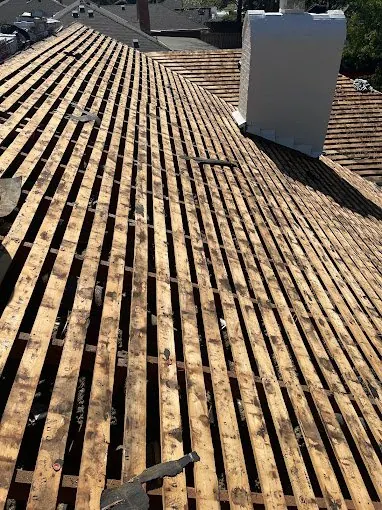
Quick answerThe majority of skylight leaks originate at the flashing system rather than the skylight unit itself. A skylight is installed on a raised curb above the roof surface, and that curb must be integrated with step flashing on the sides and counter-flashing at the head and sill.
A skylight that leaks can be one of the most frustrating roof issues a Wichita homeowner faces because water entry is often intermittent, the source is not always where the water appears inside, and the repair involves multiple potential failure points that are easy to misdiagnose. Skylight leaks in Wichita are also an outsized risk compared to many other parts of the country because the region’s hail events and high wind speeds stress skylight flashing systems that may have been adequate under normal rainfall but fail under Kansas storm conditions. This guide walks through the most common origins of skylight leaks, how they are properly diagnosed, and what a correct repair involves.
Where Do Skylight Leaks Most Commonly Originate?
The majority of skylight leaks originate at the flashing system rather than the skylight unit itself. A skylight is installed on a raised curb above the roof surface, and that curb must be integrated with step flashing on the sides and counter-flashing at the head and sill. When any component of that flashing assembly fails—due to improper original installation, sealant degradation, or storm displacement—water bypasses the roofing membrane and enters the structure. The second most common origin is the sealant or glazing seal between the skylight frame and the glass or acrylic dome. This seal ages faster than the surrounding roofing because it is exposed to UV radiation, thermal expansion cycles, and hail impact simultaneously. A third category involves the skylight curb itself: if the curb was not flashed with proper step flashing at each course or if ice and water shield was omitted during original installation, Wichita’s spring rain and occasional freeze-thaw cycles can drive water under the base. Contact the Leak Detection & Repair team to pinpoint the source before any repair work begins.
Worried about your roof?Wichita Roofing Pros will check it for free and explain what we find in plain words.Book a Free Inspection or call (316) 742-1900
How Do Wichita’s Weather Patterns Stress Skylight Flashing Systems?
Wichita’s weather profile creates specific stress patterns for skylight installations. Hail impacts on skylight domes and frames are common: acrylic dome skylights can crack under direct large-hail impact, and aluminum frames dent, which can break the sealant bond at the frame perimeter. Thermal cycling is more extreme on skylights than on surrounding roof surfaces because the glass or acrylic transmits solar heat directly rather than reflecting it, meaning the frame-to-curb joint expands and contracts at a higher amplitude than the adjacent shingles. High-wind events documented regularly by the National Weather Service Wichita office can lift step flashing tabs at skylight sides if they are not adequately fastened, creating entry points that are only visible on close inspection. After any significant Sedgwick County hail or wind event, skylights should be included in the post-storm inspection checklist alongside ridge caps and valley flashings.
When any component of that flashing assembly fails—due to improper original installation, sealant degradation, or storm displacement—water bypasses the roofing membrane and enters the structure.
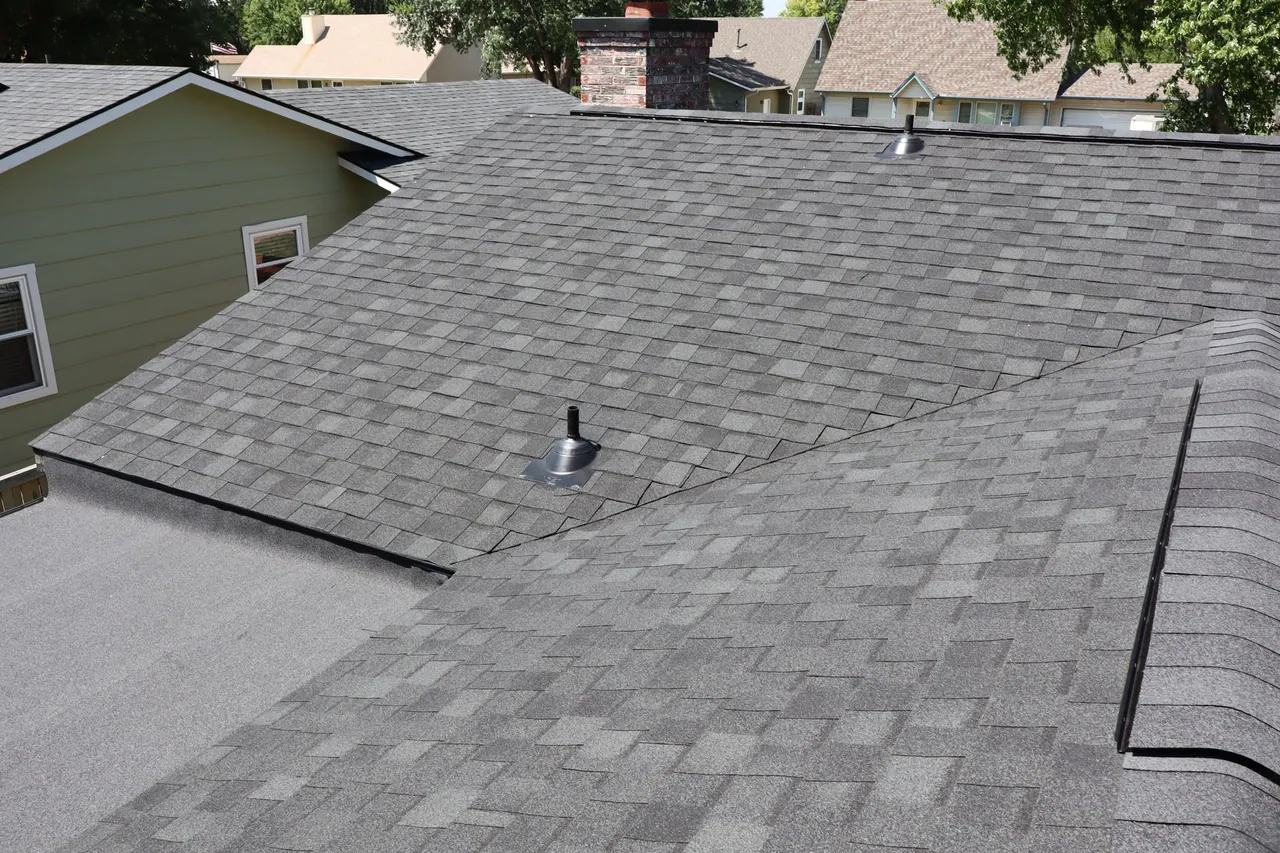
What Is the Difference Between a Flashing Leak and a Condensation Issue?
Not all skylight moisture is a leak. Condensation forms on the interior surface of skylight glass or the frame when warm interior air contacts the cooler glazing surface—a physics phenomenon that is common in winter and shoulder seasons in Kansas. Condensation-related moisture runs down the frame and onto the ceiling or surrounding drywall, producing water staining that looks identical to leak damage on casual inspection. The practical distinction is timing: condensation moisture appears primarily during cold weather regardless of whether it has rained, while flashing or seal leaks correlate with precipitation events. Checking whether interior moisture appears during dry cold spells (condensation) versus immediately after rain or hail (true leak) is the first diagnostic step. Both issues require attention—condensation indicates an inadequate vapor barrier or ventilation situation that can cause long-term ceiling damage—but the repair approach is entirely different. The Free Roof Inspection includes evaluation of both water intrusion and moisture performance for skylight installations.
How Is a Skylight Leak Properly Diagnosed on a Wichita Roof?
Correct diagnosis requires a close-up inspection of all four sides of the skylight from the roof surface—not just a visual check from the attic below. At the head (upslope side), inspectors check that counter-flashing is properly integrated with the step flashing and that sealant beads are intact and not cracked or separated. At the sides, each step flashing tab should overlap the next by at least two inches and lie flat; lifted or buckled tabs indicate wind displacement or improper nailing. At the sill (downslope side), the lowest flashing piece must direct water to the roof surface and must not be sealed in a way that traps water behind it. The glazing seal is inspected for cracking, shrinkage, or separation from either the frame or the glass edge. Attic inspection from below reveals whether staining on the underside of decking tracks to the curb perimeter or to the center of the skylight opening, which helps confirm the failure mode. The Residential Roofing team uses this systematic approach to distinguish flashing failures from unit failures before recommending a repair path.
What Does Skylight Leak Repair Actually Involve?
Repair scope depends on the failure mode. An isolated sealant failure at the glazing perimeter is repaired by stripping the failed sealant, cleaning the frame and glass edge, and applying compatible new sealant—typically a single-component silicone or polyurethane product rated for roofing applications. Flashing repairs involve removing the shingles around the skylight, replacing step flashing that is displaced or corroded, and re-integrating the full assembly with ice-and-water shield at the curb base before re-shingling. A failing curb that has rotted or cracked requires more extensive work: the skylight unit must be temporarily removed, the curb replaced or rebuilt, and the unit reinstalled. Where the skylight unit itself is cracked, fogged, or has a failed dome—common after large hail events in Wichita—unit replacement is often more economical than attempting to repair the glazing, particularly on skylights more than 15 years old. The Roof Repair team provides a detailed scope and cost breakdown so homeowners understand exactly what each repair option involves before authorizing work.

When Does Skylight Leak Repair Become a Skylight Replacement Decision?
Skylights have a practical service life of 15 to 25 years depending on product quality, material type, and Wichita weather exposure. When a unit reaches 15 or more years of age and presents with multiple issues simultaneously—cracked dome, failed glazing seals, and compromised flashing—the cumulative repair cost can approach or exceed the cost of new unit installation. A new high-quality skylight installed on a proper curb with fresh flashing provides a clean 20-year warranty baseline rather than a patched system with unknown remaining life. Homeowners who are already having a roof replacement performed are in the best position to address skylight replacement simultaneously since the surrounding shingles must be removed for proper skylight re-flashing regardless. The Roof Replacement service includes assessment of all penetrations including skylights as part of the overall project scope.
Does Skylight Leak Damage Qualify for a Homeowner’s Insurance Claim in Wichita?
If a skylight leak results from a covered peril—most commonly hail damage to the dome or frame, or wind that displaced flashing—the repair or replacement may be covered by a standard homeowner’s policy. Photographically documenting hail impact marks on the dome, frame denting, and any associated interior damage immediately after a storm event is essential for claim support. Gradual sealant failure or deterioration due to age is typically classified as maintenance-related and excluded from coverage. Wichita homeowners filing storm-related skylight claims should have the damage professionally documented before any repair work begins, since post-repair evidence is difficult to assess. The Insurance Claim Replacement process includes documentation support for skylight-related claims alongside the broader roof assessment.
What Are the Best Practices for Preventing Skylight Leaks on Wichita Roofs?
Prevention is primarily a function of installation quality and periodic maintenance. Skylights installed with full step-flashing integration, ice-and-water shield at the curb base, and a quality sealant at the frame perimeter will outperform cheaper installations by a significant margin. Annual visual inspection of the skylight from inside the attic—particularly after spring storm season—catches early moisture indicators before damage becomes significant. From the exterior, a visual check of sealant condition and flashing edge positions after any hail event costs nothing and can identify a minor repair opportunity before it becomes a major interior damage event. Wichita Roofing Pros serves the full Sedgwick County area including Wichita, Andover, and Goddard.
How Kansas weather turns a small leak into a big repair
Hot summers dry out sealants and rubber boots, winter freeze-thaw opens gaps, and spring storms push rain sideways. A drip that shows up once a year can still be soaking decking and insulation every time it rains hard.
Leak warning signs inside and outside your home
Water travels before it shows up, so the stain is rarely right under the problem. Watch for these signs.
- Brown rings or bubbling paint on ceilings
- Damp or musty smell in the attic
- Daylight visible through attic boards
- Dark streaks on rafters or decking
- Cracked or lifted pipe boots
- Rusted or loose flashing at chimneys and walls
- Shingles that feel soft underfoot (reported by a pro)
- Peeling exterior paint near roof edges
Common leak sources and typical fixes
Every roof is different, but these are the patterns we see most often.
| Leak source | What it looks like | Typical fix |
|---|---|---|
| Pipe boot | Stain near a bathroom or kitchen vent | Replace the boot and reseal |
| Chimney or wall flashing | Stain on a wall or near the chimney | Reflash or counter-flash |
| Valley | Stain where two roof planes meet | Repair valley shingles or metal |
| Skylight | Drips around the frame | Reflash or replace the skylight curb |
| Worn field shingles | Multiple stains, granule loss | Section repair or replacement |
What to do the moment you find a leak
A few quick steps limit the damage while you wait for the inspection.
- Contain the water. Buckets, towels and moved furniture.
- Relieve a bulging ceiling safely. Puncture only if it is safe, with a bucket underneath.
- Photograph it. Inside stains and any outside damage.
- Call for a tarp if needed. Emergency tarping stops more water while repairs are planned.
- Book a leak inspection. We trace the source, not just the stain.
What affects the cost of a leak repair
Price depends on the source, roof access and pitch, the material, and whether decking or insulation got wet. A pipe-boot or flashing repair is very different from a repair that needs decking replaced. You get the scope and price in writing after the inspection.
From our work: Wood Shake Leak Tarping
Dan tarps active leak spots on a wood shake roof while the homeowner’s insurance claim is underway, keeping interior damage from getting worse until the roof can be replaced.
How Do Skylight Leaks Start on Wichita Roofs? The honest answer depends on your roof’s age, material and the damage we can document. A free inspection from Wichita Roofing Pros gives you photos, a plain-English explanation and a written next step — with no obligation. Hablamos Español.
Schedule a Free Roof InspectionCall (316) 742-1900Frequently Asked Questions About Skylight Leak Repair in Wichita KS
How much does skylight leak repair typically cost in Wichita?
Sealant-only repairs on a single skylight run $150 to $350 in most cases. Flashing re-integration requiring shingle removal around the unit ranges from $400 to $900 depending on skylight size and roof pitch. Full curb rebuild with skylight reinstallation runs $600 to $1,400. New skylight unit installation on an existing curb opening starts around $800 to $1,800 for residential units including installation labor. Complex or large format skylights and installations on steep roofs carry higher costs.
How long does a skylight leak repair take in Wichita?
A sealant repair or minor flashing adjustment is typically a half-day job. Full flashing re-integration around a standard skylight takes four to six hours of roof-surface work plus interior inspection. Curb rebuilds or full unit replacements typically require a full day. Weather holds during Kansas’s spring storm season can affect scheduling, so allow two to four weeks lead time during April through June.
Can I seal a skylight leak myself without hiring a contractor?
Homeowners can apply roofing-grade sealant to visible cracks in a skylight frame or around the glazing edge as a temporary measure, but this rarely addresses the underlying flashing failure that is the most common leak cause. Improper sealant application—particularly using interior caulk or non-roofing sealants—can actually trap water and worsen damage. A professional inspection identifies the true failure point and provides a durable repair rather than a temporary cosmetic fix.
Do new roofs installed on Wichita homes come with skylight flashing included in the scope?
A quality re-roofing project should include re-flashing all penetrations including skylights as part of the standard scope. Homeowners should specifically confirm this in the written proposal. Some lower-bid contractors quote re-roofing the field areas only and exclude skylight and chimney flashing as add-ons. Asking the contractor to itemize all flashing work in the written scope prevents surprises at the invoice stage.
What type of skylight is most resistant to Wichita hail damage?
Tempered glass skylights outperform acrylic dome skylights under hail impact because glass does not crack from the kind of surface crazing that destroys acrylic, and tempered glass is required to break into small fragments rather than sharp shards if it does fail. Some manufacturers offer laminated glass skylights rated to Class 4 hail impact. For Wichita homes with a history of repeated hail events, the upgrade from acrylic dome to tempered glass is worth considering at replacement time.
On Wichita roof checks, one practical pattern we look for is whether the damage lines up with the storm direction, roof slope, attic moisture, and nearby exterior conditions. That extra context helps separate a small surface issue from damage that can turn into leaks during the next heavy rain.
Do you offer emergency tarping?
Yes. Call (316) 742-1900 if water is coming in.
Will one leak mean I need a new roof?
Not necessarily. Many leaks are fixed with a targeted repair. We explain when replacement makes more sense.
Can you find a leak that others missed?
We trace water from the stain back to the entry point, check the attic and photograph what we find.



