
Quick answerMaize homeowners can spot hail damage early by checking gutters and downspouts for granule accumulation, inspecting window screens and AC condenser fins for dents, looking at painted wood trim and garage doors for impact dings, and examining any exposed roof edge flashing from the ground with binoculars. These four checkpoints give reliable early signals before a professional inspection is scheduled.
Maize, KS sits squarely in central Kansas hail country. The northwest Wichita metro, where Maize neighborhoods stretch out toward open farmland, receives some of the most concentrated storm traffic in Sedgwick County each spring and early summer. After a significant cell moves through, most homeowners want to know immediately whether their roof took a hit. The problem is that hail damage on asphalt shingles rarely looks dramatic from the driveway, and waiting until you see a leak inside the house means the damage has already progressed further than it needed to. Acting in the window right after a storm, before the next rain event compounds any existing entry points, is the most effective thing a Maize homeowner can do to protect both their roof and their insurance claim options.
This guide covers every practical way Maize homeowners can spot hail damage early, without climbing on the roof themselves and without paying for an inspection they do not yet know they need. The signs are readable from the ground, from gutters, and from a quick attic check, if you know exactly what you are looking for. NOAA National Weather Service Wichita storm reports track hail size and path data that can tell you within minutes whether your area was in a documented hail zone after any storm event. That is always the first place to check after a storm before deciding whether to call a contractor or wait for more signs.
Worried about your roof?Wichita Roofing Pros will check it for free and explain what we find in plain words.Book a Free Inspection or call (316) 742-1900
How Can Maize Homeowners Spot Hail Damage Early Without Getting on the Roof?
Maize homeowners can spot hail damage early by checking gutters and downspouts for granule accumulation, inspecting window screens and AC condenser fins for dents, looking at painted wood trim and garage doors for impact dings, and examining any exposed roof edge flashing from the ground with binoculars. These four checkpoints give reliable early signals before a professional inspection is scheduled.
Granule loss in gutters is the most consistent early indicator. After a hail event, flush a small amount of water through each gutter section. If dark grit that looks like coarse sand washes out in large quantities, the shingles above have lost protective granule coating from direct impacts. Normal granule shedding from an aging roof produces modest gutter deposits over years. Post-hail granule loss happens in hours and is visibly heavier than routine wear. Checking multiple gutter sections around the perimeter of the house also tells you which roof planes took the heaviest impact, since granule loss tends to be heaviest directly below the most impacted shingle areas.
Window screens are excellent impact recorders. Aluminum mesh deforms permanently when struck by hailstones, leaving round or irregular dimple patterns at impact points. A screen damaged in a hailstorm shows a pattern consistent in size and distribution across the exposed surface, different from random physical damage. If your screens show this pattern, your Storm & Hail Damage in Maize risk is confirmed and a roof inspection should be scheduled without delay.
What Do Hail Marks Actually Look Like on Asphalt Shingles?
Hail marks on asphalt shingles look like soft, dark circular bruises where granules have been knocked loose, exposing the black bitumen layer beneath. The impact zone often has a slightly depressed center. Unlike foot traffic damage or mechanical scrapes, hail bruises appear in a randomized pattern across the shingle surface rather than in lines or clusters corresponding to foot paths.
A key test is the finger-press test on accessible low-slope sections or overhangs. A fresh hail bruise feels soft when pressed, similar to a bruise on fruit. An older impact that has already hardened and begun to degrade feels firm but visibly discolored. Both conditions indicate compromised shingle integrity and both warrant follow-up. The IBHS hail and high-wind roof research documents how these impact characteristics differ by hail size, shingle age, and temperature at the time of impact. Larger hail at colder temperatures tends to cause more severe fracturing of the fiberglass mat beneath the surface granules, even when the visible bruise looks minor.
For homeowners in Maize who want a professional opinion after any storm event, the Maize roofing service area page covers the inspection process and what our team looks for when evaluating hail pattern consistency across every plane of the roof.
This guide covers every practical way Maize homeowners can spot hail damage early, without climbing on the roof themselves and without paying for an inspection they do not yet know they need.
Top 7 Signs Your Maize Roof Has Hail Damage
- Heavy granule deposits in gutters – The most immediate visible sign after a storm. Black or dark gray grit collecting in gutter troughs indicates shingle surface disruption above the affected gutter run.
- Dented aluminum gutters or drip edge – Soft aluminum components record every impact. Dent patterns on gutters that correspond to hailstone size confirm the storm produced impact-capable hail over your specific Maize property.
- Dimpled window screens – Aluminum screen mesh holds circular impact dents that correlate directly with hailstone size and density across the storm path.
- Damaged AC condenser fins – The aluminum fins on outdoor condenser units dent easily. Widespread fin damage across the entire exposed face of the unit is a reliable hail size indicator without any roof access.
- Bruised or bare shingles visible at roof edge – From the ground with binoculars or a camera with a zoom lens, look at the lowest exposed shingle course. Bare spots, dark circular areas, or lifted tab edges are visible from street level on many Maize homes.
- Cracked or split ridge cap shingles – Ridge caps take direct impact without the protective overlap of field shingles. Splits, cracks, or missing ridge segments are often visible from the ground on the roof peak.
- Dented plumbing vent caps and pipe collar distortion – Metal components around roof penetrations record hail impact more clearly than asphalt. Dented vent caps confirm hail size and provide physical documentation for insurance purposes.
Does Hail Size Determine How Much Damage Occurs in Maize?
Hail size is the most important single factor in roof damage severity, but it interacts directly with roof age, shingle product, and the angle and wind speed at which hailstones strike. A one-inch hailstone on a ten-year-old standard shingle at high wind speed can cause as much functional damage as a 1.5-inch stone hitting a newer impact-resistant product in calmer conditions.
In Maize and the broader northwest Wichita area, golf-ball-sized hail at 1.75 inches and larger is documented in NOAA Storm Data records multiple times per decade. At that size, even Class 4 impact-resistant shingles sustain measurable granule displacement. Standard 3-tab shingles at that size typically show functional damage across a significant percentage of the exposed surface, often meeting the threshold for insurance-covered repair or replacement. This is why the post-storm window matters: documenting hail size through weather service records and on-property inspection while physical evidence is fresh gives the clearest picture of what actually happened to the roof during that specific event, rather than relying on later estimates.
Scheduling a Wichita Roofing Pros roof inspection shortly after a documented hail event provides professional documentation of shingle condition that is time-stamped to the storm rather than a later date when secondary weathering has begun to blur the picture.
What Should Maize Homeowners Do Immediately After a Hailstorm?
Immediately after a hailstorm, Maize homeowners should document the date and time of the storm using weather service records, photograph all exterior surfaces including gutters, screens, and visible roof edges, check the attic for any active dripping, and contact a licensed roofing contractor before attempting to file an insurance claim. The inspection report is the foundation of a successful storm damage claim and gives you independent professional documentation before the insurer sends its own adjuster.
One thing to avoid is signing any contract with a contractor before your insurance adjuster has inspected the property. Kansas consumer protection rules govern the timing and terms of roofing contracts following storm events. Understanding your policy language before agreeing to any scope of work protects you from scope disputes later in the claim process. A reputable contractor will provide a written inspection report and detailed estimate without requiring you to commit to a contract on the same visit.
The Maize roofing service area team at Wichita Roofing Pros follows a consistent documentation protocol during every post-storm inspection, including photographed hail pattern mapping, consistent sampling across all roof planes, and flashing condition notes that support the full scope of any legitimate storm claim without inflating or minimizing what is actually present.
Why storm damage is different in Maize
Wichita sits in one of the most active hail corridors in the country, and spring and early-summer storms can bring hail, straight-line wind and heavy rain in the same afternoon. Damage is often uneven: one slope can take the hit while the opposite side looks untouched, which is why a ground-level look is rarely enough.
For homes and businesses in Maize, Wichita Roofing Pros provides free inspections from our office at 1809 S Hoover Rd in Wichita. See our Maize roofing page for local details.
Hail size and what it usually means for a roof
Hail size is a useful first clue, but roof age, material and wind direction matter just as much. Use this as a rough guide only, then have the roof checked.
| Reported hail size | Common comparison | What we often check for |
|---|---|---|
| Under 1" | Pea to quarter | Granule loss, soft-metal dents, aging shingles |
| 1"–1.75" | Quarter to golf ball | Bruised or cracked shingles, damaged vents and gutters |
| 2" and up | Hen egg and larger | Fractured shingles, punctures, decking and skylight damage |
What to do in the first 48 hours after a storm
A calm, simple order of operations keeps your family safe and protects any future claim.
- Stay safe. Stay off the roof and away from downed lines.
- Stop active water. Move belongings, catch drips and call for emergency tarping if water is coming in.
- Take photos. Date-stamped photos from the ground, plus any interior stains.
- Schedule a free inspection. We document roof-level damage with photos.
- Call your insurer if damage is found. Your insurance company decides coverage; we can meet the adjuster.
Common mistakes after a hail storm
- Waiting until a leak appears before getting an inspection
- Signing with a door-to-door contractor before checking Kansas roofing registration
- Climbing onto a wet or damaged roof
- Throwing away damaged gutters or vents before they are photographed
- Assuming no visible damage from the ground means no damage
How storm repairs are usually paid for
If your policy covers the event, your insurer pays according to your policy after the deductible. If damage is minor or not covered, a targeted repair may be the most cost-effective fix. We put the scope and price in writing either way, and financing is available for qualifying projects.
From our work: Brick Ranch Roof Replacement
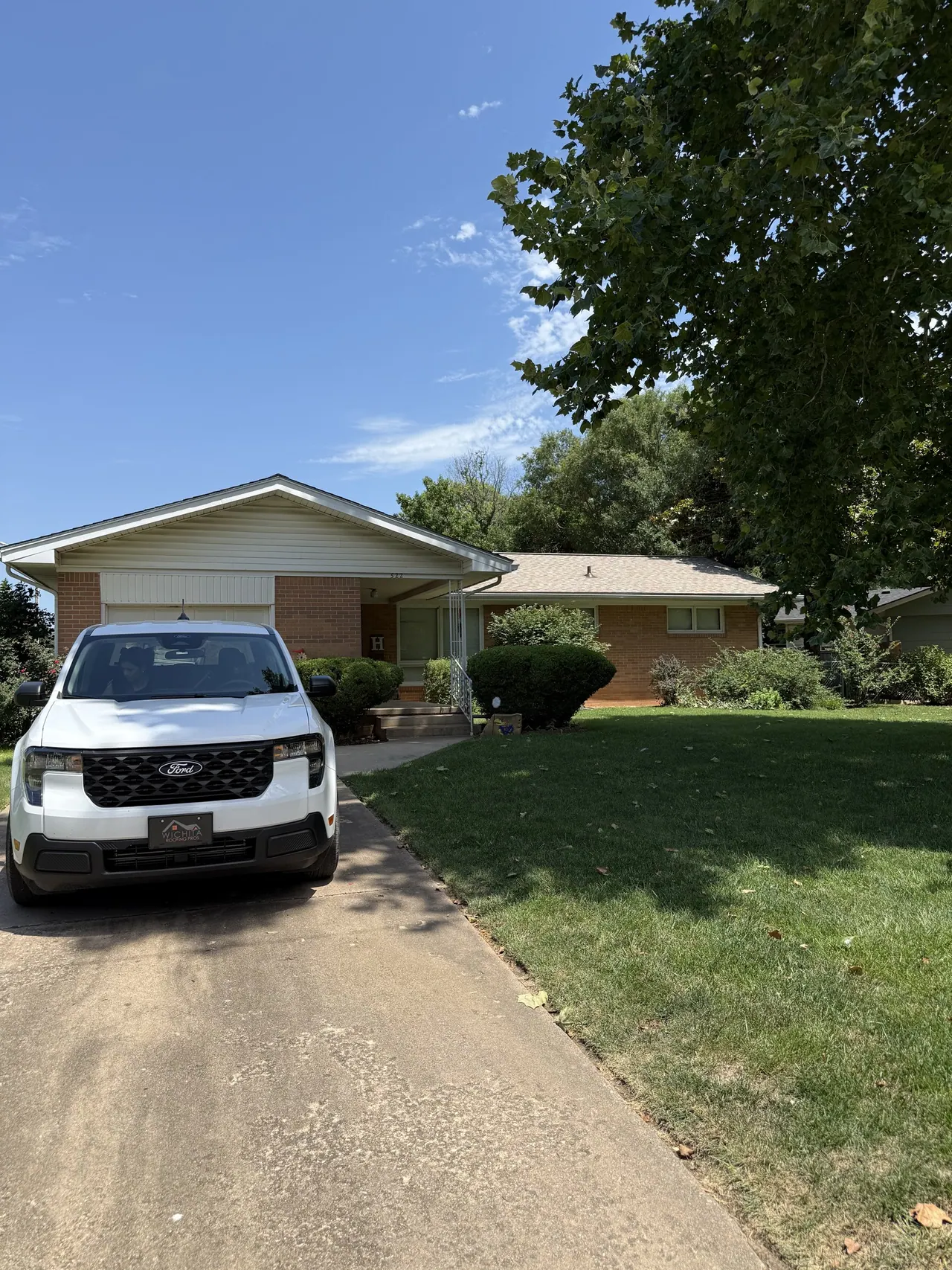
The original gray shingles on this brick ranch were weathered along the ridge and edges. The crew tore the roof off, installed new architectural shingles and a straight new ridge line, and the home was photographed again from the same spots after completion.
How Can Maize Homeowners Spot Hail Damage Early? The honest answer depends on your roof’s age, material and the damage we can document. A free inspection from Wichita Roofing Pros gives you photos, a plain-English explanation and a written next step — with no obligation. Hablamos Español.
Schedule a Free Roof InspectionCall (316) 742-1900Frequently Asked Questions About Hail Damage in Maize
How soon after a hailstorm should I get a roof inspection in Maize?
Schedule an inspection within one to two weeks of a documented hail event. The physical evidence from hail impact, particularly the soft bruising on asphalt shingles, is clearest in the days immediately following a storm before additional weathering occurs. Waiting several months makes it harder to connect damage directly to a specific event, which can complicate an insurance claim review and reduce the documentation available to support your position.
Can hail damage my roof without leaving visible signs from the ground?
Yes. Functional hail damage to the fiberglass mat beneath the shingle surface often produces no visible markings that can be seen from ground level. A professional on-roof inspection checks for bruising, mat fractures, and granule loss patterns that are only detectable at close range. This is precisely why a post-storm inspection from a licensed contractor is more reliable than a homeowner ground-level assessment alone, especially on roofs with architectural shingles that have thicker surface profiles.
Will my insurance cover hail damage to a roof in Maize?
Most standard Kansas homeowners policies cover sudden hail damage when a claim is filed in a timely manner and the damage is documented clearly. Policies vary on deductibles, and some have separate wind and hail deductibles in high-risk areas of Sedgwick County. Review your policy declarations page after any storm and contact your insurer directly before any repair work begins to confirm coverage terms for your specific situation and property.
What is the difference between cosmetic hail damage and functional hail damage?
Cosmetic damage includes dents and marks that alter appearance but do not affect the roof’s ability to shed water. Functional damage compromises the waterproofing layer, accelerates aging, or creates pathways for water intrusion. Insurance policies increasingly distinguish between these two categories, and some exclude cosmetic-only damage. An inspection report that clearly identifies functional impact evidence is essential for navigating this distinction during the claim process with your insurer.
Should I get multiple estimates for hail damage repair in Maize?
Getting two to three estimates is reasonable for any significant repair or replacement scope. Compare not just the total price but the shingle product specified, the warranty terms, and whether the contractor carries current general liability and workers compensation insurance. Kansas does not require roofing contractors to hold a state license, so verifying insurance coverage directly with the carrier is the best protection available to Maize homeowners before signing any contract for storm repair work.
Spotting hail damage early in Maize is a skill that protects your property value and your insurance claim options. If you saw a storm pass through your neighborhood and want a professional opinion on what it left behind, contact Wichita Roofing Pros through the Storm & Hail Damage in Maize page to schedule a thorough evaluation of your roof system.
How soon after a hail storm should I get my roof inspected?
As soon as it is safe, ideally within days. Early documentation helps both repairs and claims, and many policies have time limits for reporting damage.
Can hail damage a roof without causing a leak?
Yes. Hail can bruise shingles and knock off granules without an immediate leak. The damage often shows up later as premature aging or leaks.
Do you work with my insurance company?
We can document damage and meet your adjuster. Your insurance company decides what is covered under your policy.




