
Quick answerWhere a roof plane meets a vertical wall, step flashing and counter flashing or a continuous piece of siding-to-roof flashing creates the weather-tight transition. Step flashing consists of individual L-shaped metal pieces woven between each course of shingles and behind the siding, directing water that penetrates behind the siding outward and onto the shingle course below.
When Wichita homeowners discover a roof leak, the assumption is usually that the problem started on the roof surface itself, a broken shingle, a failed flashing, or a split seam. In a significant number of cases, however, the water entry point is not on the roof at all but at the intersection of the siding system and the roofline. The vertical wall surface that a roof plane terminates against is one of the most complex and leak-prone areas on any residential structure, and siding problems in that zone can route water into wall cavities, attic spaces, and framing in ways that are difficult to detect until serious damage has already occurred.
How Does Siding Interact with Roof Flashing?
Where a roof plane meets a vertical wall, step flashing and counter flashing or a continuous piece of siding-to-roof flashing creates the weather-tight transition. Step flashing consists of individual L-shaped metal pieces woven between each course of shingles and behind the siding, directing water that penetrates behind the siding outward and onto the shingle course below. When siding is installed without proper step flashing integration, or when existing flashing corrodes or separates from the wall, water follows the path of least resistance into the framing. Wichita’s storm seasons deliver wind-driven rain at angles that test these transitions aggressively. Working with an experienced Siding and Trim contractor in Wichita who understands the roofing system interface is important because siding-only crews who are not familiar with step flashing integration can create new leak points while replacing old siding panels.
Worried about your roof?Wichita Roofing Pros will check it for free and explain what we find in plain words.Book a Free Inspection or call (316) 742-1900
What Are the Most Common Siding Problems Near Wichita Rooflines?
The siding conditions that most frequently cause roofline damage in Wichita fall into several repeating patterns. Missing or deteriorated caulk at trim joints where siding meets the rake board or fascia allows water to wick into the wood beneath. Siding that was installed too low and contacts the roofing material directly traps moisture and accelerates rot at the roof-wall transition. J-channel trim used at the top of a siding run that drains backward rather than forward acts as a collection point that keeps water pressed against the wall sheathing. Wind damage from Wichita’s frequent thunderstorm events can crack, buckle, or unseat individual siding panels in the area above the roofline on dormers and second-story walls, creating immediate gaps where water enters. According to IBHS hail and high-wind roof research, the wall-roof interface is one of the documented weak points in residential building envelope performance during severe weather events.
Step flashing consists of individual L-shaped metal pieces woven between each course of shingles and behind the siding, directing water that penetrates behind the siding outward and onto the shingle course below.
How Does Trim Rot at the Roofline Lead to Bigger Problems?
Trim boards at the roofline, including rake boards that run along the sloped edge of the gable end and the horizontal fascia board at the eave, are exposed to more moisture cycling than most other exterior wood components. Once these boards begin to rot, the consequences extend inward. Rotted rake boards allow water behind the siding that covers the gable end wall. Rotted fascia, as discussed in the context of gutters, undermines gutter attachment and allows moisture to reach the rafter tails. In Wichita, where temperature cycling is significant between seasons, painted wood trim that has lost its paint film absorbs moisture rapidly and deteriorates faster than trim on homes in more moderate climates. PVC trim boards used as replacement material for rotted wood trim eliminate the rot concern entirely since PVC does not absorb water, though it requires different fastening techniques and expansion gap allowances. A free roof inspection from Wichita Roofing Pros includes an evaluation of visible trim and flashing conditions at the roofline so these issues are identified before they progress.
Why Does Wind-Driven Rain Affect Siding Near the Roofline?
Standard residential siding systems are designed to shed water that falls or runs down at relatively shallow angles. Wind-driven rain, particularly during the severe thunderstorm events that affect Wichita from spring through early fall, pushes water horizontally or even upward at roof-wall interfaces. At the gable end wall above a roof plane, the gap between the underside of the siding and the wall sheathing becomes a pressure point where horizontal rain enters under siding courses that would shed water under normal conditions. Houses in Wichita neighborhoods that are exposed to prevailing southwest winds tend to show more weathering on the southwest elevations, and the gable end walls on that exposure are worth inspecting after significant wind events. The NOAA National Weather Service Wichita documents wind events regularly, which provides a useful record when documenting storm damage for insurance purposes. Checking the siding condition on wind-exposed elevations after any storm that produces 60-plus mph gusts is a practical maintenance step.
Top 6 Siding and Roofline Problems to Check in Wichita
- Missing or cracked step flashing at dormer or wall-roof intersections – The single most common source of wall-related roof leaks. Often invisible from the ground but visible during a professional inspection.
- Caulk failure at trim-to-siding joints – Common on homes 10 or more years old where original caulk has cracked and separated. Recaulking with a quality paintable polyurethane or silicone caulk prevents immediate water entry.
- Siding panels cracked or missing above dormer rooflines – Hail and wind can break or displace individual siding panels at any elevation but the area just above a roof plane is harder to see and often discovered late.
- J-channel at siding terminations holding standing water – Improper slope or back-pitched J-channel traps debris and moisture against the wall. Correction requires removing and reinstalling the channel at the proper orientation.
- Exposed wood sheathing at siding-to-roof transitions – Any gap where house wrap or sheathing is exposed at a roof meeting point is an active water entry zone during storms.
- Rotted trim boards at rake and fascia – Visible soft spots, cracking paint, or discoloration on trim boards indicate moisture damage that requires replacement before new siding or roofing work on those surfaces.
Can You Repair Siding Problems at the Roofline Without a Full Reroofing?
In many cases, siding and flashing repairsSiding Problems at the roofline can be completed independently of a full roof replacement, particularly if the roofing material itself is in good condition and the water entry is isolated to the wall-roof transition rather than the field of the roof. Replacing deteriorated step flashing, resealing or replacing counter flashing at a chimney or dormer wall, repainting or replacing rotted trim boards, and resetting unseated siding panels are all repairs that address the building envelope without requiring new shingles across the entire roof surface. However, if these repairs are being considered alongside a roof that is approaching end of life, it often makes practical sense to coordinate the work so that flashing and trim work is completed as part of a full replacement rather than as a separate repair now and a full project later. The Wichita roofing service area coverage means that Wichita Roofing Pros can assess both the roofing and the siding-to-roof interface in the same visit and recommend a sequencing plan that makes financial sense.
How Do You Choose a Siding Contractor in Wichita?
Selecting a siding contractor in Wichita for work that involves roofline transitions requires verifying that the contractor understands both siding installation and roofing integration. Ask specifically how they handle step flashing at roof-to-wall intersections and whether they coordinate with a roofing crew for those sections or handle the flashing work themselves. Verify that any siding work that involves opening the building envelope at the roofline includes proper underlayment and flashing before new panels are installed. Confirm that the contractor pulls any required permits for exterior work that modifies the building envelope in Wichita. Wichita Roofing Pros siding and trim services integrate roofing and siding expertise so that the transition zone is handled correctly by a team that understands both systems.
How siding and roofing work together
Siding, trim, flashing and the roof edge form one water-shedding system. When we see wall stains near a roof line, we check kick-out flashing, step flashing and siding together before recommending a fix.
Siding warning signs
Look closely at the sides that face prevailing wind and storms.
- Cracked, split or hail-dented panels
- Warped or buckled sections
- Soft or swollen boards near the ground or roof line
- Peeling paint on trim
- Gaps where siding meets windows or roof lines
- Mold or mildew streaks
- Loose or missing pieces after wind
- Interior wall stains on exterior walls
How we evaluate siding damage
We look beyond the panel to the water path behind it.
- Walk every elevation. Note cracks, dents and gaps.
- Check transitions. Windows, doors, roof lines and kick-out flashing.
- Probe soft spots. Look for swelling or rot.
- Review trim and soffit. Ventilation and edge condition.
- Recommend. Patch, section replace or full re-side.
Siding mistakes to avoid
- Patching siding without fixing the flashing behind it
- Mixing panel profiles that do not match
- Ignoring rotted trim before new gutters
- Covering soffit vents
- Waiting until interior walls stain
What affects siding cost
Wall area, material, number of stories, trim and soffit work, and any sheathing repair. Matching existing siding can limit patch options. You receive a written scope and price after the inspection.
From our work: White Lap Siding Exterior
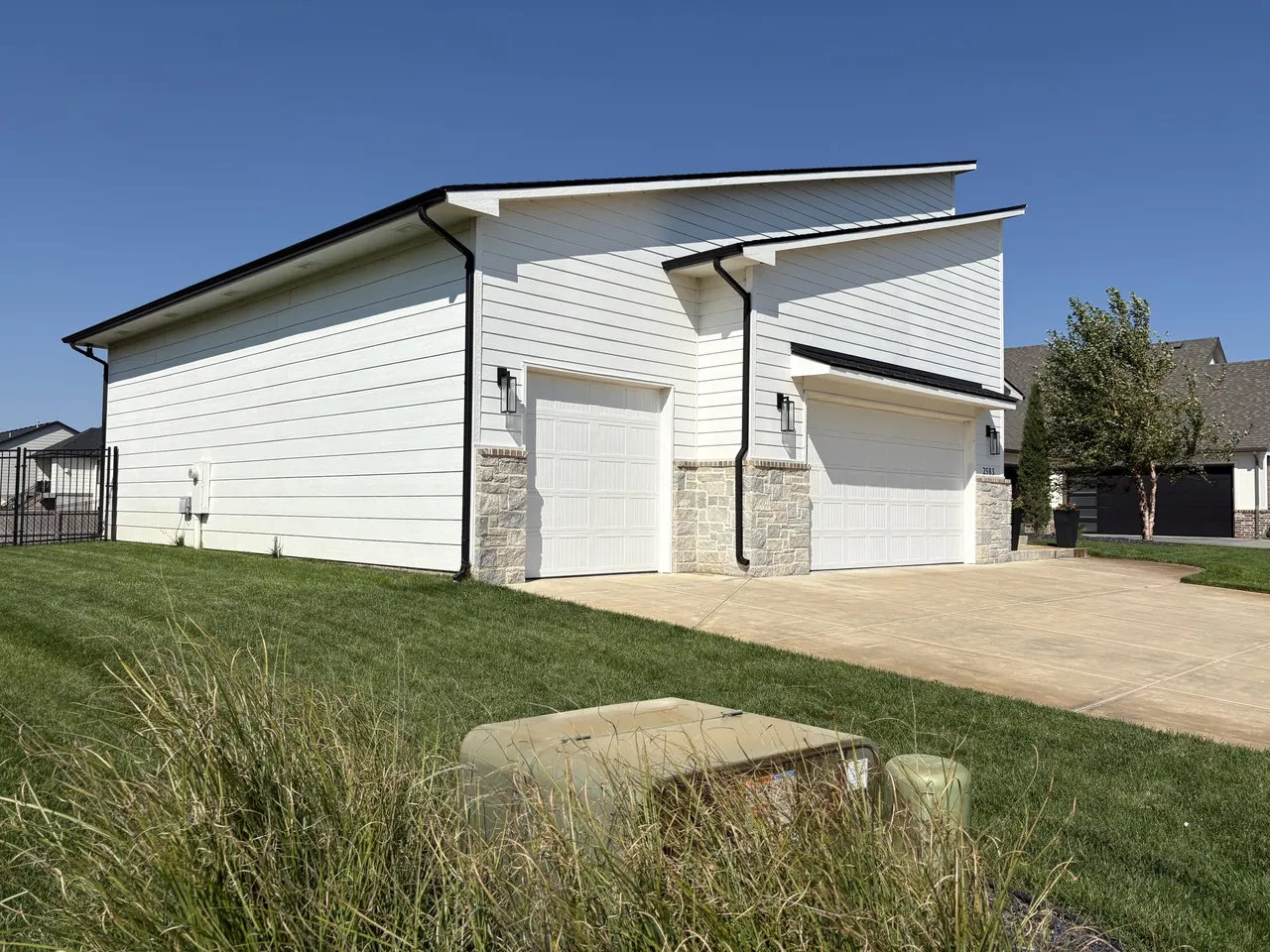
A modern home finished in clean white lap siding, photographed from several angles after completion.
What Siding Problems Affect Wichita Rooflines? The honest answer depends on your roof’s age, material and the damage we can document. A free inspection from Wichita Roofing Pros gives you photos, a plain-English explanation and a written next step — with no obligation. Hablamos Español.
Schedule a Free Roof InspectionCall (316) 742-1900Frequently Asked Questions About Siding Problems Near Wichita Rooflines
What is step flashing and why does it matter at Wichita rooflines?
Step flashing consists of individual L-shaped metal pieces, typically galvanized steel or aluminum, installed one per shingle course at the junction of a roof slope and a vertical wall. Each piece overlaps the one below and is woven behind the siding course above. Together they form a continuous barrier that channels water back onto the shingle surface rather than allowing it to run behind the siding into the wall cavity. Missing or corroded step flashing is one of the leading causes of wall-side roof leaks.
Can hail damage siding and cause roof leaks at the same time in Wichita?
Yes. Large hail in Wichita can crack vinyl siding panels, dent aluminum siding, and dislodge sections that were already weather-stressed. When panels crack or separate near the roofline, the opening allows wind-driven rain to enter the wall cavity and potentially reach roof sheathing at the eave or dormer framing. Hail events that damage the roof field often damage adjacent siding simultaneously, and a comprehensive inspection should cover both surfaces.
How do I know if water damage inside the wall came from the siding or the roof?
Locating the source of wall moisture requires tracing the water path from visible interior staining up through the wall assembly to the exterior. A professional inspector uses moisture meters and visual assessment of attic framing and wall cavities to determine whether water is tracking from the roof field, the flashing at a wall intersection, or directly through damaged siding panels. The moisture entry point and the visible damage location are often not at the same elevation because water travels down framing and sheathing before appearing on interior finishes.
Does fiber cement siding perform better near rooflines in Wichita?
Fiber cement siding resists rot, insect damage, and moisture absorption better than wood siding, making it a practical material for Wichita homes where trim and siding near rooflines are frequently exposed to moisture. Fiber cement requires proper painting and end-cut sealing per manufacturer instructions to maintain its moisture resistance. It is heavier than vinyl and requires different fastening, but its dimensional stability and durability in storm-prone environments make it a popular upgrade from standard vinyl on homes in the Wichita area.
How often should siding near the roofline be inspected in Wichita?
Annual inspection of siding conditions at all roof-to-wall transitions is reasonable for Wichita homes given the active storm season. The most practical timing is spring, after winter freeze-thaw cycles that can crack caulk and displace trim, and after any significant hail or wind event. A professional who inspects the roof can evaluate visible siding and trim conditions at the same time, making the inspection efficient rather than requiring two separate service calls.
Siding problems at the roofline are genuinely underappreciated as a source of significant water damage in Wichita homes. The intersection of two weather-exposed systems is always a vulnerability, and the storm frequency in this part of Kansas means that small deficiencies get tested regularly. Contact Wichita Roofing Pros for siding and trim evaluation or schedule a free roof inspection that covers the full exterior envelope.
Should siding be done before or after a roof?
Usually the roof first, then siding and gutters, so flashing and edges tie in correctly.
Can siding damage cause roof leaks?
Yes. Gaps at roof-wall transitions and missing kick-out flashing can send water into walls and roof edges.
Is LP SmartSide good for Wichita?
It is a popular choice for impact resistance and a wood look. It needs periodic painting.




