Quick answerStandard roofing asphalt becomes brittle in cold temperatures and soft in extreme heat. Polymer modification addresses both failure modes. Two primary polymer types are used: APP (atactic polypropylene) and SBS (styrene-butadiene-styrene).
Modified bitumen roofing is one of the most durable low-slope membrane systems available for commercial and flat-roof residential properties in Wichita, KS. Built from asphalt that has been chemically modified with polymers for improved flexibility and strength, it delivers a multi-ply system that handles temperature extremes, foot traffic, and hail impacts in ways that single-ply membranes cannot always match. For Wichita property owners managing low-slope roofs through decades of Plains weather, understanding where modified bitumen fits best can mean the difference between a roof that performs consistently and one that requires premature replacement.
Modified bitumen has been installed on Wichita commercial properties for decades, and its track record in the region is well established. The material tolerates the rapid thermal cycling that comes with south-central Kansas winters and summers, it repairs cleanly with matching material, and it can support modest amounts of foot traffic from service personnel without the puncture risk that single-ply systems carry in the same conditions.
Worried about your roof?Wichita Roofing Pros will check it for free and explain what we find in plain words.Book a Free Inspection or call (316) 742-1900
Explore the complete range of Modified Bitumen in Wichita to understand what installation options are available for your building.
What Is Modified Bitumen and How Is It Installed?
Standard roofing asphalt becomes brittle in cold temperatures and soft in extreme heat. Polymer modification addresses both failure modes. Two primary polymer types are used: APP (atactic polypropylene) and SBS (styrene-butadiene-styrene). APP-modified sheets are typically torch-applied, where a propane torch melts the underside of the sheet to bond it to the substrate. SBS-modified sheets can be torch-applied, cold-adhesive applied, or self-adhered, giving installers flexibility based on building type and fire code requirements.
A standard modified bitumen system consists of at least two plies: a base sheet fastened or adhered to the roof deck, and a cap sheet that forms the weather surface. Premium systems add a third mid-ply for additional redundancy. The cap sheet surface is typically granule-surfaced for UV protection and impact resistance, or smooth-surfaced when a coating is planned. Some systems use a foil cap surface for reflectivity.
The multi-ply construction is a key advantage. If the cap sheet sustains hail damage or a puncture, the base sheet beneath still maintains waterproofing while repairs are made. Single-ply systems like TPO Roofing in Wichita offer excellent performance but rely on a single membrane thickness for waterproofing, which means any full-thickness breach allows immediate water entry.
What Building Types Benefit Most from Modified Bitumen in Wichita?
Modified bitumen is particularly well-suited to several building categories common across the Wichita commercial landscape.
Older commercial buildings with relatively flat roofs that have hosted multiple prior roofing systems often benefit from modified bitumen overlays. The material accepts irregular substrate conditions better than membranes that require a perfectly smooth deck surface. When a tear-off is not practical or cost-effective, a base sheet mechanically fastened through the existing system into the deck can anchor a new modified bitumen cap sheet without full removal.
Properties with significant rooftop foot traffic from HVAC, plumbing, or electrical maintenance personnel benefit from the higher puncture resistance of modified bitumen compared to lighter single-ply membranes. The granule-surfaced cap provides grip for workers and absorbs minor abrasion from tool contact or equipment placement. Supplemental walkway pads still add value in the highest-traffic service paths, but the base material is more forgiving than thin TPO or EPDM.
Restaurant buildings, food processing facilities, and any property with rooftop grease or chemical exposure are also good candidates. Modified bitumen is less susceptible to degradation from petroleum-based grease contamination than some membrane systems, though protective pads at grease exhaust points are still recommended practice.
Two primary polymer types are used: APP (atactic polypropylene) and SBS (styrene-butadiene-styrene).
How Does Modified Bitumen Compare to TPO for Wichita Flat Roofs?
The comparison between modified bitumen and TPO comes up frequently for Wichita property owners making replacement decisions. Both are viable systems with strong track records, but they serve slightly different performance profiles.
Modified bitumen delivers more redundancy through multiple plies, better foot traffic tolerance, and easier field repairs that do not require specialized equipment. A seam or puncture repair on a modified bitumen roof can be accomplished with a torch or cold-process adhesive and matching material. TPO repairs require a heat-welding tool calibrated to the specific membrane formulation, which means repairs are more equipment-dependent.
TPO edges ahead of modified bitumen on energy efficiency. The bright white reflective surface of TPO reduces cooling loads more effectively than the dark granule-surfaced cap common on modified bitumen installations. For Wichita buildings with high cooling costs in summer months, this difference has real dollar value over the life of the roof.
The NRCA roofing resources provide technical guidance on both system types for building owners comparing specifications. Modified bitumen typically carries a lower initial installed cost per square foot than premium TPO systems with thicker membranes, though the gap narrows when comparing equivalent-quality installations with proper insulation boards and accessories.
What Are the Common Failure Points for Modified Bitumen Roofs in Wichita?
Knowing where modified bitumen systems tend to fail in Wichita’s climate helps owners prioritize inspection and maintenance resources effectively.
Lap seam adhesion failures are the most common problem in older modified bitumen roofs. The adhesive bond between overlapping sheets can weaken over years of thermal cycling. When laps begin to lift at edges, water finds a path between plies. Lap adhesion should be probed during every professional inspection, particularly at T-joint intersections where three layers of material come together.
Alligatoring of the cap sheet surface indicates advanced oxidation of the asphalt and is a sign that the material has reached or passed its serviceable lifespan. The characteristic pattern of surface cracking resembling alligator hide signals that the cap sheet has lost flexibility and will not accommodate further thermal movement without cracking through. A coating or overlay may extend service life at this stage, but replacement becomes necessary when cracking penetrates the full cap sheet thickness.
Drain area deterioration is accelerated by the concentration of standing water near roof drains. The asphalt in modified bitumen softens slightly under prolonged ponding, and the repeated wet-dry cycle at drain edges causes the material to break down faster than field areas. Keeping drains clear and ensuring adequate slope toward outlets reduces this stress significantly.
Top 5 Situations Where Modified Bitumen Outperforms Other Low-Slope Systems
- High foot traffic rooftops: Multi-ply construction and granule-surfaced cap sheets absorb minor abrasion and tool contact without immediate puncture risk, making modified bitumen the preferred choice where service personnel access the roof frequently.
- Complex rooftop geometry: Multiple penetrations, equipment curbs, and irregular parapet transitions are easier to detail in modified bitumen because flashings can be fabricated from the same material and torch-welded for a monolithic connection.
- Reroofing over existing systems: When a full tear-off is not required by code or condition, modified bitumen base sheets can be mechanically fastened through existing material into the deck, reducing labor cost and waste disposal fees.
- Impact-prone environments: Properties in areas of Wichita with documented frequent hail events benefit from the layered redundancy that a two- or three-ply modified bitumen system provides versus a single-membrane alternative.
- Cold-process or low-flame applications: In buildings where open-flame torch application is restricted by occupancy type or building contents, cold-adhesive SBS modified bitumen systems deliver the same multi-ply performance without fire risk during installation.
How Long Does Modified Bitumen Last in Wichita Conditions?
A two-ply modified bitumen system installed correctly on a sound deck typically delivers 20 to 25 years of serviceable life in Wichita’s climate. Three-ply premium installations can extend that range to 25 to 30 years when combined with regular maintenance. These estimates assume timely minor repairs, seasonal drain cleaning, and professional inspections that catch lap and flashing failures before they allow water damage to the deck or building interior.
Deferred maintenance dramatically shortens the effective lifespan. A modified bitumen roof that receives no professional attention after installation may begin requiring costly repairs within 10 to 12 years as lap adhesion failures, flashing separations, and drain area deterioration accumulate. The cost of consistent preventive maintenance is a fraction of the cost of major repairs or early replacement driven by neglect.
For Wichita building owners managing older properties with limited capital budgets, modified bitumen also offers a meaningful advantage in repair cost predictability. Because the material repairs with torch and compatible sheet stock rather than requiring factory equipment or specialty adhesives, a qualified local roofing contractor can address most repair needs quickly after storm events without extended lead times for materials or tools. This accessibility translates directly to faster leak resolution and lower business disruption for tenants and building users.
Schedule a Wichita Roofing Pros roof inspection to evaluate your current modified bitumen system and identify any maintenance needs before the next storm season.
Wichita Roofing Pros serves commercial and residential customers throughout the area. Learn more about the Wichita roofing service area to confirm coverage for your property location.
Why commercial roofs need a maintenance plan here
Inspections in spring and fall, plus after major storms, catch open seams, clogged drains and punctures before they turn into interior leaks and business interruptions.
Commercial roof inspection checklist for Wichita property owners
Property managers can track these items between professional inspections.
- Water ponding more than 48 hours after rain
- Open or lifted seams
- Blisters, cracks or shrinkage in the membrane
- Clogged drains, scuppers or gutters
- Damage around HVAC curbs and penetrations
- Loose or damaged edge metal
- Interior ceiling tile stains
- Debris or foot traffic damage near equipment
Low-slope roof systems at a glance
Commercial systems are chosen separately from residential materials.
| System | Strengths | Often used for |
|---|---|---|
| TPO single-ply | Reflective white surface, heat-welded seams | Offices, retail, warehouses |
| Modified bitumen | Multi-ply toughness, puncture resistance | Roofs with foot traffic, smaller low-slope areas |
| Repair & maintenance | Extends roof life, lower upfront cost | Roofs with isolated issues |
How we inspect a commercial roof
A consistent process gives owners and managers a clear budget picture.
- Review history. Age, past repairs and leak locations.
- Walk the field and perimeter. Seams, edges, flashings and equipment.
- Check drainage. Drains, scuppers and ponding areas.
- Document. Photos and notes for each issue.
- Prioritize. Now, soon and monitor, with written pricing.
What affects commercial roofing cost
Roof size, system type, insulation, number of penetrations, drainage changes, access and whether wet insulation must be removed. A maintenance plan spreads cost out and supports budgeting.
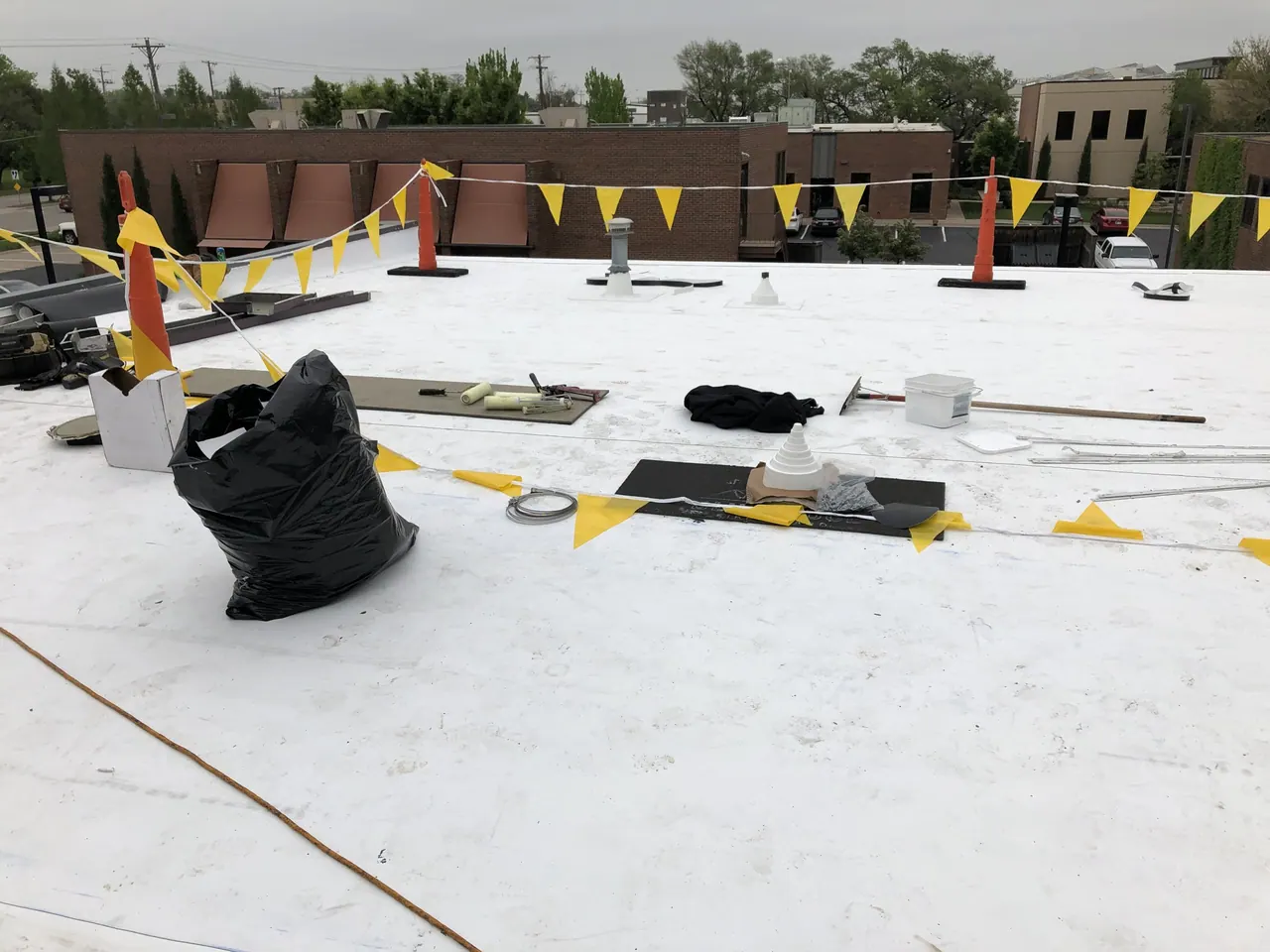
From our work: Commercial Membrane Roof
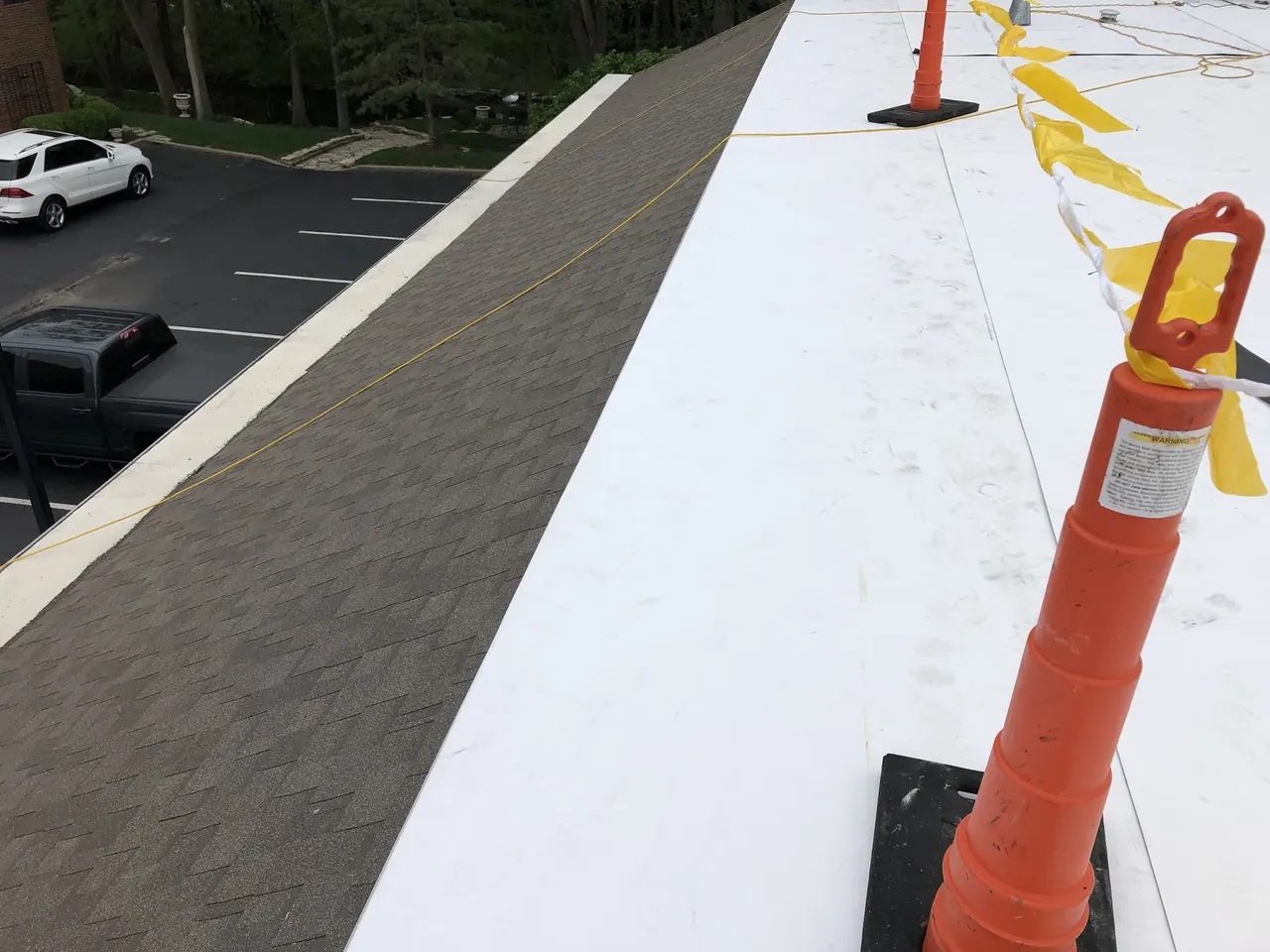
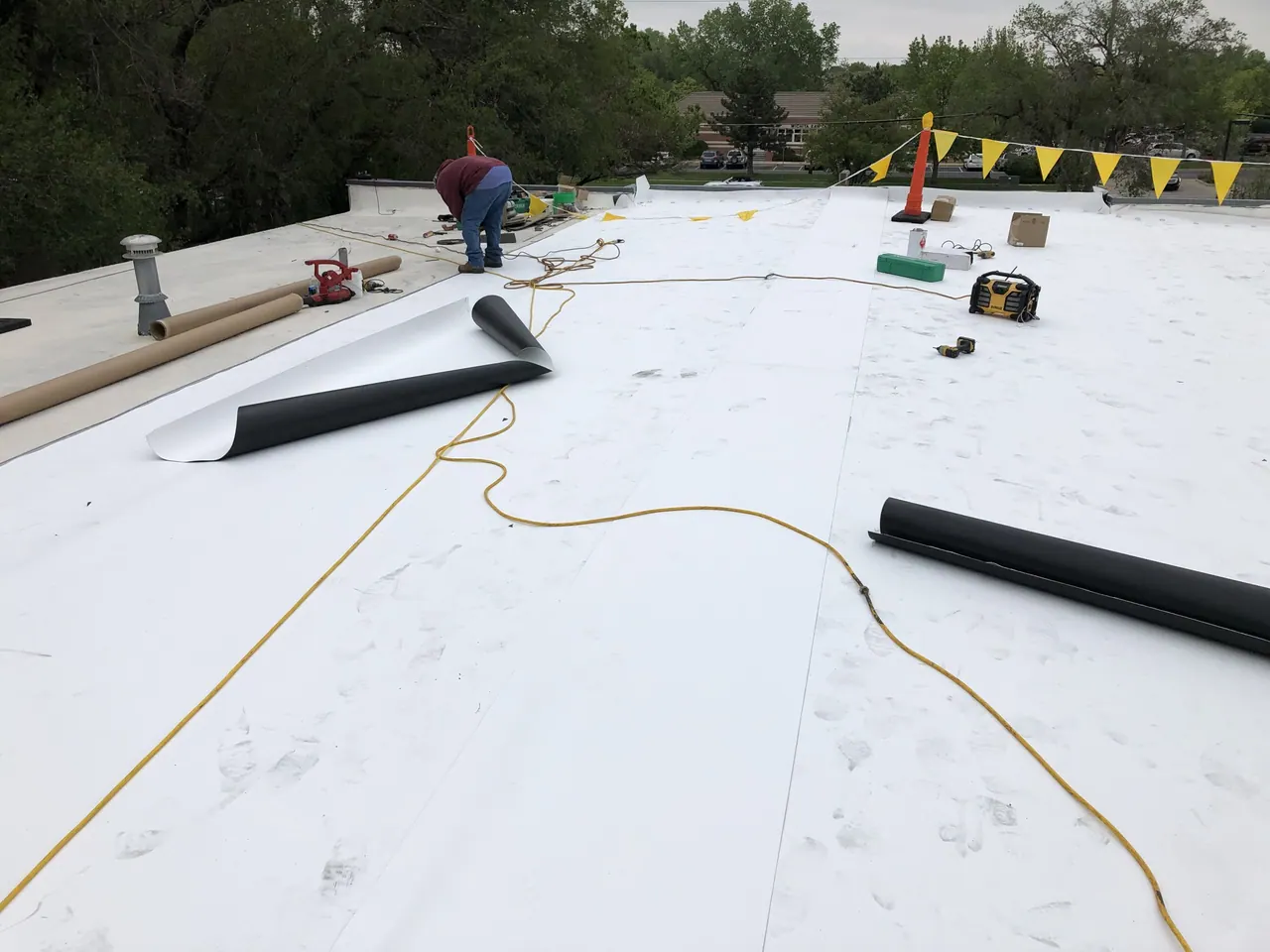
Insulation boards staged on the deck, then a white single-ply membrane rolled out, fastened and seamed across a low-slope commercial roof.
What Is Modified Bitumen Roofing Best For in Wichita? The honest answer depends on your roof’s age, material and the damage we can document. A free inspection from Wichita Roofing Pros gives you photos, a plain-English explanation and a written next step — with no obligation. Hablamos Español.
Schedule a Free Roof InspectionCall (316) 742-1900Frequently Asked Questions About Modified Bitumen Roofing in Wichita
Can modified bitumen be installed in Wichita winter weather?
SBS cold-process modified bitumen can be installed in colder temperatures that would prevent safe torch application. However, adhesive viscosity and bonding quality are still affected by extreme cold, and most manufacturers set minimum temperature thresholds in their installation specifications. Late fall and early spring installations in Wichita require attention to ambient temperature, substrate temperature, and moisture conditions to ensure full adhesion.
How do you repair a hole in a modified bitumen roof?
Small punctures and holes in modified bitumen roofs are repaired by cleaning and drying the damaged area, applying a modified bitumen patch cut from matching cap sheet material with a minimum four-inch overlap on all sides, and torch-welding or adhering the patch edges fully. The repair material should match the cap sheet formulation for proper bonding. Large area failures may require section replacement rather than patching.
What is the difference between APP and SBS modified bitumen?
APP-modified bitumen is stiffer, more UV-resistant, and typically torch-applied. It performs well in hot climates and high UV exposure environments. SBS-modified bitumen is more flexible, particularly in cold temperatures, and can be installed by torch, cold adhesive, or self-adhesion methods. SBS is generally the preferred specification for Wichita’s cold winters because its flexibility reduces the risk of cold-crack failures when temperatures drop sharply.
Does modified bitumen need a coating to last longer?
Smooth-surfaced modified bitumen cap sheets benefit from a reflective coating to protect the asphalt from UV degradation and to improve energy efficiency. Granule-surfaced cap sheets already have UV protection from the embedded mineral granules and do not require an additional coating for basic longevity. A coating applied to a granule surface in mid-life can improve reflectivity and seal minor surface oxidation, providing a modest life extension at lower cost than replacement.
Is modified bitumen roofing covered by insurance claims in Kansas?
Yes. Modified bitumen roofing is a recognized and accepted commercial roofing system for Kansas property insurance purposes. When storm damage including hail impact, wind uplift, or falling debris causes damage to a modified bitumen roof, the damage should be documented with photos and a professional damage report. The Kansas Department of Insurance provides guidance on the claim process and building owner rights throughout the settlement process.
Is ponding water a problem?
Water that stays more than about 48 hours speeds up wear and should be evaluated.
Can a TPO roof be repaired?
Yes. Seams and punctures can often be repaired when the rest of the membrane is sound.
Do you work with property managers?
Yes. We provide documented inspections and prioritized recommendations.