Quick answerFor most Wichita residential properties, 6-inch K-style gutters sized to handle the local design rainfall rate of approximately 7 to 8 inches per hour represent the appropriate standard for new installations or full replacements. The traditional 4-inch and 5-inch gutters that appear on older homes throughout Wichita’s established neighborhoods were sized for lower design storm intensities and were installed before regional climate data fully confirmed the frequency and severity of Wichita’s convective rainfall events.
Choosing the right gutter size for a Wichita home is not a one-size-fits-all decision, and the choice matters more here than in many parts of the country. Wichita and Sedgwick County sit squarely in Tornado Alley, and the same atmospheric dynamics that produce severe thunderstorm warnings throughout spring and summer also generate rainfall rates that can exceed two inches per hour during peak convective activity. A gutter system that performs adequately during a light spring shower can overflow catastrophically during an intense July thunderstorm, sending water cascading against the foundation, behind the fascia board, and across landscape beds in a way that creates expensive long-term structural damage. The problem compounds over years: each overflow event saturates soil at the foundation perimeter, stresses fascia attachment hardware, and drives moisture behind drip edge at the eave. Understanding gutter sizing principles — and matching them precisely to both roof geometry and local precipitation intensity — is one of the more cost-effective investments a Wichita homeowner can make to protect everything the roof is supposed to protect, starting with the foundation below and extending upward through the full eave assembly and into the roof deck itself.
What Gutter Size Works Best for Wichita Storms?
For most Wichita residential properties, 6-inch K-style gutters sized to handle the local design rainfall rate of approximately 7 to 8 inches per hour represent the appropriate standard for new installations or full replacements. The traditional 4-inch and 5-inch gutters that appear on older homes throughout Wichita’s established neighborhoods were sized for lower design storm intensities and were installed before regional climate data fully confirmed the frequency and severity of Wichita’s convective rainfall events. Upgrading to 6-inch gutters, paired with 3-by-4-inch rectangular downspouts rather than 2-by-3-inch ones, gives a system that can handle peak flow without overtopping the front edge during the kind of storms the National Weather Service Wichita forecast office regularly tracks and warns about across the south-central Kansas region.
Worried about your roof?Wichita Roofing Pros will check it for free and explain what we find in plain words.Book a Free Inspection or call (316) 742-1900
How Is Gutter Size Calculated for a Residential Roof?
Gutter size is calculated by determining the effective drainage area of each roof section — the square footage of horizontal surface that drains toward a given gutter run — and then factoring in the design rainfall intensity for the location and the pitch of the roof. Steeper roofs shed water faster than low-slope roofs, which means a steep 8:12 pitch requires more gutter capacity per linear foot than a 4:12 pitch draining the same horizontal area. The calculation produces a required flow capacity in gallons per minute that the gutter channel and downspout combination must accommodate without overflowing the front lip. For Wichita, using a design storm intensity of 7 inches per hour is the conservative and appropriate standard given the documented frequency of intense convective events during spring and early summer months. Any roof section with a drainage area over 1,200 square feet should be carefully evaluated for whether 5-inch gutters remain adequate or whether upgrading to 6-inch is warranted given the actual storm conditions and precipitation intensity regularly observed in the area.
Steeper roofs shed water faster than low-slope roofs, which means a steep 8:12 pitch requires more gutter capacity per linear foot than a 4:12 pitch draining the same horizontal area.
What Is the Difference Between 5-Inch and 6-Inch Gutters in Practice?
The difference between 5-inch and 6-inch K-style gutters is larger than the single-inch measurement implies because gutter capacity increases by roughly 40 percent when moving from a 5-inch to a 6-inch profile. A 5-inch K-style gutter can handle approximately 1.2 gallons per minute per linear foot under ideal conditions, while a 6-inch gutter handles approximately 1.7 gallons per minute per linear foot — a gap that becomes significant during a Wichita thunderstorm delivering heavy rain in a 20-minute burst. On longer gutter runs common on ranch-style homes with wide eaves, the cumulative drainage area amplifies that difference and makes the case for 6-inch gutters even stronger. The larger channel also means fewer overflow incidents that stain siding, saturate window trim, and drive water into the foundation perimeter over the years. Our residential roofing team evaluates gutter sizing as part of every full roof assessment we conduct across the Wichita metro area.
How Does Roof Pitch Affect Gutter Sizing Decisions in Wichita?
Roof pitch affects gutter sizing because steeper pitches shed water at a higher velocity and volume per unit time than lower pitches draining the same horizontal area. A 12:12 pitch roof sheds water more than 30 percent faster than a 4:12 pitch roof of equal footprint, meaning the gutter at the base of a steep roof receives the same total water volume in a significantly shorter time window. Kansas building conventions have historically produced a wide range of residential roof pitches — from low-slope additions common on ranch homes to steeper colonials and two-story designs in Wichita’s newer subdivisions and older historic neighborhoods. When replacing gutters on a steep-pitch roof, sizing up to 6-inch gutters is almost always the right decision regardless of what was originally installed. A professional inspection that measures actual roof geometry rather than relying on visual estimates provides the most accurate and defensible sizing recommendation for any specific property.
What Downspout Sizing and Spacing Complements Larger Gutters?
Downspout sizing and placement must be matched to gutter capacity, or even a correctly sized gutter channel will overflow during peak storm events. A 6-inch K-style gutter should pair with 3-by-4-inch rectangular downspouts rather than the 2-by-3-inch downspouts typically used with 5-inch gutters. As a general rule, one downspout should serve no more than 35 to 40 linear feet of 6-inch gutter, with that interval shortened on runs handling large drainage areas or positioned on west and northwest exposures that receive the highest rainfall intensity during Wichita’s typical severe storm approaches from that direction. Downspout placement at corners where two gutter runs meet is standard practice, but long uninterrupted wall spans sometimes require a mid-run downspout to prevent overflow at the center of the run during peak flow conditions. Our free roof inspection includes a review of existing downspout placement relative to gutter run lengths, and our gutter repair team can correct spacing issues during any service visit.
How Does Gutter Material Choice Interact With Sizing for Wichita Conditions?
Gutter material affects sizing decisions primarily through durability under Wichita’s combined hail, UV exposure, and temperature-cycling stresses. Aluminum gutters are the most common choice for residential installations throughout Wichita and Sedgwick County because they are lightweight, do not rust, and accept paint to match virtually any exterior color scheme. Heavier gauges — 0.032-inch aluminum versus the 0.027-inch used in builder-grade installations — resist denting from hail and hold their pitch better over time, which is critical for consistent drainage performance across seasons. Steel gutters offer greater hail resistance but require paint maintenance to prevent rust at cut ends and seams. Seamless gutters fabricated on-site have fewer leak points than sectional gutters assembled from store-bought lengths, and they are the preferred standard for Wichita homes that experience repeated thermal expansion cycles from Kansas temperature swings. ENERGY STAR’s guidance on roofing systems underscores the importance of integrated drainage components in maintaining overall roof energy and structural performance. Our team has installed and serviced gutter systems across the Wichita metro and can help homeowners match material, gauge, and size to their specific exposure, risk profile, and project budget.
What Are the Most Common Gutter Sizing Mistakes on Wichita Homes?
The most common gutter sizing mistake on Wichita homes is retaining undersized 4-inch or 5-inch gutters when replacing a roof, on the assumption that if the old system worked it can continue to work adequately. This reasoning fails because the old system almost certainly overflowed during major storms — it simply may not have produced visibly obvious damage yet, or the damage may have been attributed to other causes. The second most common mistake is adding downspouts without upsizing the gutter channel, which partially addresses flow but leaves the channel itself as the limiting factor during peak rainfall events. A third mistake is positioning downspouts based on visual symmetry rather than hydraulic analysis, resulting in long unsupported mid-run sections that overflow at their centers during intense storms. Working with a roofing and exterior specialist who understands both the roof drainage system and the local rainfall environment ensures that sizing decisions are grounded in performance data. Visit our Wichita service area page for more on how we approach gutter and roofing work across Sedgwick County. Our crew brings years of Wichita field experience to every gutter sizing recommendation and coordinates gutter work with roof replacement or repair sequencing to avoid mobilization redundancy.
Trees, wind and Kansas gutters
Mature trees in older Wichita neighborhoods fill gutters with leaves and seed pods every season, and strong wind can loosen hangers. Guards and properly spaced hangers cut down on clogs and sagging.
Signs your gutters need attention
Walk the house during or right after a rain and look for these.
- Water spilling over the front edge
- Sagging runs or pulled-away hangers
- Peeling paint or rot on fascia boards
- Stains or erosion under the gutter line
- Downspouts that dump next to the foundation
- Rust spots, cracks or leaking seams
- Granules from shingles collecting in the trough
- Plants growing in the gutter
Gutter options at a glance
The right choice depends on roof size, tree cover and budget.
| Option | Best for | Keep in mind |
|---|---|---|
| Seamless aluminum gutters | Most homes | Fewer joints means fewer leaks |
| Larger gutters and downspouts | Large or steep roofs, heavy rain | Moves more water off the roof |
| Gutter guards | Homes under trees | Reduces clogs and cleaning |
| Gutter repair | Newer systems with isolated issues | Reseal seams, reset hangers, adjust pitch |
How we evaluate a gutter system
Gutters, roof edges and fascia work together, so we look at all three.
- Check flow. Pitch, outlets and downspout placement.
- Inspect the edge. Drip edge, fascia and soffit condition.
- Look for overflow clues. Stains, erosion and splash marks.
- Size the system. Match capacity to roof area and pitch.
- Recommend. Repair, replace, add guards, or fix fascia first.
What drives gutter cost
Linear footage, number of stories, downspout count, gutter size, guards, and any fascia repair needed underneath. Coordinating gutters with a roof replacement can save a second trip. Pricing is provided in writing after the inspection.
From our work: Two-Tone Ranch Replacement
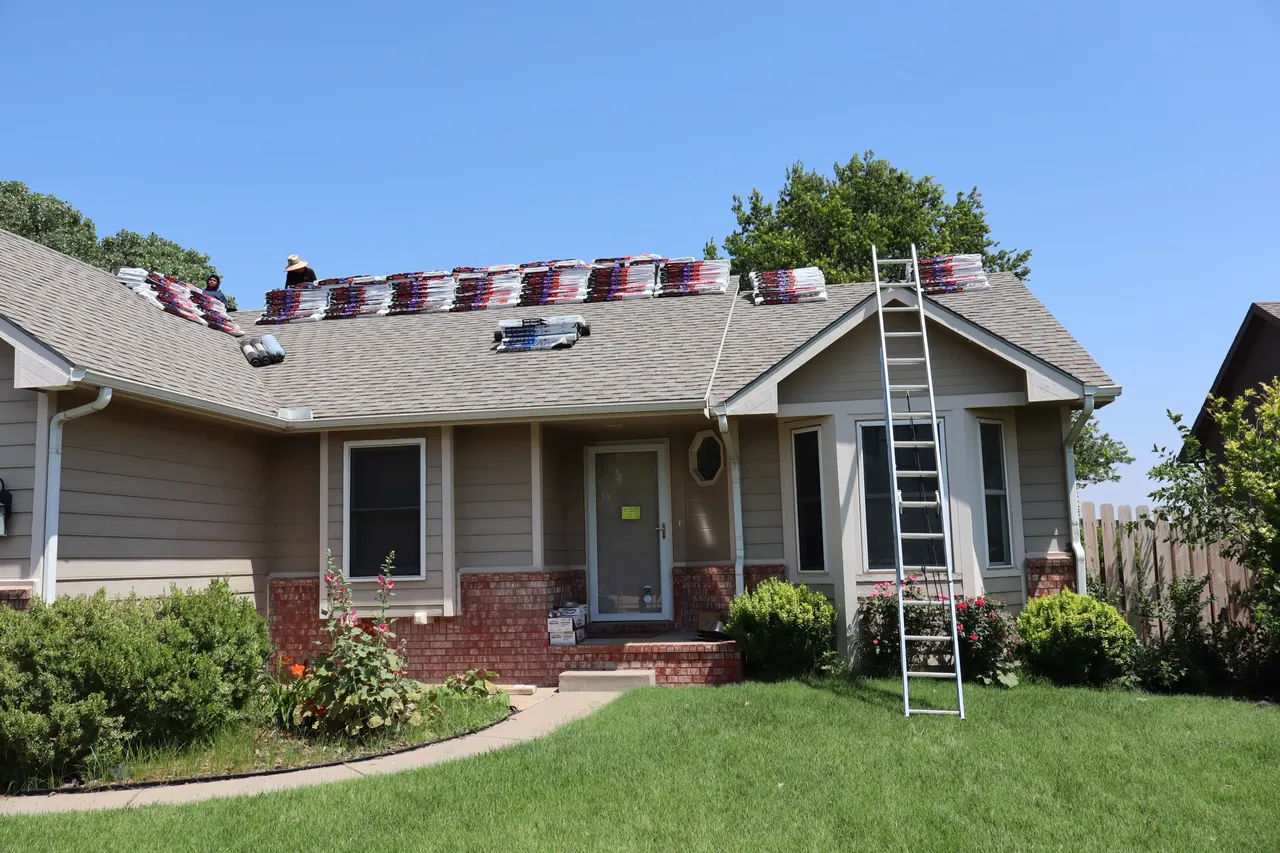
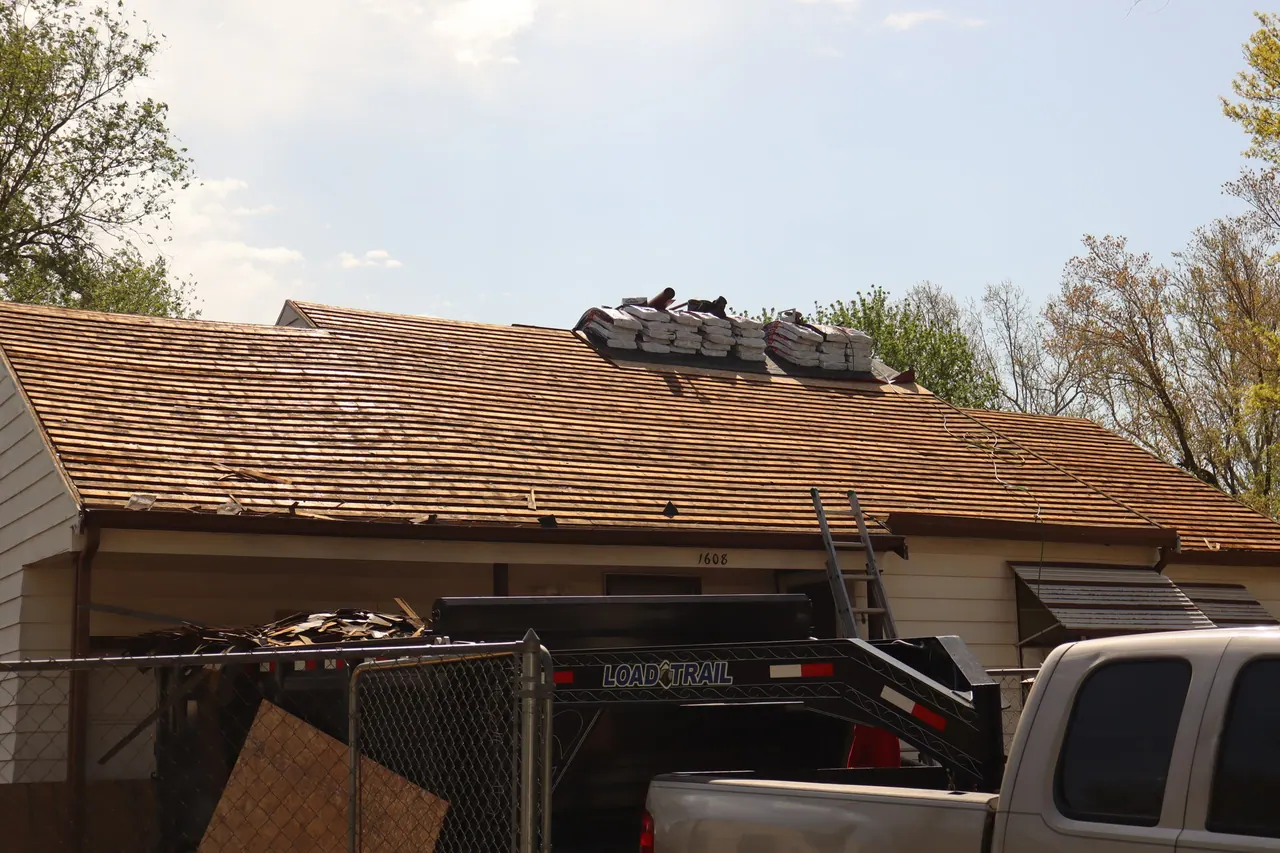
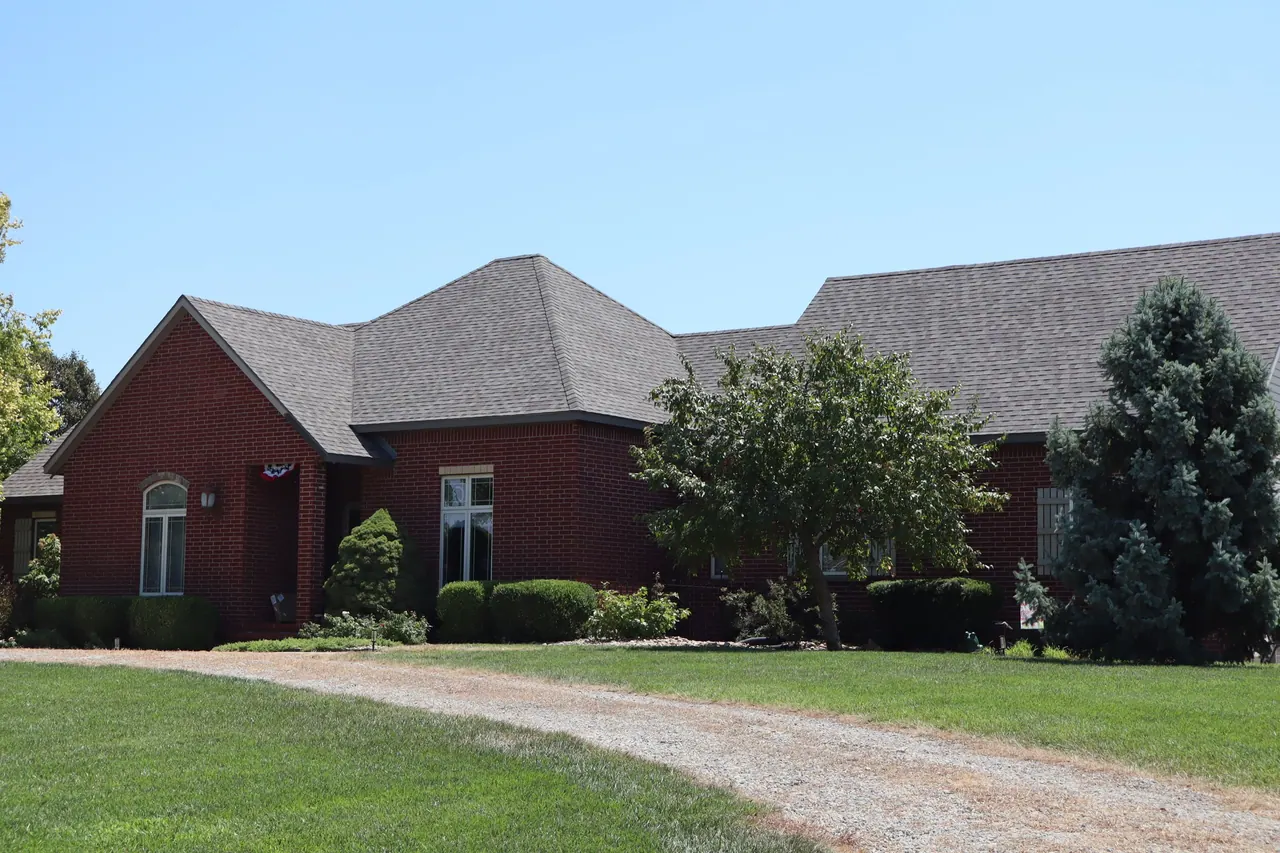
A brick and gray-siding ranch home during replacement: tear-off, crew setup, materials on site and the new architectural shingles going on.
What Gutter Size Works Best for Wichita Storms? The honest answer depends on your roof’s age, material and the damage we can document. A free inspection from Wichita Roofing Pros gives you photos, a plain-English explanation and a written next step — with no obligation. Hablamos Español.
Schedule a Free Roof InspectionCall (316) 742-1900Frequently Asked Questions About Gutter Size in Wichita
Is 6-inch gutter overkill for a small Wichita home?
Not for most Wichita homes. Even a 1,200-square-foot ranch home can have drainage areas per individual gutter run that exceed what 5-inch gutters handle well during intense local storms. The marginal cost difference between 5-inch and 6-inch aluminum gutters — typically a modest amount per linear foot — is small relative to the cumulative cost of foundation and fascia repairs that repeated gutter overflows cause over multiple years of deferred undersizing.
How many downspouts does a typical Wichita house need?
A typical Wichita ranch home needs at least four downspouts — one at each corner — with additional mid-run downspouts on any gutter section exceeding 35 to 40 linear feet. Two-story homes with larger drainage areas often need six to eight downspouts to handle peak storm flow without overtopping gutter channels during the intense convective events that define Wichita’s storm season.
Do seamless gutters last longer than sectional gutters in Wichita?
Seamless gutters generally outlast sectional gutters in Wichita’s environment because the absence of field seams eliminates the primary failure point. Gutter seams separate over time due to thermal expansion and contraction, a problem accelerated by Kansas temperature swings between winter cold and summer heat. Fewer seams means fewer leak locations and a longer overall service life for the system.
Can I upgrade just the downspouts without replacing the gutters?
Upgrading to larger downspouts helps when the gutter channel itself is not the limiting factor — for example, when a 6-inch gutter has undersized 2-by-3-inch downspouts. If the gutter channel is a 5-inch profile that is simply too small for the drainage area it serves, larger downspouts alone will not prevent overflow during peak storm events, and the full channel needs to be upgraded to resolve the problem.
How does gutter sizing relate to roof warranty coverage?
Most roofing material manufacturer warranties do not specify gutter sizing, but they do require that the roof drainage system prevent water from backing up under shingles or drip edge. An undersized gutter that chronically overtops against the fascia and eave can create moisture conditions that complicate workmanship warranty claims related to premature shingle edge deterioration, particularly if a post-storm inspection reveals evidence of long-term chronic overflow rather than damage caused by a sudden, discrete weather event. Keeping gutters sized correctly from the start avoids this ambiguity entirely.
Why do my gutters overflow in heavy rain?
Common causes are clogs, poor pitch, too few downspouts or gutters that are too small for the roof.
Can you repair gutters instead of replacing them?
Yes, when the system is sound. Resealing seams and resetting hangers fixes many issues.
Do you install gutters with roof replacements?
Yes. Wichita Roofing Pros installs gutters and guards and can coordinate them with your roof.