
Quick answerThe most common commercial roof problems in Wichita are ponding water on flat or low-slope membrane surfaces, seam failures in TPO and EPDM systems, mechanical penetration leaks around rooftop HVAC units and exhaust fans, blistering and membrane delamination from trapped moisture, and storm-induced edge and coping damage. These five categories account for the majority of commercial roof repair calls across the Wichita metro each year.
Commercial roofs in Wichita take punishment from the same storm environment that challenges residential properties, but they also face a set of problems unique to their flat and low-slope geometry, larger membrane surface areas, and the concentration of rooftop mechanical equipment that residential roofs never carry. Building owners and property managers in Wichita who understand the most common commercial roof failure modes are in a significantly better position to manage maintenance budgets, plan capital replacements, and avoid the operational disruptions that come with an uncontrolled interior water event.
The Wichita commercial real estate market spans everything from industrial warehouses near the airport to office parks in the eastern suburbs to retail centers throughout the metro. Each property type presents a slightly different profile of risk, but the fundamental failure modes repeat across virtually every building category. This guide addresses the most common commercial roof problems our team encounters when performing Commercial Roofing in Wichita inspections and repairs, along with what building owners should be watching for in their own maintenance programs.
Worried about your roof?Wichita Roofing Pros will check it for free and explain what we find in plain words.Book a Free Inspection or call (316) 742-1900
What Commercial Roof Problems Show Up Most in Wichita?
The most common commercial roof problems in Wichita are ponding water on flat or low-slope membrane surfaces, seam failures in TPO and EPDM systems, mechanical penetration leaks around rooftop HVAC units and exhaust fans, blistering and membrane delamination from trapped moisture, and storm-induced edge and coping damage. These five categories account for the majority of commercial roof repair calls across the Wichita metro each year.
Ponding water is the foundational problem on many older Wichita commercial buildings. Any flat roof that retains standing water for more than 48 hours after rainfall is experiencing drainage failure. Persistent ponding accelerates membrane degradation by maintaining constant hydrostatic pressure against the membrane and seams, promotes algae and vegetative growth that physically damages the surface layer, and adds structural load that was not part of the original design calculation. Many Wichita commercial buildings constructed before the mid-1990s were built with drainage slopes that do not meet current standards, making ponding a chronic maintenance issue rather than an occasional event.
Visit the Wichita roofing service area page for information on how Wichita Roofing Pros approaches commercial roof inspections and documentation across different building types and membrane systems throughout the metro area.
How Do Seam Failures Develop on Wichita Commercial Roofs?
Seam failures on Wichita commercial roofs develop through a combination of thermal cycling stress, installation deficiencies in the original weld or adhesive bond, and progressive UV degradation of the membrane material at the seam edge. In a climate with Wichita’s temperature range, from below-zero winter lows to 100-plus-degree summer highs, roofing membranes expand and contract by measurable amounts over each daily and seasonal cycle. Seams that were not welded to full-depth specification, or that used adhesive bonds that have aged beyond their service life, pull apart progressively over time.
TPO and PVC membranes use heat-welded seams that should form a monolithic bond when installed correctly. The weld quality is entirely dependent on the installer’s technique and the equipment condition at the time of installation. A seam that was welded at insufficient temperature, with contamination present, or by an undertrained installer may look correct for years before thermal cycling separates the bond at its weakest point. EPDM systems using tape adhesive seams are subject to the tape adhesive aging out, particularly in areas with consistent UV exposure at the seam overlap edge.
The NRCA roofing resources cover seam inspection protocols for each membrane type. Building owners in Wichita should require documentation of seam testing during any new commercial roof installation and include seam probe testing in annual maintenance inspection scopes.
These five categories account for the majority of commercial roof repair calls across the Wichita metro each year.
Top 7 Commercial Roof Problems Wichita Building Owners Should Monitor
- Ponding water areas that retain standing water beyond 48 hours – Mark all ponding zones on a roof plan during and after rainfall events. Persistent ponding areas require drainage correction through tapered insulation, drain repositioning, or scupper additions rather than membrane patching alone.
- Seam separations and open laps on membrane systems – Probe all seams during annual inspections using a blunt seam probe tool. Any seam section that opens under moderate hand pressure has already failed and will admit water during the next rain event without further warning.
- Flashing failures at mechanical unit curbs – Rooftop HVAC units, exhaust fans, and electrical equipment all sit on raised curbs that must be flashed to the membrane system. Curb flashing is subject to vibration stress from operating equipment and frequently separates at the termination point before the field membrane shows any visible wear.
- Edge metal and coping cap separation – Perimeter edge metal and parapet coping caps keep wind from lifting the membrane edge. When fasteners back out or sealant fails at coping joints, wind-driven rain enters the wall assembly and parapet, causing damage that appears as interior wall moisture rather than a visible roof leak.
- Membrane blistering from trapped moisture or gas – Blisters in a membrane surface indicate moisture or off-gassing below the membrane layer. Large blisters under foot traffic risk membrane puncture. Persistent blistering in a field area typically indicates inadequate adhesion to the insulation board below the membrane.
- Drain clogging and overflow scupper blockage – Wichita’s spring storm season deposits debris on flat commercial roofs regularly. Clogged primary drains and blocked overflow scuppers can raise standing water depth to the point where it overtops low parapets or backs up through penetrations during heavy rain events across the city.
- Storm-damaged walkway pads and membrane punctures – Service technicians who access rooftop equipment regularly can puncture or abrade membrane surfaces. Walkway pad placement and condition should be checked whenever any roof access is recorded in the building service log.
How Does Wichita’s Storm Season Affect Commercial Roof Maintenance Timing?
Wichita’s spring and early summer storm season creates a concentrated period of roof stress that makes pre-storm and post-storm inspection timing critical for commercial property managers. The NOAA National Weather Service Wichita storm reports show that the greatest concentration of large-hail and high-wind events occurs between April and July, making late March the ideal time for a pre-season inspection and any deferred maintenance repairs. Post-storm inspections after documented events allow damage to be catalogued before secondary weathering changes the physical evidence available to document.
Flat commercial roofs that sustain hail impact face a different damage profile than residential steep-slope shingles. TPO and EPDM membranes can absorb impacts that would fracture asphalt shingles, but large hail above 1.5 inches can puncture thinner membrane systems and damage the insulation boards below, creating moisture pathways that do not produce an immediate leak but accelerate thermal performance loss and eventual membrane failure. Documenting hail impact evidence with photographs and professional inspection notes is essential for commercial property insurance claims in Kansas.
Commercial buildings in Wichita should maintain a written roof inspection log that records every inspection date, findings, and repair action taken. This log is increasingly required by commercial property insurers and is essential for demonstrating that documented storm damage was not the result of deferred maintenance. The Commercial Roofing in Wichita team at Wichita Roofing Pros provides written inspection reports suitable for property files and insurance documentation on every commercial inspection we complete.
What Should Wichita Building Owners Include in a Commercial Roof Maintenance Plan?
A complete commercial roof maintenance plan for a Wichita building should include two scheduled inspections per year, one pre-storm in spring and one post-season in fall, plus immediate post-event inspections after any storm with documented hail over one inch or wind gusts exceeding 60 mph. Annual drain cleaning and flow testing, seam probe testing on membrane roofs every two years, and a written photographic record of all findings and completed work round out a defensible maintenance program.
Proactive maintenance extends commercial roof life significantly beyond the baseline design life of the membrane system. A well-maintained TPO system that receives regular seam inspection and prompt repair of identified open laps may last 25-30 years in the Wichita climate. The same membrane system without a maintenance program may require replacement in 15-18 years, with accelerating repair costs in the final years before replacement becomes unavoidable. The capital planning implications of this difference are substantial for any Wichita commercial property owner managing a multi-building portfolio.
Permit requirements for commercial roof work in Wichita follow City of Wichita building code requirements. Review the City of Wichita permits information for current requirements before scheduling any commercial roofing project that involves structural changes, drainage system modifications, or full membrane replacement. Wichita Roofing Pros manages permit coordination for commercial projects as part of our standard project management process. Contact the Wichita roofing service area team for a consultation on building a maintenance program appropriate for your specific property and membrane system type.
What Wichita weather does to low-slope roofs
Summer heat, UV, hail and heavy rain stress low-slope roofs differently than shingle roofs. Seams, flashings, drains and rooftop equipment curbs are the usual weak points, and ponding water speeds up wear.
Commercial roof inspection checklist for Wichita property owners
Property managers can track these items between professional inspections.
- Water ponding more than 48 hours after rain
- Open or lifted seams
- Blisters, cracks or shrinkage in the membrane
- Clogged drains, scuppers or gutters
- Damage around HVAC curbs and penetrations
- Loose or damaged edge metal
- Interior ceiling tile stains
- Debris or foot traffic damage near equipment
Low-slope roof systems at a glance
Commercial systems are chosen separately from residential materials.
| System | Strengths | Often used for |
|---|---|---|
| TPO single-ply | Reflective white surface, heat-welded seams | Offices, retail, warehouses |
| Modified bitumen | Multi-ply toughness, puncture resistance | Roofs with foot traffic, smaller low-slope areas |
| Repair & maintenance | Extends roof life, lower upfront cost | Roofs with isolated issues |
Commercial roof mistakes that shorten roof life
- Skipping post-storm inspections
- Letting drains clog
- Allowing unprotected foot traffic around equipment
- Patching over wet insulation
- Replacing a roof that a repair would have extended
What affects commercial roofing cost
Roof size, system type, insulation, number of penetrations, drainage changes, access and whether wet insulation must be removed. A maintenance plan spreads cost out and supports budgeting.
From our work: Commercial Membrane Roof
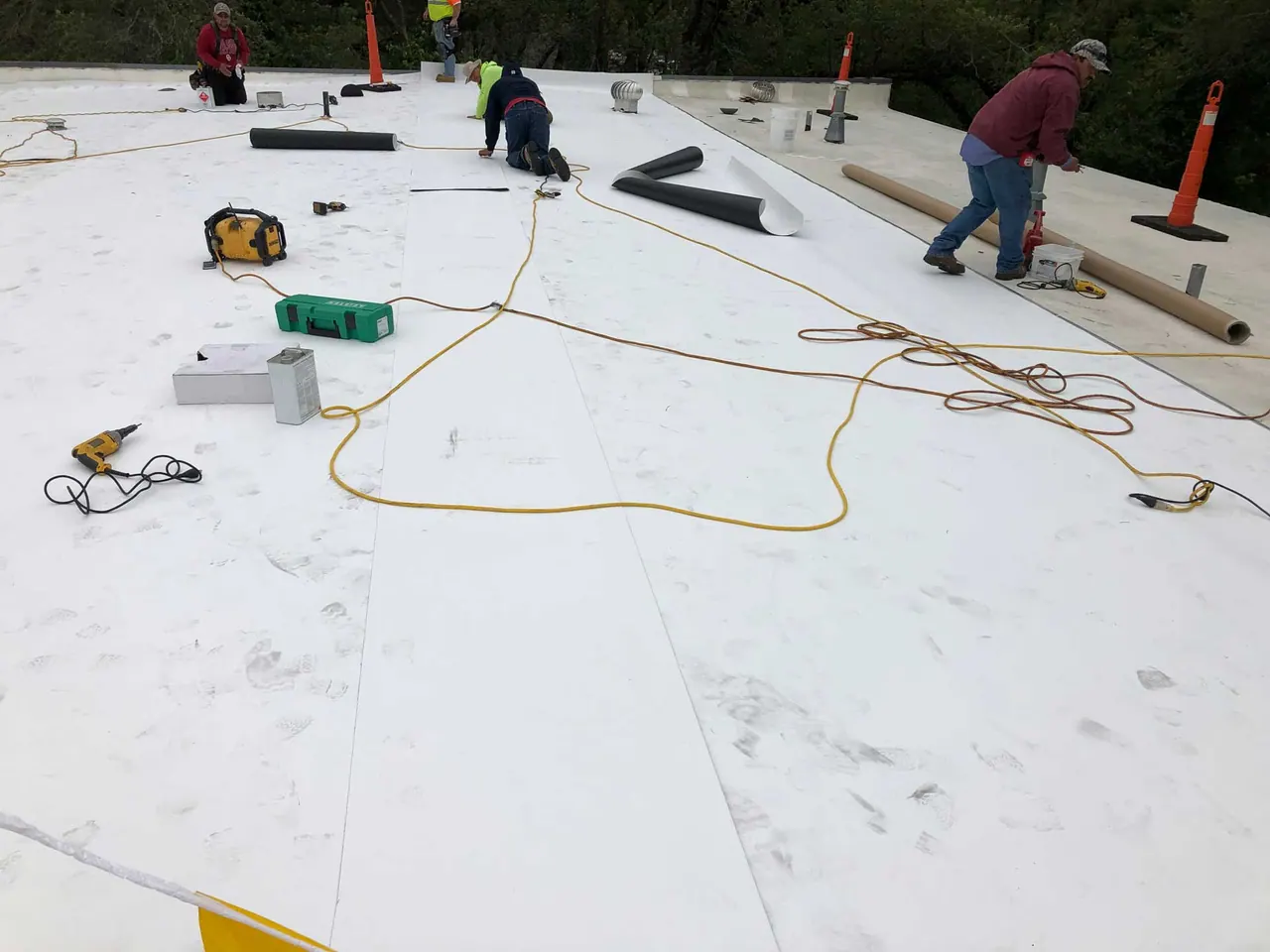
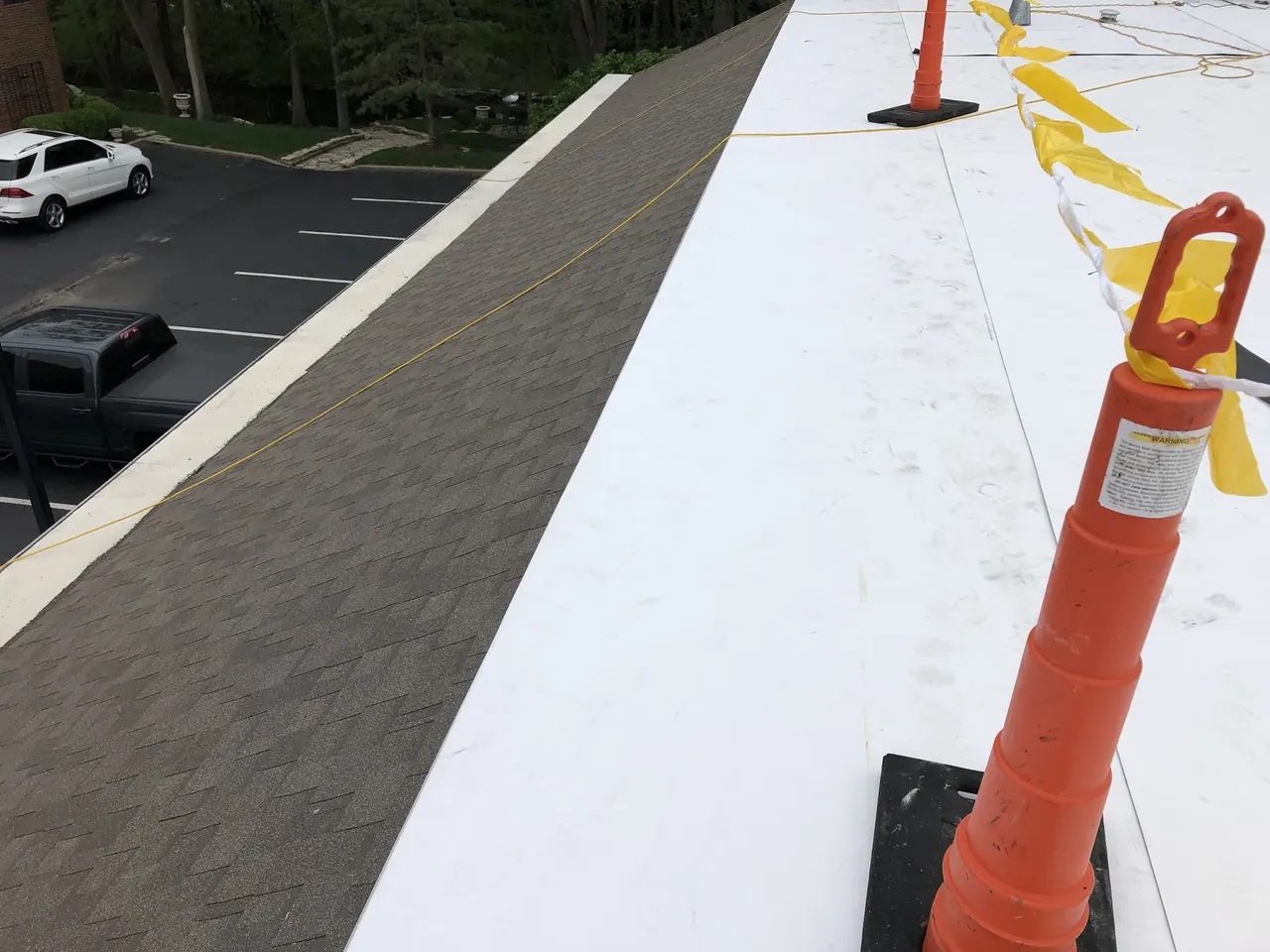
Insulation boards staged on the deck, then a white single-ply membrane rolled out, fastened and seamed across a low-slope commercial roof.
What Commercial Roof Problems Show Up Most in Wichita? The honest answer depends on your roof’s age, material and the damage we can document. A free inspection from Wichita Roofing Pros gives you photos, a plain-English explanation and a written next step — with no obligation. Hablamos Español.
Schedule a Free Roof InspectionCall (316) 742-1900Frequently Asked Questions About Commercial Roof Repair in Wichita
How often should a commercial roof be inspected in Wichita?
Commercial roofs in the Wichita area should be professionally inspected at minimum twice per year, with a pre-storm season inspection in late March or early April and a post-season review in October or November. Any documented storm event with hail over one inch or wind speeds above 60 mph warrants an additional inspection within two weeks of the event to capture damage evidence while it is still clearly attributable to that specific storm rather than background wear from normal aging.
What is the typical lifespan of a commercial roof in Wichita?
TPO and EPDM membrane systems carry design lives of 20-25 years under standard conditions. Modified bitumen systems run 15-20 years. Built-up roofing on older Wichita commercial buildings may have already exceeded its design life if it has not been replaced or recovered. Wichita’s climate shortens these timelines compared to milder regions due to UV intensity and temperature cycling. A well-maintained system with a documented service record can reach the upper end of its design life range; a neglected system typically requires replacement significantly earlier.
Can commercial roof repair be done while my Wichita building is occupied?
Most commercial roof repairs can be completed while a building remains occupied. Wichita Roofing Pros coordinates work schedules to minimize disruption to tenants and business operations. Solvent-based adhesives and certain repair materials have odor requirements that may require temporary ventilation adjustments. Full membrane replacement projects on occupied buildings are typically scheduled in phases or during lower-occupancy periods to manage disruption to building operations and tenant comfort effectively.
Does my commercial property insurance cover roof hail damage in Wichita?
Commercial property insurance in Kansas typically covers sudden hail damage when documented properly and claimed within the policy’s reporting window. Commercial policies often carry higher deductibles than residential policies and may include depreciation schedules that reduce the actual cash value payout on older roof systems. Review your specific policy declarations with your broker before a storm event so you understand your deductible and coverage terms and can act quickly with proper documentation after any hail event.
What permits are required for commercial roof replacement in Wichita?
Commercial roof replacement in Wichita requires a building permit from the City of Wichita’s development services department in most cases. The permit requirement covers full tear-off and replacement, structural modifications to the deck or drainage system, and significant additions to rooftop mechanical equipment bases. Routine membrane repairs and maintenance work below a certain scope threshold may not require a permit, but the threshold varies by project scope. Wichita Roofing Pros handles permit coordination as a standard part of every commercial replacement project we manage in the Wichita area.
Commercial roof problems in Wichita are manageable when building owners have accurate information and a consistent maintenance plan in place before failures escalate into major interior damage. Schedule a Wichita Roofing Pros roof inspection for your commercial property and get a documented starting point for your building’s ongoing maintenance program before the next storm season arrives.
How often should a commercial roof be inspected?
At least twice a year and after major storms.
Is ponding water a problem?
Water that stays more than about 48 hours speeds up wear and should be evaluated.
Can a TPO roof be repaired?
Yes. Seams and punctures can often be repaired when the rest of the membrane is sound.




