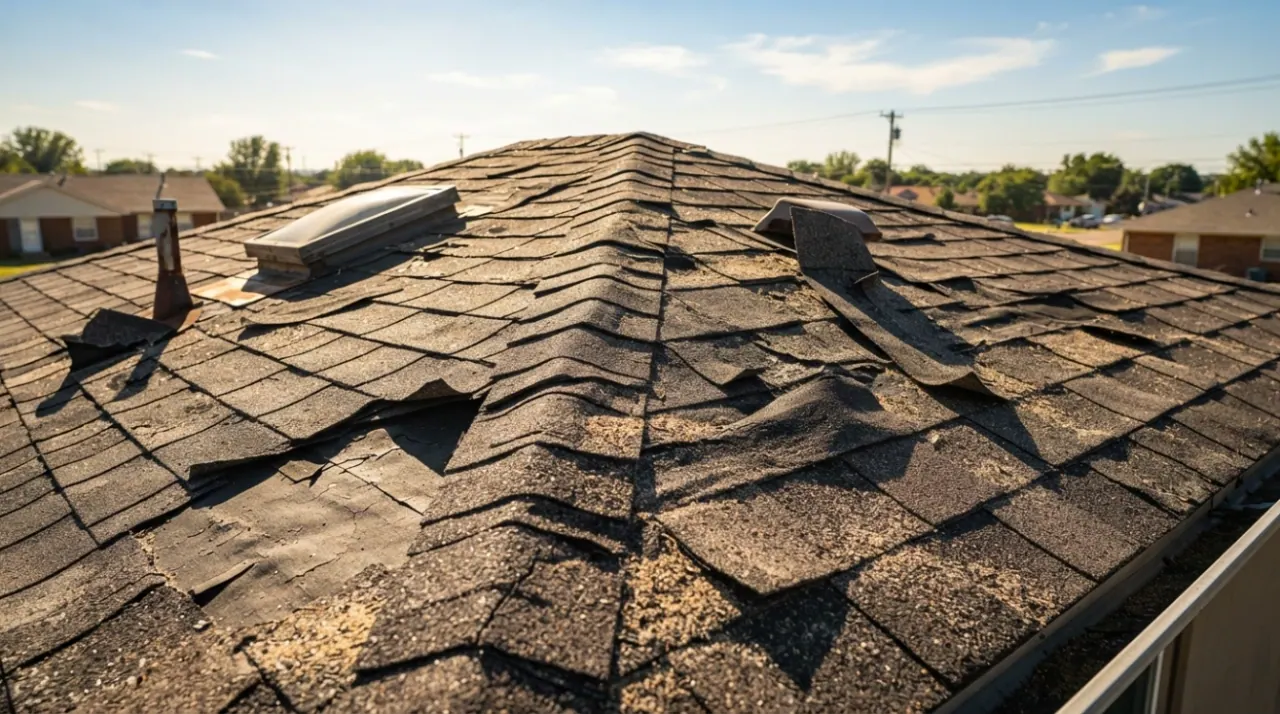
Quick answerYes. Prolonged heat can contribute to roofing-material stress, particularly when it is combined with strong UV exposure, aging materials, limited attic airflow, or repeated heating and cooling cycles.
Long stretches of hot Kansas weather can put extra stress on a roofing system, especially when strong sunlight, attic heat, roof age, and repeated day-to-night temperature changes work together. Summer heat roof damage does not always appear as one dramatic failure. More often, homeowners notice gradual changes in shingles, surface condition, flashing, or attic comfort.
That does not mean every curled shingle or handful of loose granules was caused by heat. Roof age, installation, ventilation, previous storms, material type, and normal weathering all matter. The goal is to recognize changes early enough to determine whether they are normal aging or a sign the roof deserves a closer look.
Worried about your roof?Wichita Roofing Pros will check it for free and explain what we find in plain words.Book a Free Inspection or call (316) 742-1900
Can Summer Heat Really Damage a Roof?
Yes. Prolonged heat can contribute to roofing-material stress, particularly when it is combined with strong UV exposure, aging materials, limited attic airflow, or repeated heating and cooling cycles. However, heat damage to roof components is rarely diagnosed from temperature alone.
During a sunny Wichita afternoon, the roof surface can become much hotter than the outdoor air. After sunset, those materials cool again. This repeated movement can contribute to roof thermal expansion, while shingles and other components are also exposed to sunlight, wind, moisture, and previous weather events.
Homeowners asking whether extreme heat can damage a roof should therefore think of heat as one factor in the roof’s overall environment rather than an automatic explanation for every defect.
7 Warning Signs of Summer Heat Roof Damage
These seven conditions can be worth watching during or after a long, hot summer. Each one can have several possible causes, so a visible symptom should not be treated as a confirmed diagnosis by itself.
1. Shingles Beginning to Curl or Distort
Shingle edges that appear raised, curled, cupped, or otherwise different from nearby sections deserve attention. Homeowners often associate roof shingles curling from heat with hot weather, but age, moisture conditions, installation quality, ventilation, and product wear can also contribute.
If you are wondering whether heat can cause shingles to curl, the answer is that sustained heat may contribute to material stress, but the pattern and surrounding roof condition matter.
From the ground, compare the affected area with nearby roof slopes. Widespread distortion, exposed edges, or noticeable movement may justify a professional evaluation rather than assuming the condition is purely cosmetic.
2. Cracks or Brittle-Looking Roofing Material
As roofing materials age, repeated exposure to sunlight and temperature changes can gradually reduce flexibility. Small cracks, brittle-looking areas, or surface deterioration may become easier to notice. Searches for cracked roof shingles from heat often assume temperature is the only cause. In practice, cracking may reflect a combination of UV exposure, age, previous weathering, material condition, and thermal cycling.
Similarly, the answer to whether heat can cause roof cracks is not simply yes or no. Heat can contribute to stress, but cracking should be evaluated alongside the roof’s age and history.
Avoid bending, lifting, or testing shingles yourself. A roofing professional can assess whether the material still appears serviceable without disturbing the roof unnecessarily.
3. Unusual Granule Accumulation
Asphalt shingles naturally lose some surface granules over time. Homeowners may notice them near downspouts, in gutters, or around drainage areas. What people sometimes describe as shingle granule loss from heat may actually have several causes, including ordinary aging, foot traffic, hail, manufacturing characteristics, drainage patterns, and long-term weather exposure.
A small amount of granule shedding does not automatically mean the roof is failing. More noticeable or accelerating loss, especially when combined with visible surface wear, may be more meaningful.
This is also a useful place to distinguish gradual heat-related wear from impact-related conditions. If the change appeared after severe weather rather than gradually through the summer, the cause may need to be evaluated differently.
4. Blister-Like or Raised Surface Areas
Small raised or blister-like areas on shingles can attract attention because they look different from the normal surface texture. What a homeowner describes as roof blistering from heat should not automatically be blamed on hot weather alone.
Material manufacturing, moisture, ventilation conditions, roof age, and other factors can influence surface appearance. Popping or scraping these areas is not a good diagnostic method and can damage the roofing surface.
Instead, note where the condition appears and whether it is isolated or widespread. A professional can compare the surface condition with surrounding materials and look for other evidence before recommending any action.
5. Excessive Heat in the Attic
A hot attic during a Kansas summer is expected to some degree. The concern is not simply that the attic feels hot, but whether airflow, insulation, roof design, and ventilation are functioning as intended. Attic heat and roof damage are often discussed as though attic temperature alone determines roof performance. It does not. The relationship is more complicated.
Balanced intake and exhaust airflow can help manage attic conditions. Blocked soffit vents, inadequate airflow paths, insulation placement, or other configuration issues may influence temperatures and moisture movement. Because poor attic ventilation can lead to roof damage, homeowners should avoid diagnosing ventilation performance solely from how warm the attic feels on one summer day.
6. Changes Around Flashing, Seals, or Roof Edges
Roofing materials do not all expand, contract, and age in exactly the same way. Flashing, seal points, fasteners, roof edges, penetrations, and adjoining materials may respond differently to repeated temperature changes.
Over time, movement can place additional stress on vulnerable connections, especially if the area was already worn or poorly installed. From the ground, homeowners may notice lifted edges, displaced pieces, visible gaps, or other changes. These roof heat damage signs do not prove heat is the cause, but they can indicate that a detail deserves closer inspection.
If the same area has also experienced strong wind, hail, or previous water entry, those factors should be considered separately rather than labeling everything as hot weather roof damage.
7. Roof Wear Appearing Faster Than Expected
Sometimes the warning sign is not one isolated crack or curled edge. Instead, the roof seems to be aging unevenly or more quickly on certain slopes. Sun exposure, orientation, shade, roof pitch, material type, attic design, installation, and previous weather can all influence how different sections age.
That is why signs of heat damage on roof surfaces may be more noticeable on one side of a home than another. If several summer roof warning signs appear together, such as distortion, surface wear, granule loss, and changes around roof details, it may be worth having the condition evaluated rather than focusing on one symptom alone.
The goal is to recognize changes early enough to determine whether they are normal aging or a sign the roof deserves a closer look.
How Heat Affects Roof Shingles Over Time
Understanding how heat affects roof shingles requires looking at more than outdoor temperature. During the day, shingles absorb solar energy. At night, they cool. This repeated expansion and contraction occurs alongside UV exposure, rain, wind, attic conditions, and normal aging. Older materials may have less flexibility than newer ones, making existing deterioration easier to notice.
This is why extreme heat roof damage is better understood as accumulated stress rather than a single hot afternoon suddenly destroying an otherwise healthy roof. The same principle applies to summer roof damage more broadly: heat may accelerate an existing weakness without necessarily creating that weakness by itself.
How Attic Ventilation Affects a Roof During Summer
Proper roof ventilation in summer helps move air through the attic using a combination of intake and exhaust ventilation. Soffit vents often serve as intake points, while ridge vents or other exhaust components allow warmer air to leave. The specific design varies from house to house, and adding more ventilation is not automatically better if the system is poorly balanced.
Ventilation should also be considered alongside insulation, attic configuration, moisture conditions, and roof design. Wichita homeowners concerned about unusually hot attic conditions can have the overall residential roofing system evaluated rather than assuming temperature alone proves a ventilation defect.
Why Wichita Roofs Respond Differently to Summer Heat
Two homes on the same street can experience the same outdoor temperature yet show very different roof conditions. Differences may include roof orientation, slope, attic layout, ventilation, tree shade, age, material, color, previous hail exposure, and installation details. A south- or west-facing roof area may receive different solar exposure than a shaded slope.
That is why answering how hot weather affects a roof requires property-specific context. Kansas weather also adds another variable. A roofing system that has already experienced hail, high winds, or heavy rain may respond differently to another season of heat than a roof with less previous exposure.
Heat Damage or Normal Roof Aging: How Can You Tell?
The difference usually comes from pattern, severity, timing, and the overall condition of the roof. Normal aging tends to develop gradually. Potentially concerning deterioration may appear unusually concentrated, widespread, accelerated, or accompanied by other symptoms such as displaced materials, visible openings, moisture problems, or significant surface changes.
Heat-damaged shingles should therefore not be diagnosed by appearance alone. A professional may review material condition, age, attic ventilation, flashing, roof slopes, penetrations, previous weather exposure, and surrounding components before deciding what the symptom means. If the concern involves localized roofing problems, Wichita Roofing Pros can help homeowners understand whether the condition appears limited or part of a broader pattern.
When Should a Homeowner Have the Roof Evaluated?
Consider professional evaluation when several symptoms develop together, the roof’s appearance changes noticeably, materials appear displaced or brittle, or you see conditions you cannot safely assess from the ground. Do not climb onto a hot, steep, unfamiliar, or visibly damaged roof simply to investigate a suspected problem. High roof-surface temperatures can also make roofing materials more vulnerable to unnecessary foot traffic.
A professional assessment can help distinguish roof damage from heat from normal aging, previous storm effects, installation issues, or another roofing condition. Wichita Roofing Pros can also help homeowners understand whether monitoring is reasonable or whether a specific condition deserves further attention.
How Can Homeowners Reduce Unnecessary Heat Stress?
Homeowners cannot control Wichita summer temperatures, but they can pay attention to the overall roof-and-attic system. Keep visible exterior vents free from obvious obstructions, avoid covering soffit airflow during other home projects, watch for changing roof conditions from the ground, and address attic moisture or ventilation concerns when they appear.
Regular observation is more useful than trying to diagnose a roof from one hot day. The question does summer heat shortens roof life depends heavily on material, installation, ventilation, exposure, age, and maintenance, not temperature alone.
Frequently Asked Questions
Can extreme heat damage a roof?
Yes, prolonged heat can contribute to roofing-material stress, particularly when combined with UV exposure, age, ventilation problems, and repeated temperature changes. It should not be treated as the sole cause of every visible defect.
Can heat cause shingles to curl?
Heat may contribute to shingle distortion, but curling can also be related to age, moisture, ventilation, product condition, or installation. The surrounding roof should be evaluated before assigning a cause.
Can heat cause roof cracks?
Repeated temperature cycles and UV exposure may contribute to material aging and brittleness. Cracks can also have other causes, so their pattern and the roof’s overall condition matter.
Does summer heat shorten roof life?
It can contribute to long-term material stress, but roof longevity also depends on product type, installation, ventilation, maintenance, weather history, and exposure.
Is granule loss always caused by heat?
No. Asphalt shingles can lose granules because of age, weather exposure, impact, foot traffic, manufacturing characteristics, and other factors. Granule loss should be evaluated in context.
Should I worry if my attic gets very hot in summer?
Not automatically. Attics can become very warm in summer. Concerns are better evaluated by looking at ventilation design, airflow, insulation, moisture conditions, and the overall roofing system.
Can heat-related roof wear lead to water problems?
Material deterioration or movement around vulnerable roof details may eventually make water entry more likely, but visible heat wear does not automatically mean a leak exists. New moisture should be evaluated as a separate water-entry concern.
Should I have my roof checked after an unusually hot summer?
An evaluation can make sense if you notice new curling, cracking, surface deterioration, displaced materials, unusual granule loss, or several symptoms appearing together. If nothing has visibly changed, routine observation may be sufficient.
Timing a replacement around Kansas weather
Spring and summer are busy after storms. Most residential replacements take one to a few days once materials arrive, and dry, mild days are ideal for installation.
Signs it may be time to replace, not repair
One sign alone does not always mean replacement. Several together usually do.
- Roof age near or past 20 years
- Widespread granule loss or bald shingles
- Curling, cupping or cracked shingles across slopes
- Repeated leaks in different spots
- Soft or sagging decking
- Storm damage on multiple slopes
- Daylight through attic boards
- Neighbors replacing roofs after the same storm
What happens during a full roof replacement
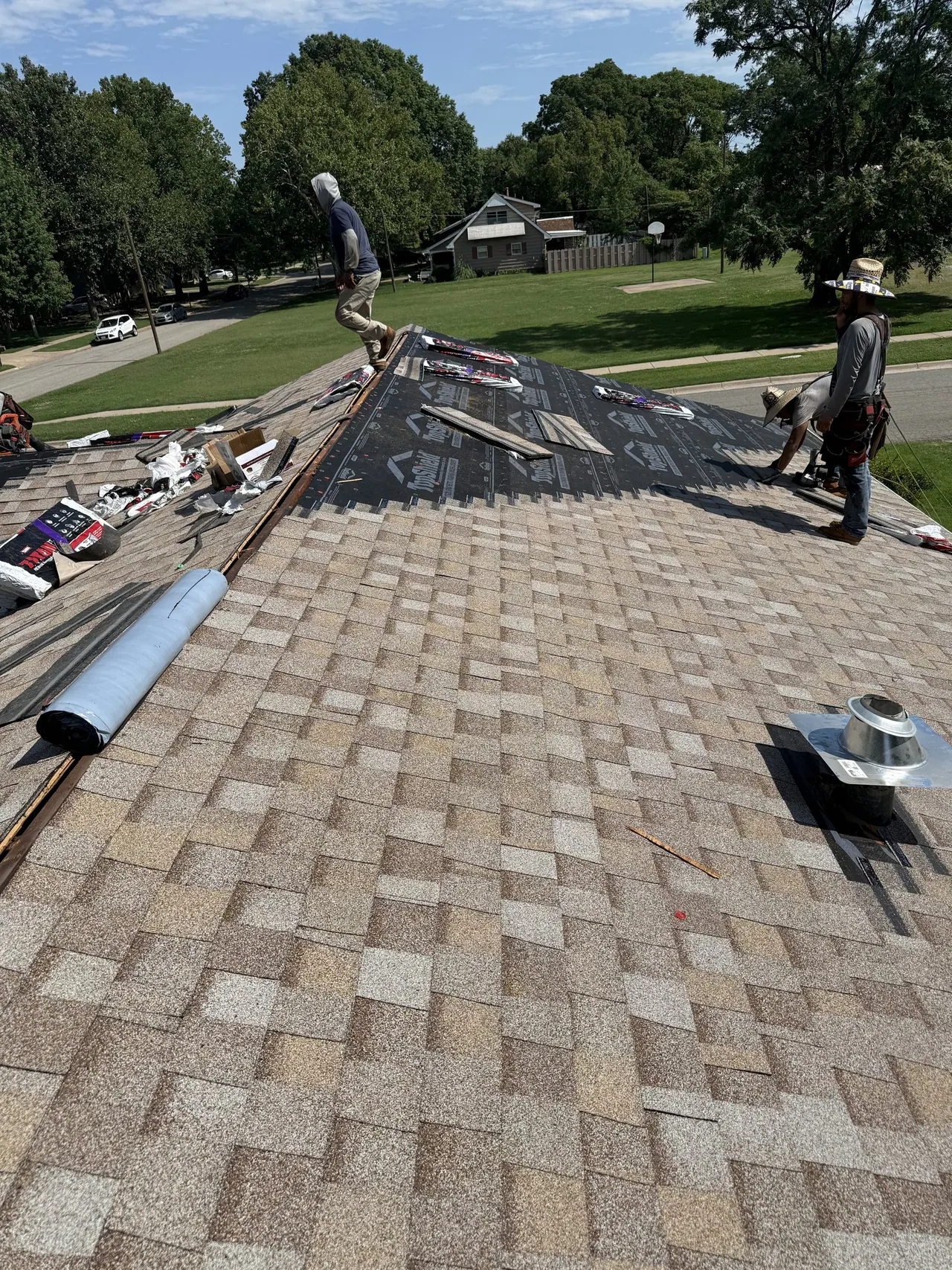
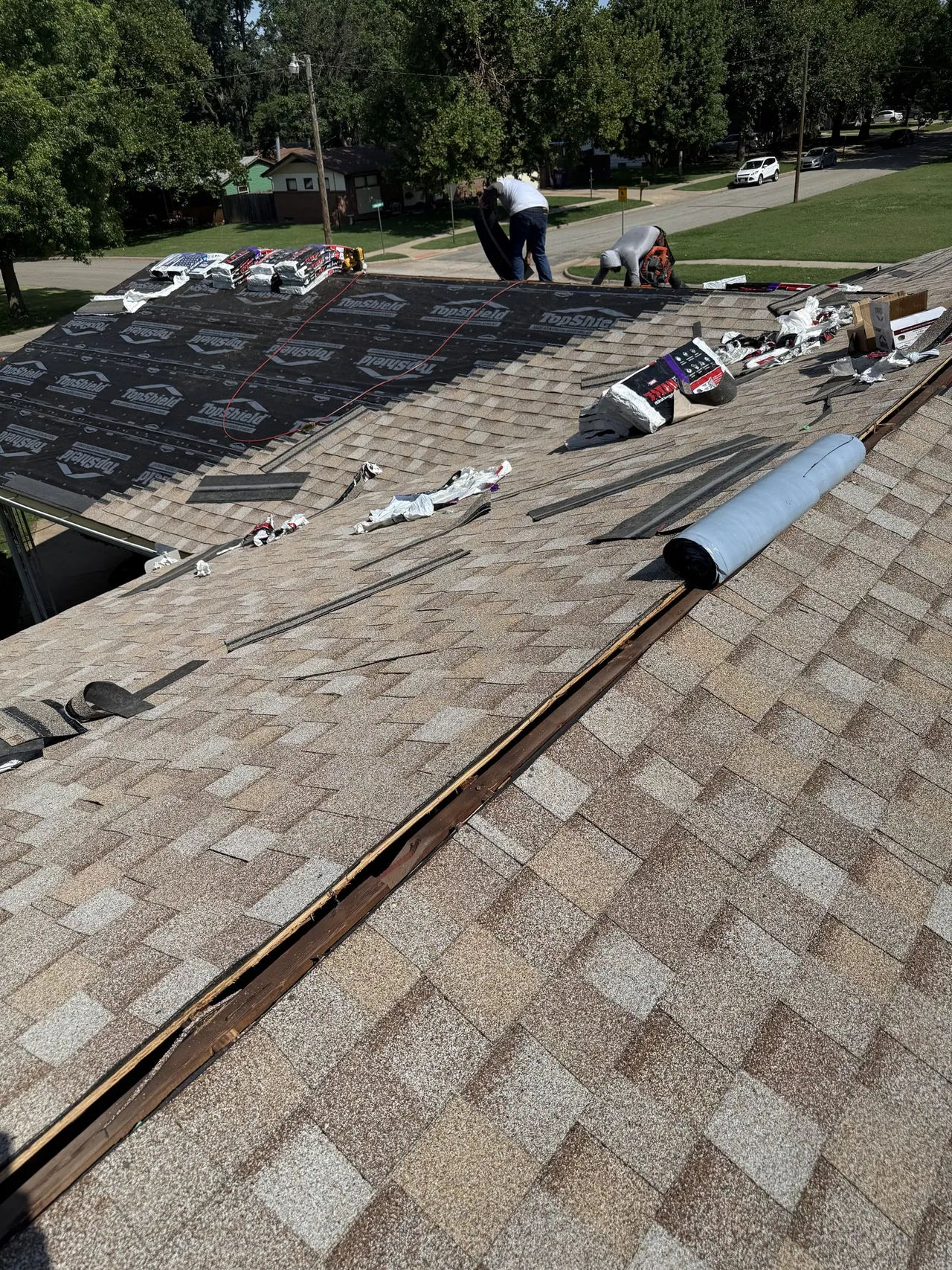
Here is the typical order of work on a Wichita Roofing Pros replacement.
- Protect the property. Tarps, landscaping protection and a dumpster or trailer.
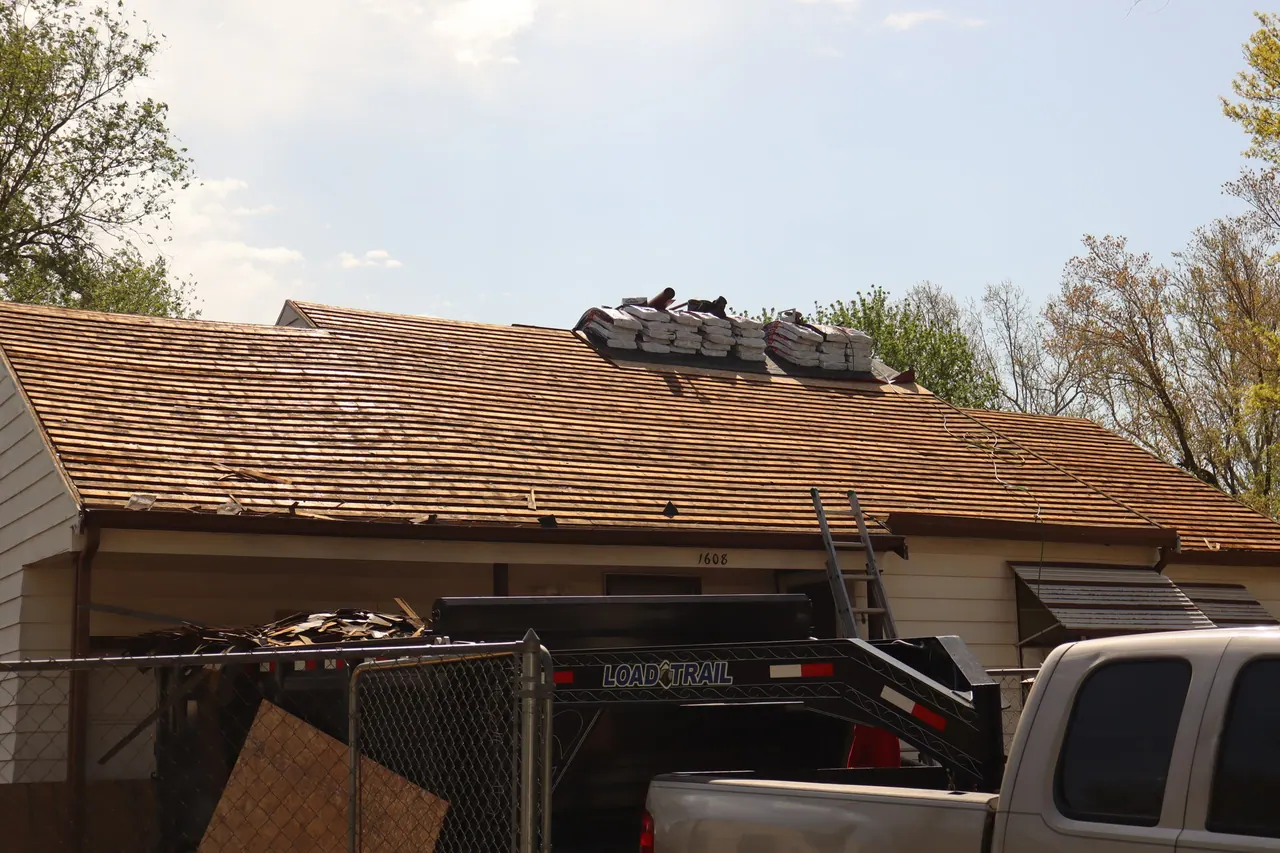
- Tear off. Old shingles and underlayment come off down to the deck.
- Inspect and repair decking. Soft or rotted boards are replaced.
- Install the system. Underlayment, ice and water shield, flashing, shingles and ridge.
- Clean up and walk through. Magnet sweep, final review and warranty paperwork.
Replacement mistakes homeowners regret
- Choosing on price alone without a written scope
- Skipping decking and ventilation checks
- Not confirming Kansas roofing registration
- Overlaying new shingles on a failing roof
- Not asking how the warranty transfers
What affects roof replacement cost in Wichita
Roof size in squares, pitch and complexity, number of layers, decking repairs, material choice and accessories. Our basic price is $505 per roofing square (100 sq ft), confirmed in writing after a free inspection. Financing is available through Wisetack for qualifying projects.
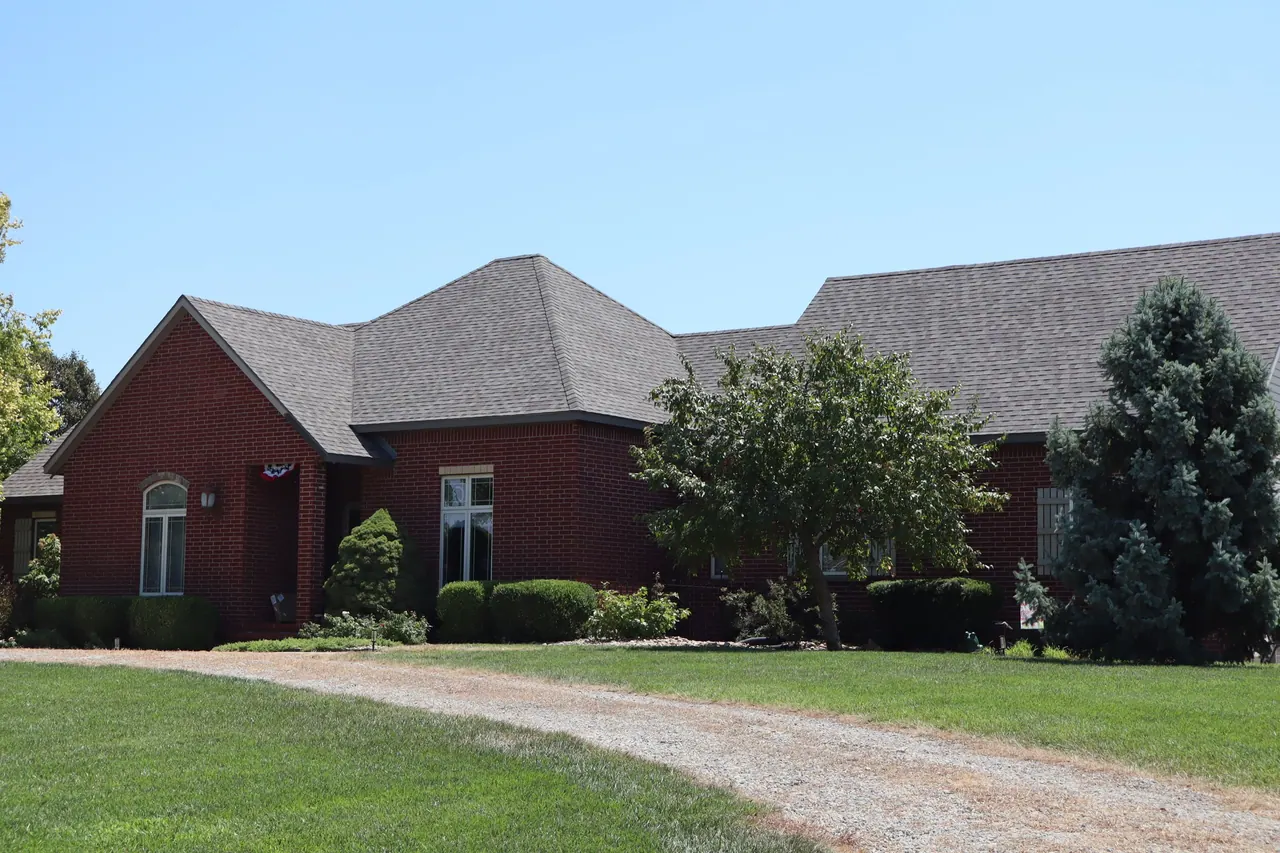
From our work: Brick Ranch Roof Replacement
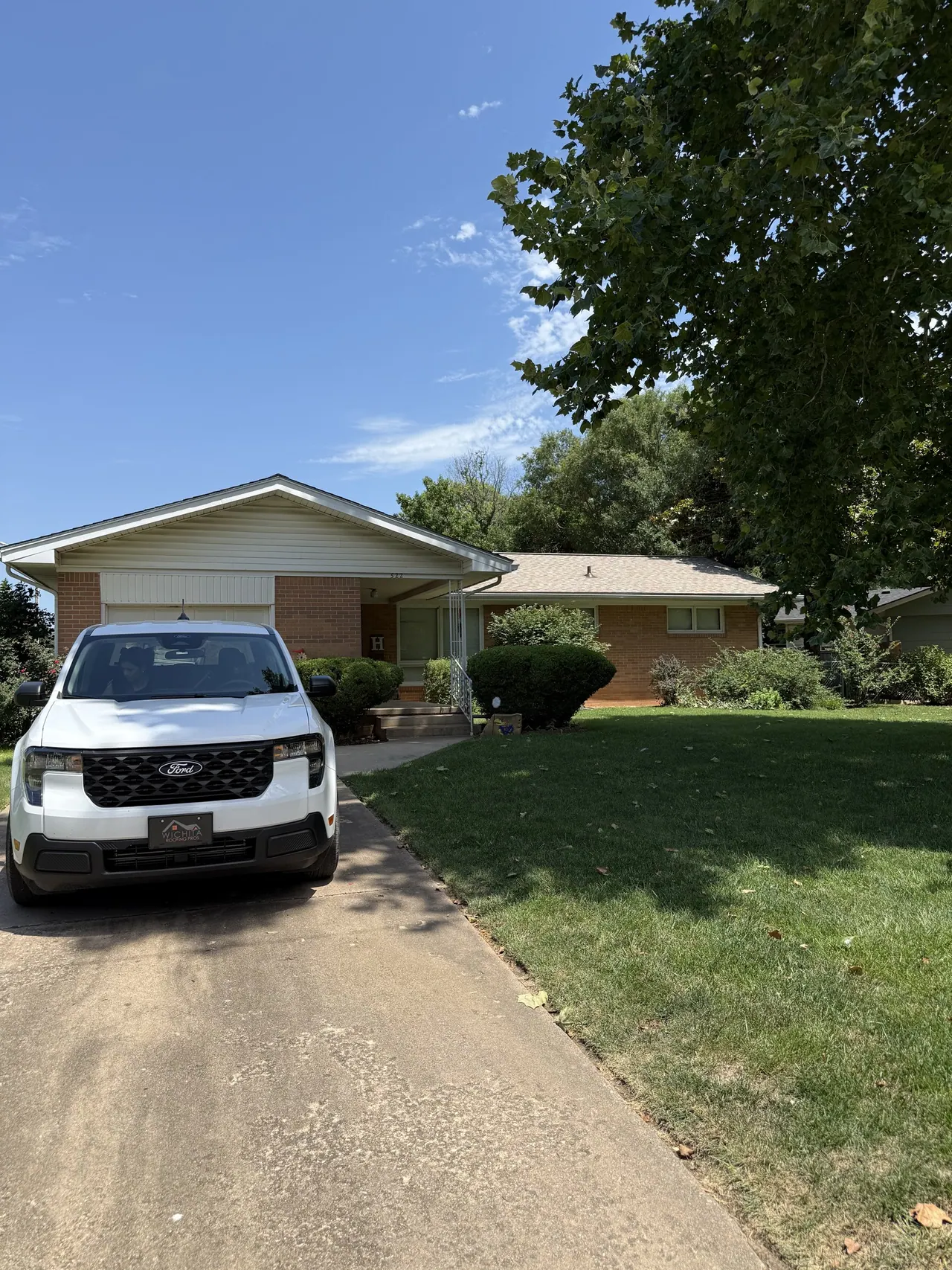
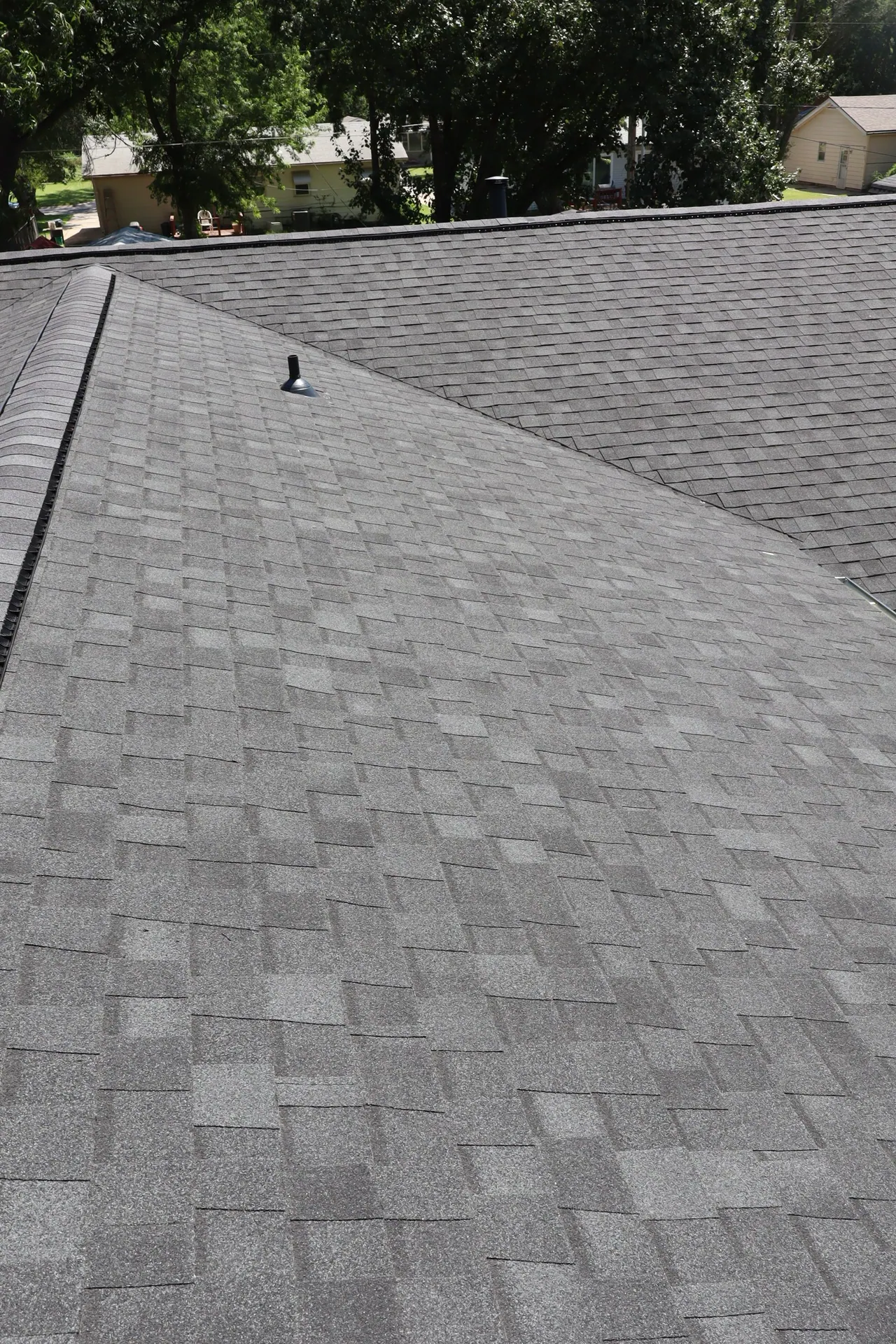
The original gray shingles on this brick ranch were weathered along the ridge and edges. The crew tore the roof off, installed new architectural shingles and a straight new ridge line, and the home was photographed again from the same spots after completion.
Summer Heat Roof Damage: 7 Warning Signs Homeowners Should Watch For? The honest answer depends on your roof’s age, material and the damage we can document. A free inspection from Wichita Roofing Pros gives you photos, a plain-English explanation and a written next step — with no obligation. Hablamos Español.
Schedule a Free Roof InspectionCall (316) 742-1900More Questions
Is financing available?
Yes, through Wisetack for qualifying projects. Checking options will not affect your credit score.
Do you offer a warranty?
Yes. New roofs include our lifetime transferable workmanship warranty, with manufacturer upgrades available.
Will you clean up after the job?
Yes. Cleanup and a final walkthrough are part of every replacement.