
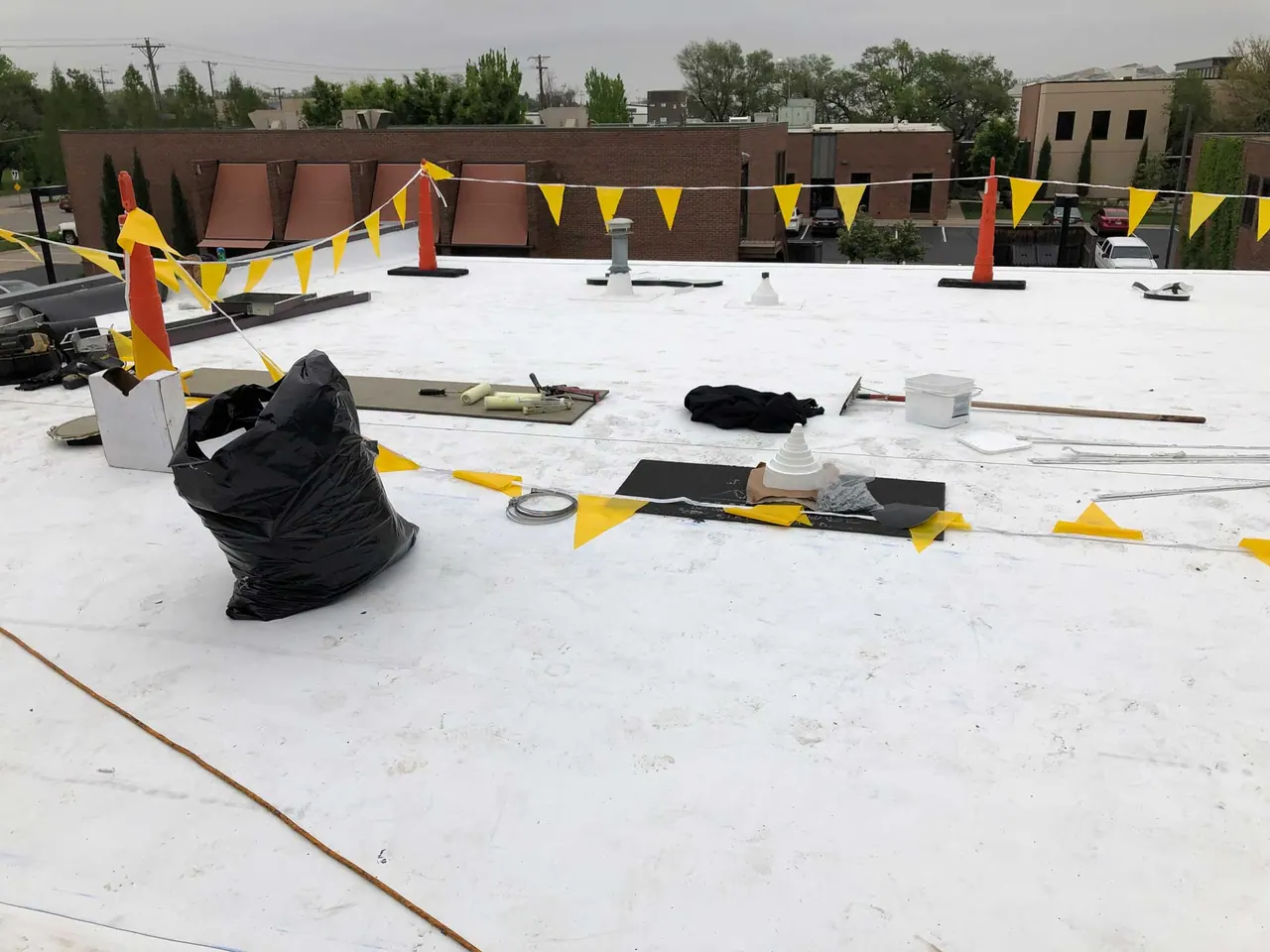
Quick answerTPO stands for thermoplastic polyolefin, a single-ply membrane typically made from polypropylene and ethylene-propylene rubber blended together. It is installed in large rolls, either mechanically fastened to the roof deck, adhered with bonding adhesive, or ballasted with stone.
TPO roofing has become the go-to membrane system for flat and low-slope commercial buildings across Wichita, KS. Its reflective white surface, heat-welded seams, and resistance to UV degradation make it a practical choice for the wide temperature swings and hail events that define south-central Kansas weather. Still, business owners and property managers regularly ask how long a TPO roof actually holds up under real Wichita conditions before major repairs or replacement become necessary.
The honest answer depends on four variables: installation quality, membrane thickness, maintenance frequency, and how hard the local climate pushes the system. A well-installed 60-mil membrane that receives annual inspections can realistically last 20 to 30 years in the Wichita area. A thinner 45-mil system with deferred maintenance and ignored seam separations may start failing within a decade. Understanding what drives that difference helps building owners make smarter decisions at every stage of ownership.
Worried about your roof?Wichita Roofing Pros will check it for free and explain what we find in plain words.Book a Free Inspection or call (316) 742-1900
Learn more about TPO Roofing in Wichita and what installation options are available for your property.
What Is TPO Roofing and Why Do Wichita Buildings Use It?
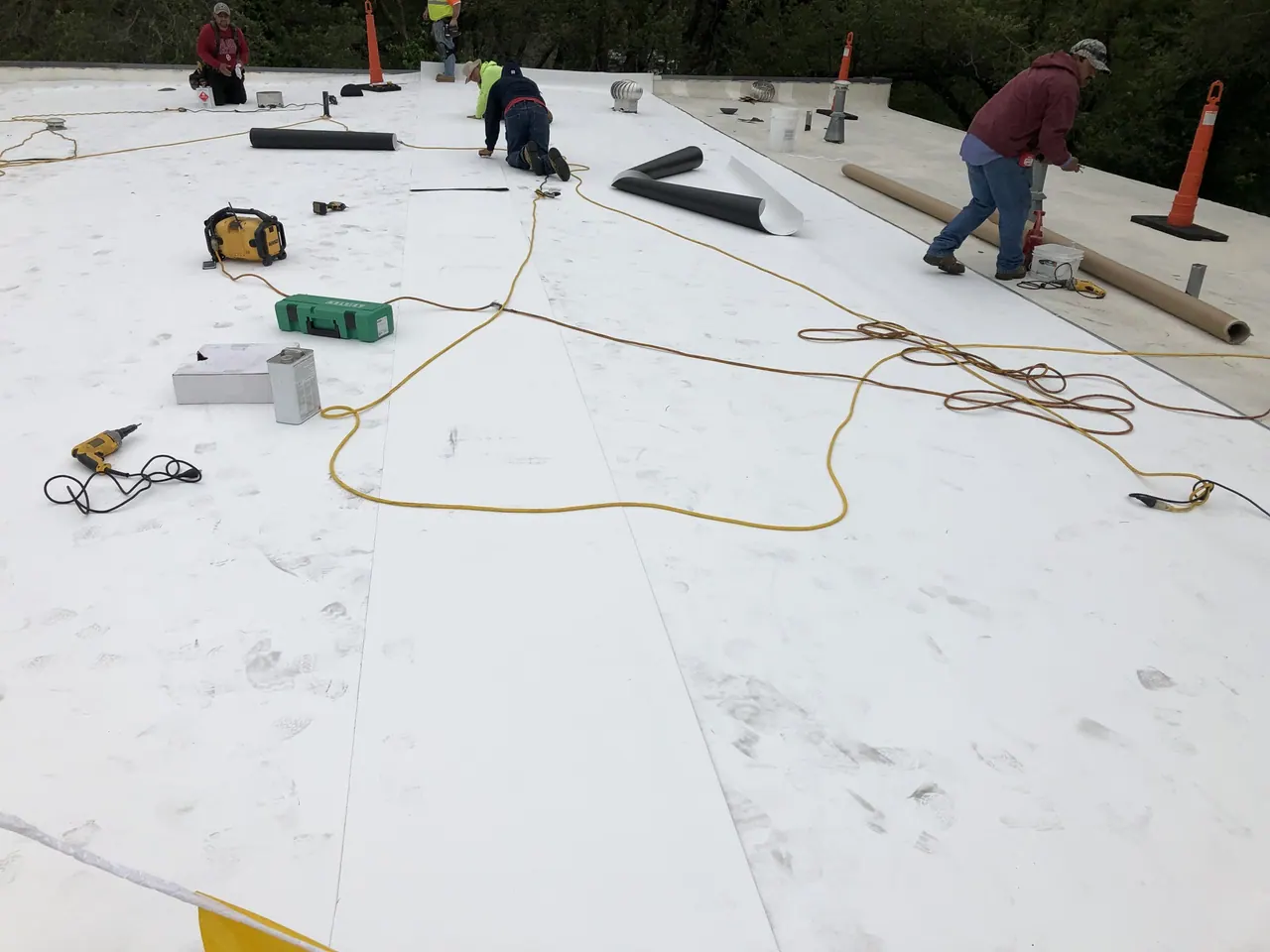
TPO stands for thermoplastic polyolefin, a single-ply membrane typically made from polypropylene and ethylene-propylene rubber blended together. It is installed in large rolls, either mechanically fastened to the roof deck, adhered with bonding adhesive, or ballasted with stone. The seams between rolls are heat-welded with a hot-air gun, creating a bond that is often stronger than the membrane itself when done correctly.
Wichita’s commercial building stock is heavily weighted toward low-slope or flat roofs on warehouses, retail strip centers, office buildings, and light industrial facilities. These buildings cannot use standard asphalt shingles designed for pitched residential roofs. TPO competes directly with EPDM rubber membrane and Modified Bitumen in Wichita for this market segment, and it has grown its share largely because of its energy efficiency and cost-competitive pricing.
The white reflective surface of TPO can reduce roof surface temperatures significantly compared to darker membranes, which matters in Wichita summers where rooftop temperatures can exceed 160 degrees Fahrenheit on a 95-degree day. Lower surface temperatures reduce cooling loads inside the building and slow the thermal expansion and contraction cycle that stresses seams and flashings over time.
How Does Wichita Weather Affect TPO Roof Lifespan?
Wichita sits in a climate zone that delivers multiple stresses to flat roofing systems throughout the year. Spring hailstorms can deposit hailstones large enough to puncture or bruise thin TPO membranes. Summer heat accelerates thermal cycling. Winter ice and snow add weight and introduce freeze-thaw damage near drains and scuppers. High winds from spring and fall storm systems can peel back improperly secured seams or pull up mechanically fastened rows if fastener spacing was inadequate.
The NOAA National Weather Service Wichita storm records document a consistent pattern of significant hail events each year across Sedgwick County and surrounding areas. The combination of large hail and high winds creates a compound threat to membrane roofs. A 60-mil TPO membrane carries a better impact resistance profile than a 45-mil membrane, and some manufacturers produce reinforced membranes rated for Class 4 impact resistance that perform better in hail-prone markets like Wichita.
Drainage is another Wichita-specific factor. The flat or near-flat geometry of commercial roofs requires precise slope toward drains. When drain covers become blocked with cottonwood seeds, leaf debris, or hail granules from adjacent gravel-stop edges, water ponds on the membrane surface. Prolonged ponding accelerates seam degradation, promotes algae growth, and can void manufacturer warranties. Seasonal drain maintenance is not optional in this climate.
The honest answer depends on four variables: installation quality, membrane thickness, maintenance frequency, and how hard the local climate pushes the system.
What Are the Most Common TPO Roof Failures in Wichita?
Understanding failure modes helps building owners spot problems early and avoid the costly water damage that follows a neglected membrane breach.
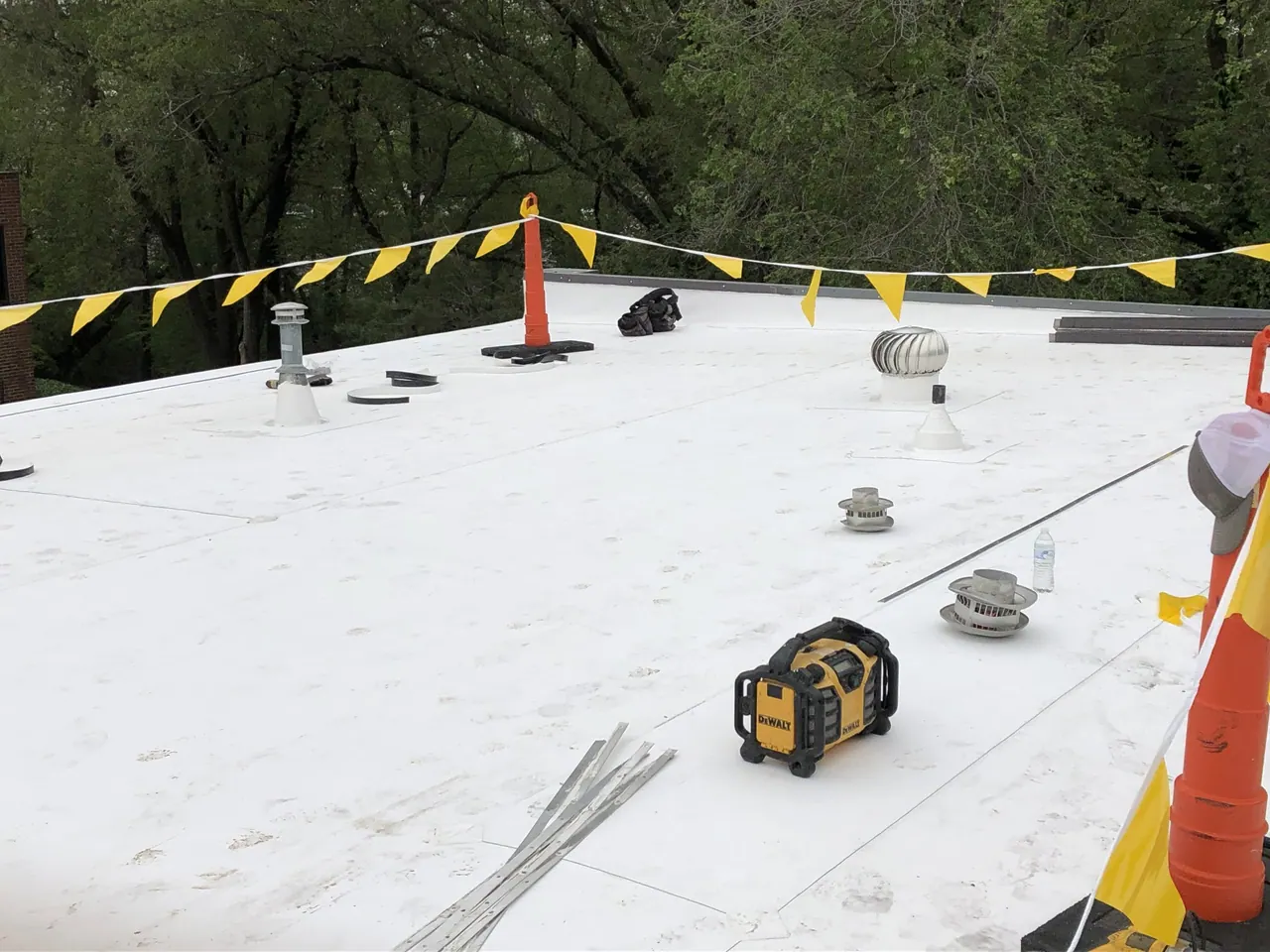
Seam separation is the most reported TPO failure type in the region. When heat-welded seams are not properly executed during installation, the bond can fail under thermal cycling stress. A seam that looks acceptable at installation may start separating within two to three years as the membrane repeatedly expands in summer heat and contracts in winter cold. Regular seam inspections, particularly after the first full winter following installation, catch early failures before they allow significant water infiltration.
Punctures from HVAC equipment access are another common source of roof failures on Wichita commercial properties. Technicians servicing rooftop units sometimes drag tools or equipment across the membrane surface, creating small punctures or abrasion damage that may not be immediately visible. Installing walkway pads in high-traffic service zones protects the membrane and reduces the frequency of puncture repairs.
Flashing failures at penetrations, walls, and equipment curbs account for a significant share of leak calls. TPO flashings at HVAC curbs, pipe boots, skylights, and parapet walls require careful detailing and proper termination bar installation. When these areas are not maintained, water infiltrates behind the flashing and travels horizontally before appearing as a ceiling stain far from the actual breach point.
How Can You Extend the Life of a TPO Roof in This Climate?
A maintenance program built around Wichita’s specific weather calendar significantly extends TPO roof life. The most practical approach schedules two professional inspections per year: one in spring after hail season ramps up, and one in fall before winter precipitation arrives.
Spring inspections should look for hail bruising, seam condition, drain blockages, and any damage from winter ice loading. Fall inspections should address debris accumulation, drain cover condition, flashing attachment, and any minor repairs that would allow water to enter under winter freeze-thaw cycles. Addressing small issues before winter is far less expensive than discovering active leaks after spring thaw when interior damage is already compounded.
Membrane coatings can extend the life of aging TPO systems that are structurally sound but showing surface wear. A reflective silicone or acrylic coating applied over a clean, dry membrane adds UV protection, restores some reflectivity, and seals minor hairline cracks before they progress to full thickness failures. Coatings are not a substitute for proper repairs on failed seams or punctures, but they provide a cost-effective extension strategy for roofs approaching the midpoint of their service life.
Schedule a Wichita Roofing Pros roof inspection to get a professional assessment of your current membrane condition and a maintenance roadmap tailored to your property.
Top 5 Factors That Determine TPO Roof Longevity in Wichita
- Membrane thickness: 60-mil or 80-mil membranes outperform 45-mil in hail-prone and high-traffic environments. Thicker membranes absorb impact better and resist puncture from foot traffic and debris.
- Seam weld quality: Properly heat-welded seams with consistent overlap width and no voids at seam edges are the single biggest predictor of long-term waterproofing performance.
- Drainage design and maintenance: Adequate slope to drains, correctly sized scuppers, and seasonal drain cleaning prevent ponding water that accelerates membrane degradation.
- Flashing detail quality: Every penetration, parapet wall, HVAC curb, and expansion joint requires correctly installed TPO flashing. Poor detailing at these transitions accounts for the majority of commercial roof leaks.
- Inspection and repair frequency: Annual professional inspections with prompt minor repairs consistently deliver longer service lives at lower total ownership cost than reactive maintenance after leaks appear.
Is TPO the Right Choice for Every Wichita Commercial Property?
TPO is well-suited to most low-slope commercial applications in the Wichita area, but it is not the optimal choice in every scenario. Properties with heavy rooftop foot traffic from maintenance personnel may benefit from the higher abrasion resistance of an 80-mil reinforced membrane or from complementary walkway protection systems. Buildings with complex rooftop equipment layouts and many penetrations require an experienced installer who understands TPO flashing details at each transition type.
Older buildings with structural decking concerns may need deck repairs or overlay boards before new TPO installation to achieve the smooth substrate the membrane requires. Installing TPO over deteriorated or uneven decking creates stress concentrations that shorten membrane life. A thorough pre-installation inspection of the deck is part of a quality TPO project.
For some Wichita properties with high hail exposure, modified bitumen multi-ply systems offer additional redundancy through multiple plies of material. The right system for your building depends on slope, traffic patterns, budget, and risk tolerance. Explore the full range of roofing options available across the Wichita roofing service area and compare commercial systems side by side.
Why commercial roofs need a maintenance plan here
Inspections in spring and fall, plus after major storms, catch open seams, clogged drains and punctures before they turn into interior leaks and business interruptions.
Commercial roof inspection checklist for Wichita property owners
Property managers can track these items between professional inspections.
- Water ponding more than 48 hours after rain
- Open or lifted seams
- Blisters, cracks or shrinkage in the membrane
- Clogged drains, scuppers or gutters
- Damage around HVAC curbs and penetrations
- Loose or damaged edge metal
- Interior ceiling tile stains
- Debris or foot traffic damage near equipment
Low-slope roof systems at a glance
Commercial systems are chosen separately from residential materials.
| System | Strengths | Often used for |
|---|---|---|
| TPO single-ply | Reflective white surface, heat-welded seams | Offices, retail, warehouses |
| Modified bitumen | Multi-ply toughness, puncture resistance | Roofs with foot traffic, smaller low-slope areas |
| Repair & maintenance | Extends roof life, lower upfront cost | Roofs with isolated issues |
How we inspect a commercial roof
A consistent process gives owners and managers a clear budget picture.
- Review history. Age, past repairs and leak locations.
- Walk the field and perimeter. Seams, edges, flashings and equipment.
- Check drainage. Drains, scuppers and ponding areas.
- Document. Photos and notes for each issue.
- Prioritize. Now, soon and monitor, with written pricing.
What affects commercial roofing cost
Roof size, system type, insulation, number of penetrations, drainage changes, access and whether wet insulation must be removed. A maintenance plan spreads cost out and supports budgeting.
From our work: Commercial Membrane Roof
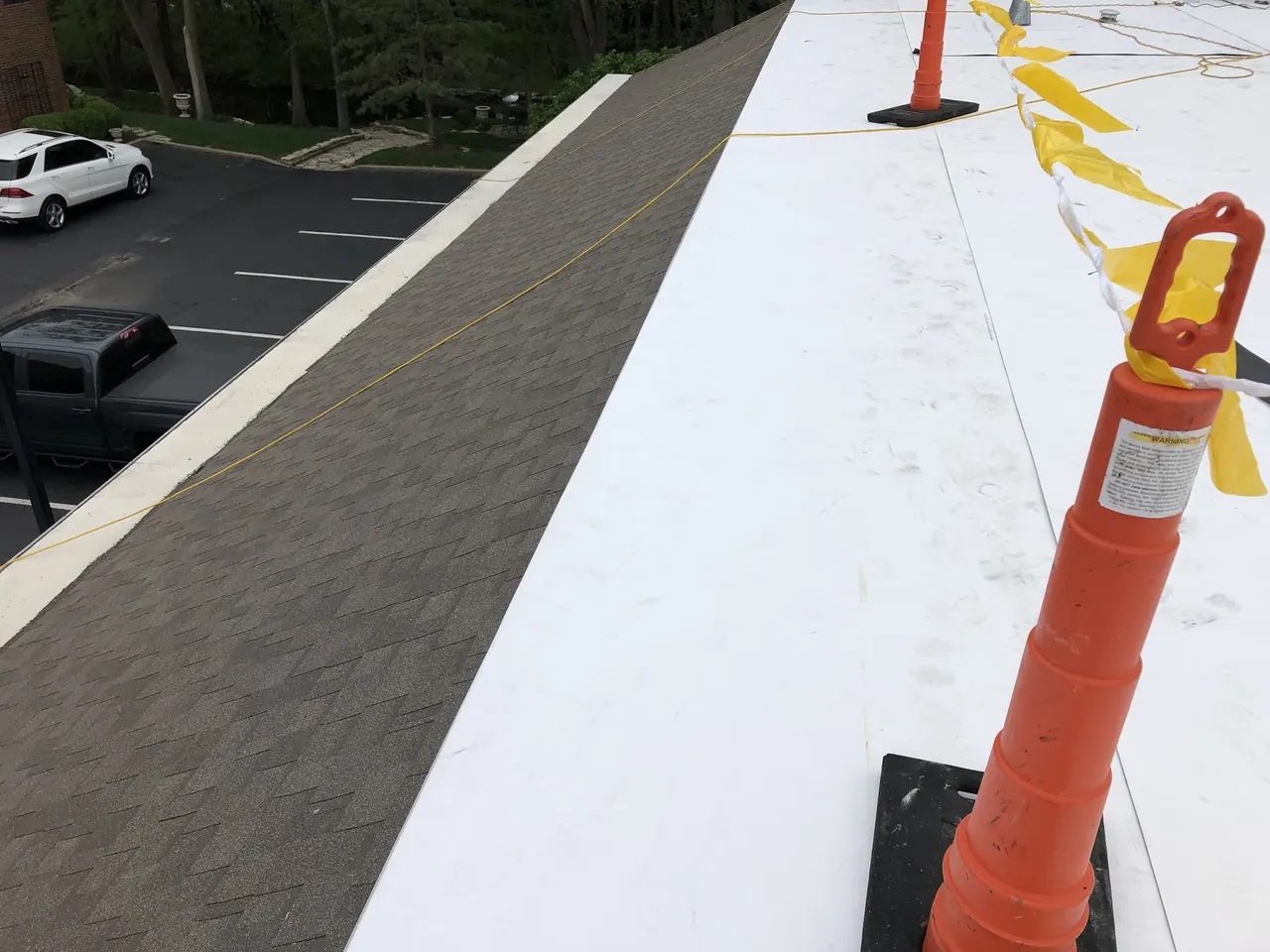
Insulation boards staged on the deck, then a white single-ply membrane rolled out, fastened and seamed across a low-slope commercial roof.
How Long Does a TPO Roof Last in Wichita Weather? The honest answer depends on your roof’s age, material and the damage we can document. A free inspection from Wichita Roofing Pros gives you photos, a plain-English explanation and a written next step — with no obligation. Hablamos Español.
Schedule a Free Roof InspectionCall (316) 742-1900Frequently Asked Questions About TPO Roofing in Wichita
How long does a standard TPO roof last in Wichita?
A properly installed 60-mil TPO membrane with regular maintenance typically lasts 20 to 30 years in the Wichita climate. Thinner 45-mil membranes under minimal maintenance programs often require significant repairs or replacement within 15 years. Membrane thickness, installation quality, and inspection frequency are the primary factors separating short-lived systems from long-performing ones.
Does hail damage void a TPO roof warranty?
Most manufacturer warranties cover material defects but not hail impact damage, which is typically handled through commercial property insurance. When hail causes punctures or bruising that affects membrane integrity, the damage should be documented with photos and reported to the insurer. A qualified roofing contractor can prepare a hail damage report to support the insurance claim and complete repairs with matching membrane material.
How do you know if a TPO roof has a seam failure?
Interior ceiling stains that appear after rain events are the most common sign that a seam failure has allowed water entry. On the roof surface, a separated seam may be visible as a lifted membrane edge or a gap at the overlap zone. Professional membrane probing during an inspection can detect weak seam bonds before they fully open, allowing repairs before water infiltration begins.
Can a TPO roof be repaired instead of replaced?
Yes. TPO roofs with localized seam failures, punctures, or flashing issues can often be repaired effectively using membrane patches heat-welded over damaged areas. Full replacement becomes necessary when the membrane is brittle from UV degradation, when ponding water has compromised more than 25 percent of the field area, or when the roof deck beneath has sustained structural deterioration that a new membrane alone cannot address.
What should a Wichita TPO roof inspection include?
A complete inspection should cover seam probing across all field seams and flashings, drain and scupper condition, membrane surface condition including punctures and bruising, parapet wall and coping cap attachment, HVAC curb flashing integrity, and any visible ponding areas. The inspector should provide a written report with photos documenting each deficiency and a prioritized repair recommendation.
Wichita commercial property owners who stay proactive with their TPO systems consistently report lower total repair costs and fewer interior damage events than those who wait until leaks drive action. A two-inspection-per-year schedule costs a fraction of a single major repair event, and the documentation built up over time provides a clear maintenance history that supports insurance claims, lease negotiations, and building sale transactions. Treating your TPO roof as a maintained asset rather than a passive building component is the most practical way to maximize your return on the installation investment.
Connect with the team at TPO Roofing in Wichita to schedule your commercial roof assessment today.
Do you work with property managers?
Yes. We provide documented inspections and prioritized recommendations.
TPO or modified bitumen?
It depends on the building, foot traffic and budget. See our TPO vs. modified bitumen guide.
Do you offer commercial inspections in Wichita?
Yes. Call (316) 742-1900 to schedule.




