Quick answerThe period immediately after a storm is the most important window for protecting both your home and your claim. Begin by documenting everything safely from the ground: photograph your property from multiple angles, capturing any visible missing shingles, displaced ridge caps, dented gutters, damaged soffits, or debris impact marks on siding.
Filing a homeowner’s insurance claim for a storm-damaged roof in Wichita, KS involves a sequence of steps that can feel overwhelming the first time. Hail damage from a severe storm, wind damage that lifts shingles, or a combination of both can trigger a claim that eventually results in full roof replacement, but the path from storm event to a completed roof and final payment has multiple stages. Each stage involves decisions that affect how smoothly and completely the claim resolves.
Wichita sits squarely in hail alley, and the insurance industry processes a high volume of roof replacement claims in south-central Kansas. That means local insurers, adjusters, and roofing contractors all have direct experience with the claim process, which works in homeowners’ favor when everyone understands the steps and their responsibilities within them.
Worried about your roof?Wichita Roofing Pros will check it for free and explain what we find in plain words.Book a Free Inspection or call (316) 742-1900
Learn how Insurance Claim Replacement in Wichita works and what documentation Wichita Roofing Pros prepares to support your claim.
What Should You Do Immediately After Storm Damage in Wichita?
The period immediately after a storm is the most important window for protecting both your home and your claim. Begin by documenting everything safely from the ground: photograph your property from multiple angles, capturing any visible missing shingles, displaced ridge caps, dented gutters, damaged soffits, or debris impact marks on siding. Date and time stamp every photo.
If there is active water intrusion through the roof, emergency tarping prevents additional interior damage and demonstrates that you took reasonable steps to mitigate loss after the event. Tarping costs are typically reimbursable under the same claim as the roof repair, but keep receipts and document the tarped areas with photographs taken before and after installation.
Contact your insurance carrier to report the storm event and open a claim. Insurers in Kansas have prompt acknowledgment requirements, and opening the claim quickly establishes the date of loss, which matters when the insurer reviews storm records and weather data. The NOAA National Weather Service Wichita maintains storm event archives that can confirm hail size, wind speed, and storm track for specific dates and locations across Sedgwick County.
How Does the Insurance Adjuster Visit Work?
After you open a claim, the insurer assigns an adjuster to inspect the damage and document a scope of loss. The adjuster may be a staff employee of the insurance company or an independent adjuster hired by the insurer. Their job is to document the damage they observe and calculate what the insurer owes under the terms of your policy.
Having a roofing contractor present during the adjuster visit is an important and widely recommended practice in Wichita. A contractor who has already inspected the roof can walk the adjuster through each damage item, point out damage that might be overlooked by someone unfamiliar with the specific roofing system, and ensure that all damaged components including gutters, skylights, vents, and soffits are included in the scope. Adjusters genuinely want to document damage accurately, and a knowledgeable contractor makes that process more efficient.
After the visit, the adjuster produces a scope of loss document listing all damaged items and their replacement cost values. Review this document carefully before accepting it. If items that were clearly damaged are missing from the scope, or if the quantities or specifications appear incorrect, this is the time to request a supplement with supporting documentation from your contractor.
The period immediately after a storm is the most important window for protecting both your home and your claim.
What Is a Supplement and When Do You Need One?
A supplement is a formal request to add items to the original adjuster scope that were missed, incorrectly measured, or priced below current market rates. Supplementing is a normal part of the insurance claim process in Wichita, and contractors who work extensively with insurance claims are experienced at preparing supplement packages that document missing items with photos, measurements, and pricing references.
Common supplement items include code-required upgrades that were not in the original scope, such as ice and water shield that must now be installed to current code even though it was not present previously. Drip edge material, additional decking replacement beyond the allowance in the original scope, permit fees, and manufacturer-required accessories are also frequently supplemented items. Each supplement item should be supported by a code reference, manufacturer requirement, or measurement documentation.
The Kansas Department of Insurance storm claim data provides context on the volume and types of claims processed in Kansas, and the department also provides guidance on homeowner rights throughout the claims process. If you believe your claim has been handled improperly, the Kansas Department of Insurance handles complaints and disputes.
What Is the Difference Between ACV and RCV Payments?
Understanding the difference between actual cash value (ACV) and replacement cost value (RCV) payments is essential to knowing what to expect financially from your claim.
An ACV payment is the replacement cost of the damaged property minus depreciation for age and condition. A 15-year-old roof that would cost $18,000 to replace might have significant depreciation applied, resulting in an initial ACV check substantially below the full replacement cost. Many homeowners are surprised by the gap between the ACV payment and the actual contractor invoice.
An RCV policy pays the full replacement cost without subtracting depreciation, but typically does so in two payments. The initial payment is the ACV amount. The recoverable depreciation, which is the difference between ACV and full RCV, is paid after the work is completed and the insurer receives proof of completion such as a contractor invoice. This is called the depreciation release or recoverable depreciation payment, and it is only triggered after the work is actually done. A roofing contractor familiar with the RCV process can help you understand what documentation to submit to trigger the second payment promptly.
Top 5 Steps in the Wichita Insurance Roof Replacement Process
- Document the damage immediately: Photograph all visible storm damage from the ground and safely accessible areas before any emergency repairs. The date-stamped photos establish what existed at the time of the event and support the claim scope.
- Open the claim promptly: Contact your insurer as soon as safely possible after the storm. Delays in reporting can complicate the date of loss determination and may raise questions about whether damage is from the reported event.
- Get a contractor inspection before the adjuster visit: A professional roof inspection before the adjuster arrives gives you an independent damage assessment and a knowledgeable advocate present during the adjuster walkthrough to ensure all damage is included in the scope.
- Review the adjuster scope carefully: Compare the adjuster scope to the contractor estimate line by line. Request supplements for any clearly damaged items that are missing or undervalued, supported by written documentation.
- Complete the work and submit proof for RCV release: For RCV policies, the recoverable depreciation is released only after work completion. Submit the contractor invoice and any required completion documentation promptly to receive the full policy benefit.
What Contractor Practices Are Not Permitted Under Kansas Law?
Kansas law and insurance regulations prohibit certain contractor practices that occasionally appear in storm-damaged markets. Contractors may not waive, absorb, or pay a homeowner’s insurance deductible as an inducement to sign a contract. The deductible is the homeowner’s contractual obligation to the insurer, and waiving it is considered insurance fraud under Kansas statutes.
Contractors who approach your door unsolicited after a storm and pressure for a same-day contract signature deserve extra scrutiny. While some legitimate contractors do market after storm events, a reputable contractor will provide a written estimate, give you time to compare options, and not pressure you to sign before you have reviewed their credentials and compared their scope to the adjuster’s assessment.
Request proof of Kansas contractor licensing, general liability insurance, and workers compensation coverage before signing any contract. A contractor who cannot provide current certificates of insurance should not be hired for roof work on your Wichita property. Schedule your Wichita Roofing Pros roof inspection to start the claim documentation process with a trusted local contractor.
Throughout the entire claim process, keeping organized records makes a significant practical difference. Maintain a dedicated folder for your claim that includes photos taken after the storm, all correspondence with the insurer, the adjuster’s scope document, any supplement requests and responses, contractor estimates, and completion invoices. This documentation protects you if disputes arise and simplifies the depreciation release process at project completion. Homeowners who approach the insurance claim roof replacement process in Wichita with organized documentation and a knowledgeable contractor consistently report smoother and more complete settlements than those who proceed without clear records. Visit the Insurance Claim Replacement in Wichita page for more details on how Wichita Roofing Pros supports the claim process from inspection through final payment.
Wichita Roofing Pros serves homeowners throughout the metro area. Explore the Wichita roofing service area to confirm coverage at your address.
What makes a Wichita roof replacement different
Kansas hail, wind and heat shape the whole project: impact-rated shingles, correct nailing patterns for wind, ice and water shield in valleys, and attic ventilation for summer heat. A Wichita or Sedgwick County roofing permit may also be required.
Signs it may be time to replace, not repair
One sign alone does not always mean replacement. Several together usually do.
- Roof age near or past 20 years
- Widespread granule loss or bald shingles
- Curling, cupping or cracked shingles across slopes
- Repeated leaks in different spots
- Soft or sagging decking
- Storm damage on multiple slopes
- Daylight through attic boards
- Neighbors replacing roofs after the same storm
Repair vs. replacement at a glance
A quick way to frame the decision before your inspection.
| Situation | Repair usually fits | Replacement usually fits |
|---|---|---|
| Damage area | Small, isolated | Multiple slopes |
| Roof age | Younger roof | Older, aging roof |
| Leak history | One known source | Recurring, multiple sources |
| Decking | Solid | Soft or rotted areas |
| Long-term cost | Lower now | Lower over time |
Replacement mistakes homeowners regret
- Choosing on price alone without a written scope
- Skipping decking and ventilation checks
- Not confirming Kansas roofing registration
- Overlaying new shingles on a failing roof
- Not asking how the warranty transfers
What affects roof replacement cost in Wichita
Roof size in squares, pitch and complexity, number of layers, decking repairs, material choice and accessories. Our basic price is $505 per roofing square (100 sq ft), confirmed in writing after a free inspection. Financing is available through Wisetack for qualifying projects.
From our work: Brick Ranch Roof Replacement
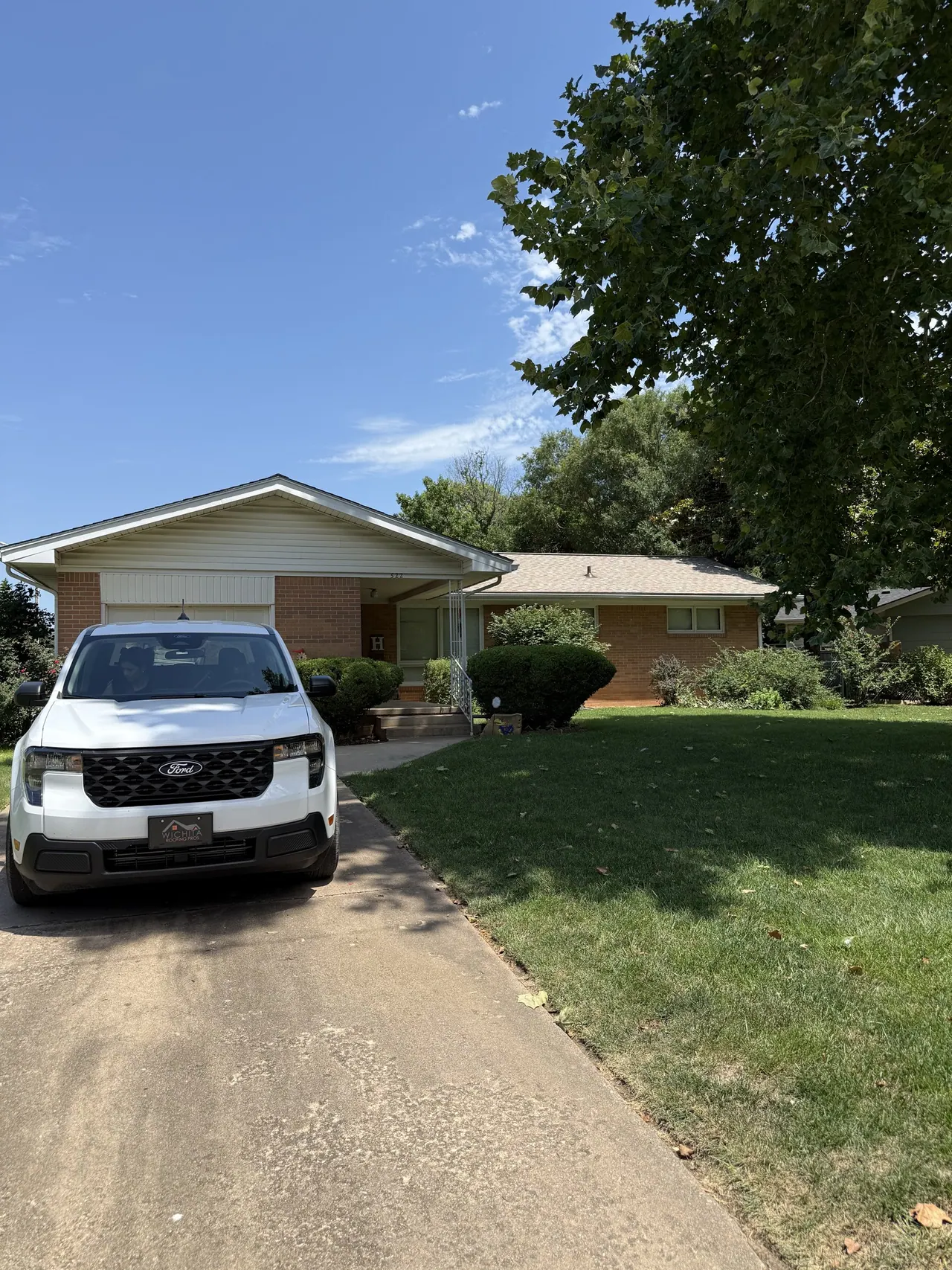
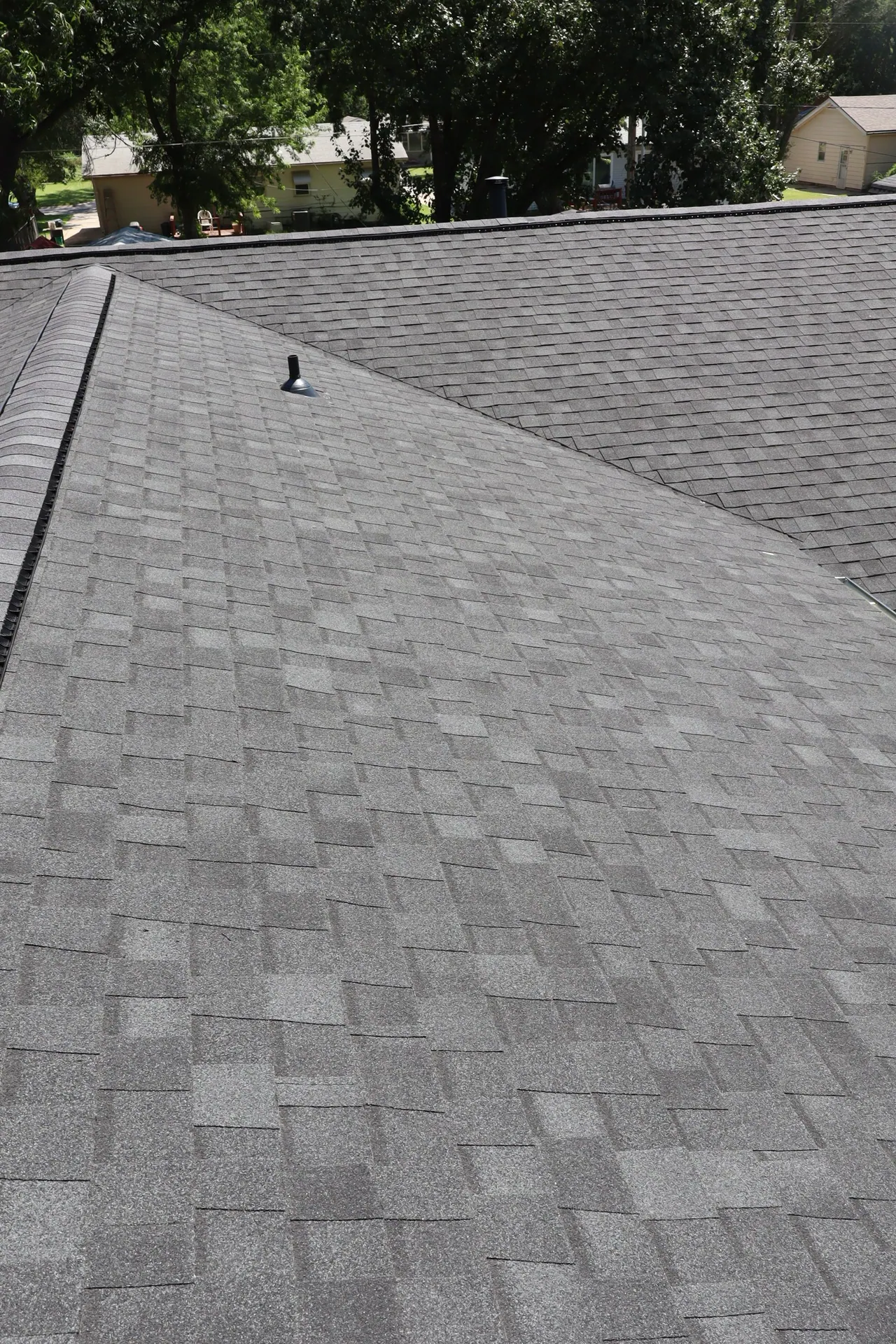
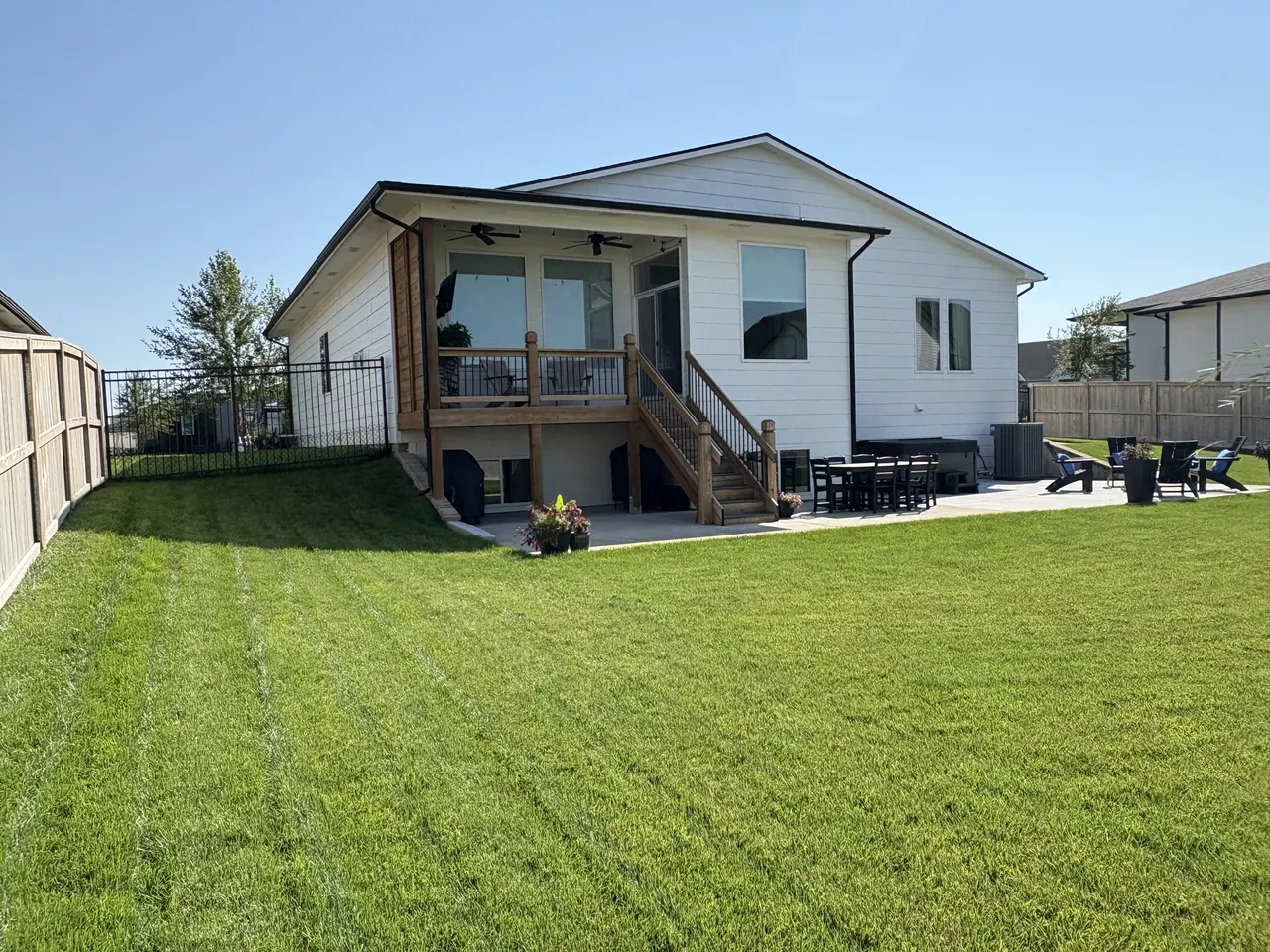
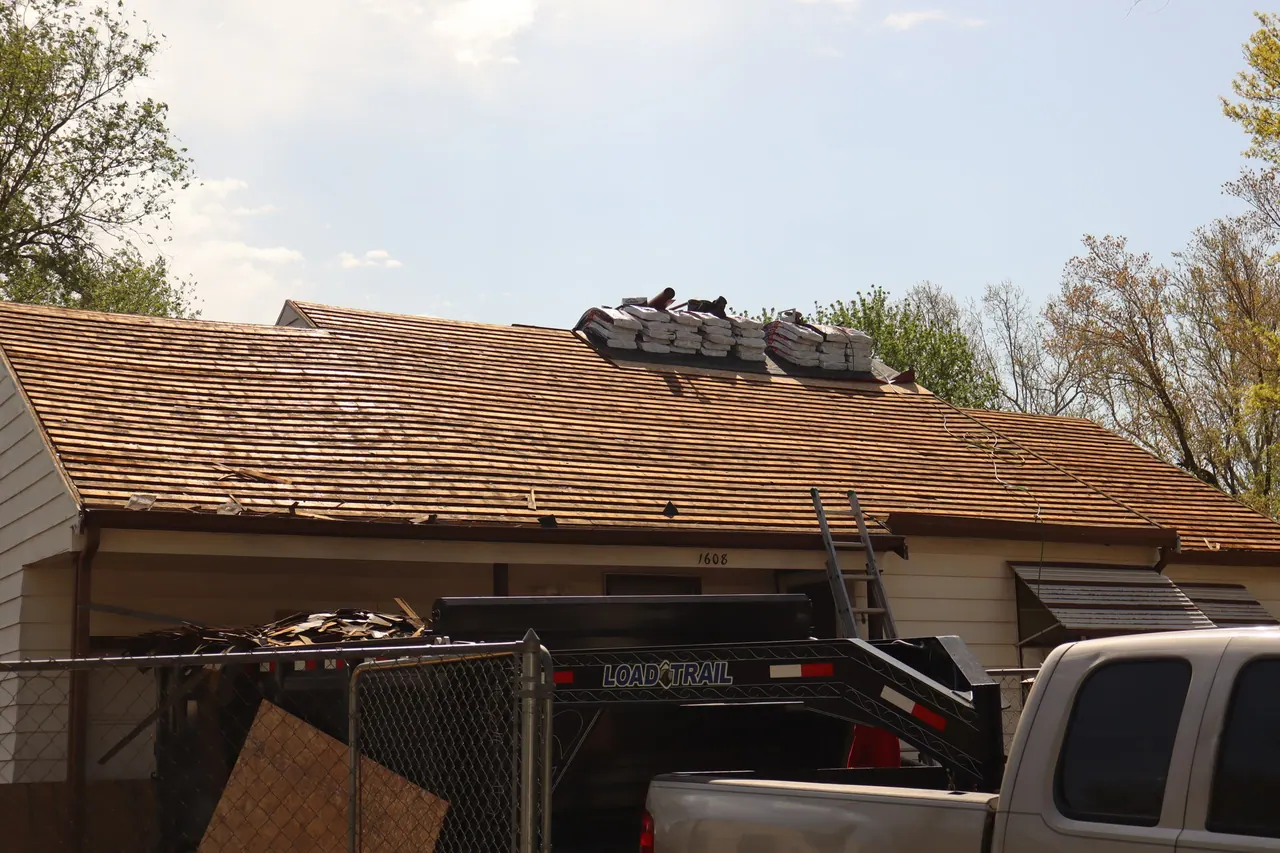
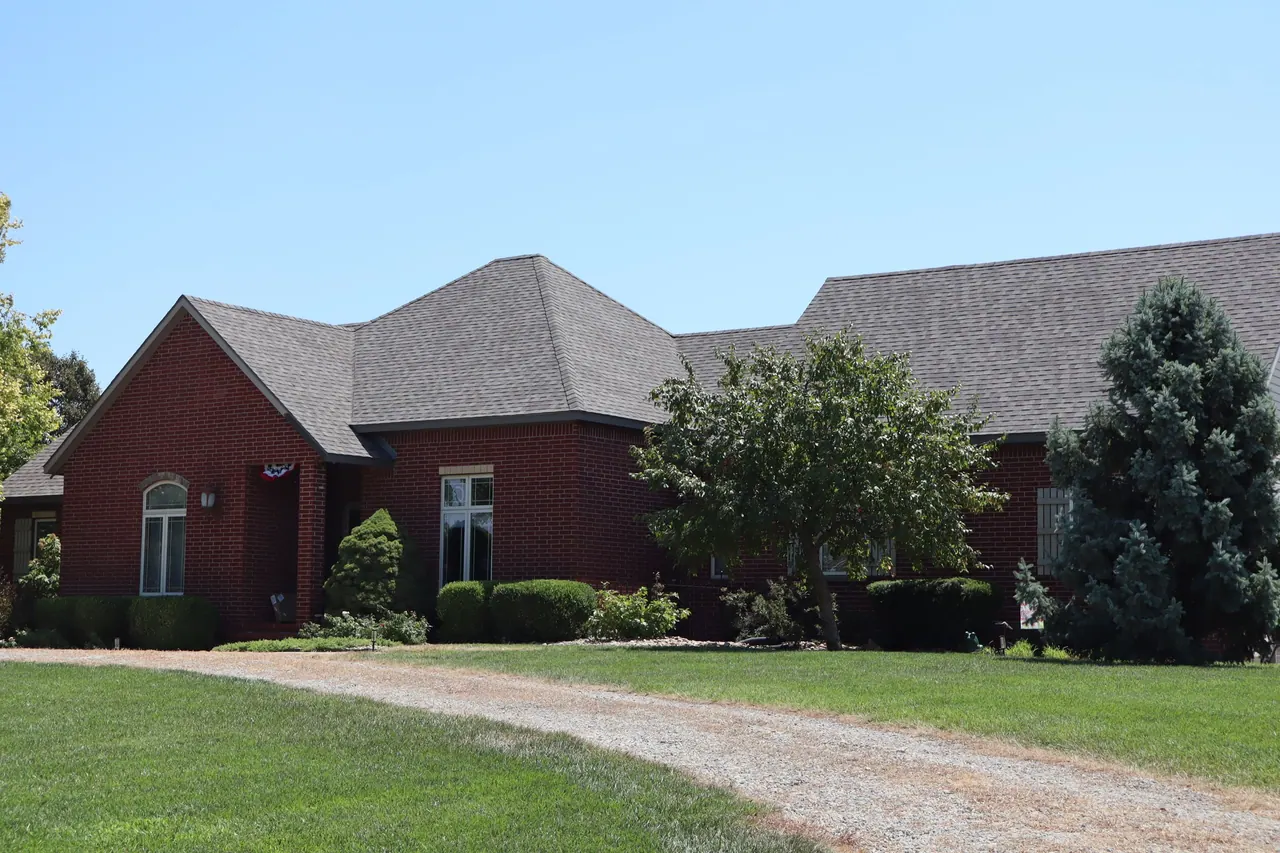
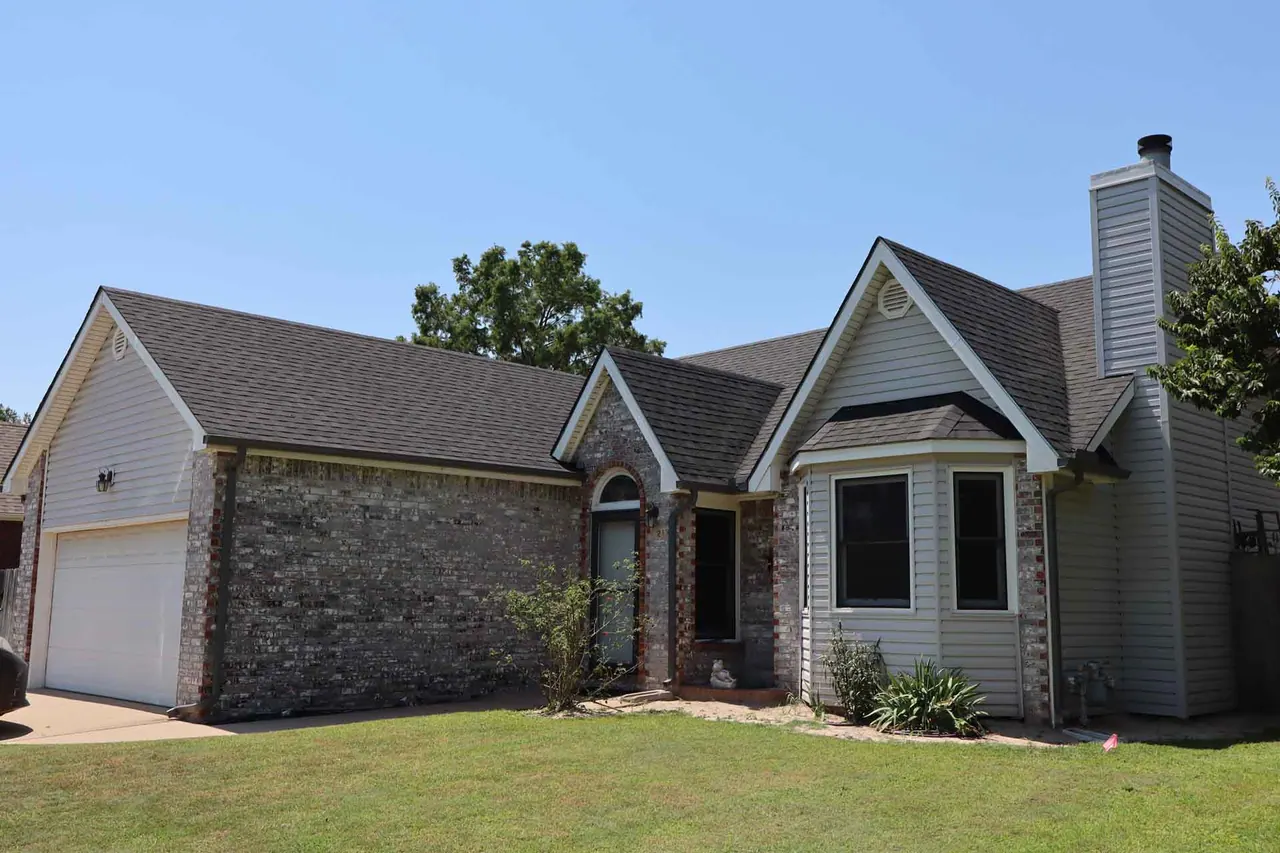
The original gray shingles on this brick ranch were weathered along the ridge and edges. The crew tore the roof off, installed new architectural shingles and a straight new ridge line, and the home was photographed again from the same spots after completion.
How Does Insurance Claim Roof Replacement Work in Wichita? The honest answer depends on your roof’s age, material and the damage we can document. A free inspection from Wichita Roofing Pros gives you photos, a plain-English explanation and a written next step — with no obligation. Hablamos Español.
Schedule a Free Roof InspectionCall (316) 742-1900Frequently Asked Questions About Insurance Claim Roof Replacement in Wichita
How long does a roof insurance claim take to process in Kansas?
Most standard roof insurance claims in Kansas move from initial inspection to payment within two to four weeks for uncomplicated cases. Complex claims with supplements, disputed scope items, or engineering reviews take longer. The timeline also depends on insurer workload following widespread storm events when the same storm affects thousands of properties simultaneously, stretching adjuster availability and processing times across the region.
Can you choose your own roofing contractor for an insurance claim?
Yes. In Kansas, homeowners have the right to choose their own licensed roofing contractor for insurance claim work. Insurers may recommend preferred contractors, but you are not required to use them. Choosing a contractor you trust who has experience with insurance claim documentation and supplements often results in a more complete scope and fewer disputes over missing items than using an unfamiliar contractor selected solely on insurer recommendation.
What if the adjuster’s estimate is lower than the contractor’s estimate?
When the adjuster’s estimate is lower than a contractor’s legitimate estimate for the same scope, the contractor can submit a supplement request with supporting documentation. If a gap remains after supplementing, the policy’s appraisal clause may provide a resolution mechanism where each party selects an independent appraiser and they resolve the dispute with an umpire. Your insurance agent or the Kansas Department of Insurance can explain the dispute resolution options available under your specific policy.
Does filing a roof insurance claim raise your premium?
A single storm damage claim typically does not result in a dramatic premium increase in Kansas, particularly for claims caused by weather events rather than maintenance failures or repeated claims. Whether a specific claim affects your premium depends on your insurer’s rating practices, your claims history, and current market conditions. Consulting your insurance agent before deciding whether to file a borderline claim is a reasonable step when the damage amount is close to your deductible.
What is a public adjuster and do you need one in Wichita?
A public adjuster is a licensed professional who represents the homeowner in the claims process and negotiates the settlement scope and value on the homeowner’s behalf. Public adjusters charge a percentage of the claim settlement for their services. For large and complex claims with significant underpayment concerns, a public adjuster may recover more than their fee. For straightforward claims where a knowledgeable roofing contractor is already assisting with documentation and supplements, a public adjuster may not add sufficient value to justify the cost.
Do I need a permit?
Most Wichita and Sedgwick County re-roofs need a permit through MABCD. We handle it as part of the job.
Is financing available?
Yes, through Wisetack for qualifying projects. Checking options will not affect your credit score.
Do you offer a warranty?
Yes. New roofs include our lifetime transferable workmanship warranty, with manufacturer upgrades available.