Quick answerTraditional sectional gutters are assembled from pre-cut lengths of aluminum or vinyl joined at overlapping seams with sealant and fasteners. Every seam is a potential leak point.
Most Wichita homeowners think of gutters as a convenience feature, something that keeps rain from splashing on the sidewalk or porch. In practice, a properly installed gutter system is a critical component of your home’s water management strategy, and when gutters fail or are absent, the consequences reach far beyond a muddy flowerbed. The roof edge, fascia board, soffit, and foundation are all directly affected by how well your gutters capture and channel storm water away from the structure. Understanding how seamless gutter installation works and what it protects helps you see why it belongs in the same conversation as your roofing system.
What Makes Seamless Gutters Different from Sectional Gutters?
Traditional sectional gutters are assembled from pre-cut lengths of aluminum or vinyl joined at overlapping seams with sealant and fasteners. Every seam is a potential leak point. Sealant degrades under Wichita’s freeze-thaw cycles and summer heat, and once a seam begins weeping, water tracks behind the fascia rather than flowing to the downspout. Seamless gutters are roll-formed on-site from a single continuous coil of aluminum, cut to the exact length of each gutter run with no mid-run joints. The only connections are at corners and downspout outlets, both of which are also sealed, but there are far fewer of them than on a sectional system. Seamless Gutter Installation in Wichita is completed with a portable roll-forming machine brought to the job site so the gutter profile matches your fascia width precisely rather than being cut from stock sections.
Worried about your roof?Wichita Roofing Pros will check it for free and explain what we find in plain words.Book a Free Inspection or call (316) 742-1900
How Do Gutters Protect the Roof Edge and Fascia?
The roof edge is one of the most vulnerable parts of any residential roofing system in Wichita. When water runs off the roof slope and overshoots or backs up at the eave, it saturates the fascia board, which is the horizontal board that the gutter attaches to and that seals the rafter tail ends. Saturated fascia eventually rots, which weakens the gutter attachment point and can allow water to wick into the soffit cavity and attic space. According to NRCA roofing resources, proper drainage at the eave is essential to preventing premature deterioration of roofing system components. Drip edge flashing installed under the roofing underlayment and over the fascia is part of the system, but drip edge alone does not move water away from the structure; the gutter does that. A correctly pitched seamless gutter captures runoff and directs it to downspouts positioned to discharge water at least 6 feet from the foundation. In Wichita, where spring storm events can deliver 2 to 4 inches of rain in a short window, that discharge capacity matters considerably.
Understanding how seamless gutter installation works and what it protects helps you see why it belongs in the same conversation as your roofing system.
What Size Gutters Does a Wichita Home Need?
Gutter sizing depends on roof area, slope, and the intensity of rainfall the system needs to handle. The two most common residential profiles are 5-inch K-style gutters, which handle the majority of Wichita homes, and 6-inch K-style, which are recommended for larger roof sections or steeper pitches that shed water faster. Undersized gutters overflow during heavy rain even when they are clean, and overflow at the eave is nearly as damaging as having no gutter at all. Downspout sizing and spacing also matter: a single 2×3 downspout handles roughly 600 square feet of roof area in average rainfall, while 3×4 outlets handle more. Homes in Wichita with multiple roof planes converging into a valley that drains through a single section of gutter may need a 6-inch profile on that run regardless of what the rest of the system uses. A proper installation assessment through the Wichita roofing service area takes these drainage calculations into account before specifying materials.
Where Should Downspouts Discharge on a Wichita Property?
Downspout placement is as important as the gutter itself. The goal is to deposit roof runoff far enough from the foundation that it does not saturate the soil immediately adjacent to the house, which can cause basement moisture intrusion, crawl space humidity, and in severe cases, foundation movement. Downspouts should extend at least 6 feet from the foundation via splash blocks, flexible downspout extensions, or underground drainage pipes that daylight away from the house. In Wichita neighborhoods with smaller lot setbacks, underground drainage routed to a pop-up emitter at the lawn edge is a clean solution that keeps the yard functional without visible drain tubes across the surface. Downspout locations should be planned at corners of the house where possible to reduce the number of horizontal runs and keep gutter pitch consistent throughout the system. Improper downspout locations are one of the more common installation errors that result in callbacks and water damage claims.
Top 6 Signs Your Wichita Gutters Need Replacement
- Visible seam separation or rust at joints – Once a sectional gutter seam opens, resealing offers only temporary relief. Rust indicates the galvanized coating has failed and the metal is actively deteriorating.
- Gutters pulling away from the fascia – Sagging sections indicate either rotted fascia that can no longer hold screws or hanger spacing that was too wide from the beginning. Both require correction before water damage progresses.
- Water stains on fascia or soffit – Streaks of paint failure or dark staining below the gutter line indicate chronic overflow or behind-gutter leaking that is saturating the wood components.
- Foundation water intrusion after heavy rain – If your basement or crawl space takes on moisture within hours of a storm, trace the discharge path of your downspouts first before assuming the foundation itself is the source.
- Gutters overflowing during moderate rain – If the gutter fills and spills during a 1-inch-per-hour rain event with no apparent blockage, the system is undersized for your roof drainage load.
- Cracks, holes, or impact damage from hail or falling branches – Large hail can dent aluminum gutters and create points where water pools rather than flows. Branches that fall during Wichita spring storms can create immediate structural damage to the gutter run.
Is Aluminum the Best Material for Seamless Gutters in Wichita?
Aluminum is the dominant material for seamless gutter installation in Wichita and across most of Kansas for practical reasons. It does not rust, is lightweight enough to be handled and installed efficiently, accepts paint or comes from the factory in dozens of colors to match trim, and is cost-effective relative to copper or steel alternatives. Aluminum expands and contracts with temperature changes but the seamless format minimizes the stress that causes joints to open in sectional systems. Copper gutters are a premium option for historically designed homes or high-end custom builds, offering a distinctive appearance that develops a patina over time, but copper costs 4 to 6 times more than aluminum and requires specialized soldering at corners. Steel gutters are heavier and stronger but susceptible to rust at cut edges. For the vast majority of Wichita residential properties, .027 or .032 gauge aluminum seamless gutters installed with hidden hanger fasteners at 24-inch or closer spacing represent the correct balance of performance, longevity, and value. Scheduling a Wichita Roofing Pros roof inspection alongside a gutter assessment is efficient because both systems are evaluated at the same time, and any fascia or soffit concerns identified during the roof inspection feed directly into the gutter installation plan.
How Do Gutters Connect to the Overall Roofing System?
Gutters are the terminus of the roof’s water management path and they interact directly with several roofing components. Drip edge flashing laps over the gutter lip so water does not run behind the gutter and onto the fascia. The fascia board provides the attachment surface for gutter hangers, and its condition determines whether new gutters can be installed directly or whether fascia repair is needed first. Ice dams, which form in Wichita during extended cold snaps when attic heat melts snow that refreezes at the eave, can push ice and water under roofing material and behind gutters. Properly insulated and ventilated attics reduce ice dam formation, and gutters that are free of debris allow melt water to drain rather than pond. The NOAA National Weather Service Wichita records significant precipitation events that affect both roof decking and gutter drainage systems throughout the year. Viewing gutters as part of the roofing system rather than a separate add-on leads to better installation decisions and more coordinated maintenance. Upgrading to a premium roofing material is most effective when the gutter system underneath is adequate to handle the runoff.
Why gutters matter so much in Wichita
Wichita storms can drop a lot of rain in a short time. Gutters that are undersized, clogged or pitched wrong overflow at the corners, soak fascia boards and dump water at the foundation, which is where many “roof” problems actually begin.
Signs your gutters need attention
Walk the house during or right after a rain and look for these.
- Water spilling over the front edge
- Sagging runs or pulled-away hangers
- Peeling paint or rot on fascia boards
- Stains or erosion under the gutter line
- Downspouts that dump next to the foundation
- Rust spots, cracks or leaking seams
- Granules from shingles collecting in the trough
- Plants growing in the gutter
Gutter options at a glance
The right choice depends on roof size, tree cover and budget.
| Option | Best for | Keep in mind |
|---|---|---|
| Seamless aluminum gutters | Most homes | Fewer joints means fewer leaks |
| Larger gutters and downspouts | Large or steep roofs, heavy rain | Moves more water off the roof |
| Gutter guards | Homes under trees | Reduces clogs and cleaning |
| Gutter repair | Newer systems with isolated issues | Reseal seams, reset hangers, adjust pitch |
Gutter mistakes we see often
- Installing new gutters on rotted fascia
- Downspouts that end at the foundation
- Too few hangers for Kansas wind
- Skipping guards under heavy tree cover
- Replacing gutters right before a roof replacement without coordinating the drip edge
What drives gutter cost
Linear footage, number of stories, downspout count, gutter size, guards, and any fascia repair needed underneath. Coordinating gutters with a roof replacement can save a second trip. Pricing is provided in writing after the inspection.
From our work: Two-Tone Ranch Replacement
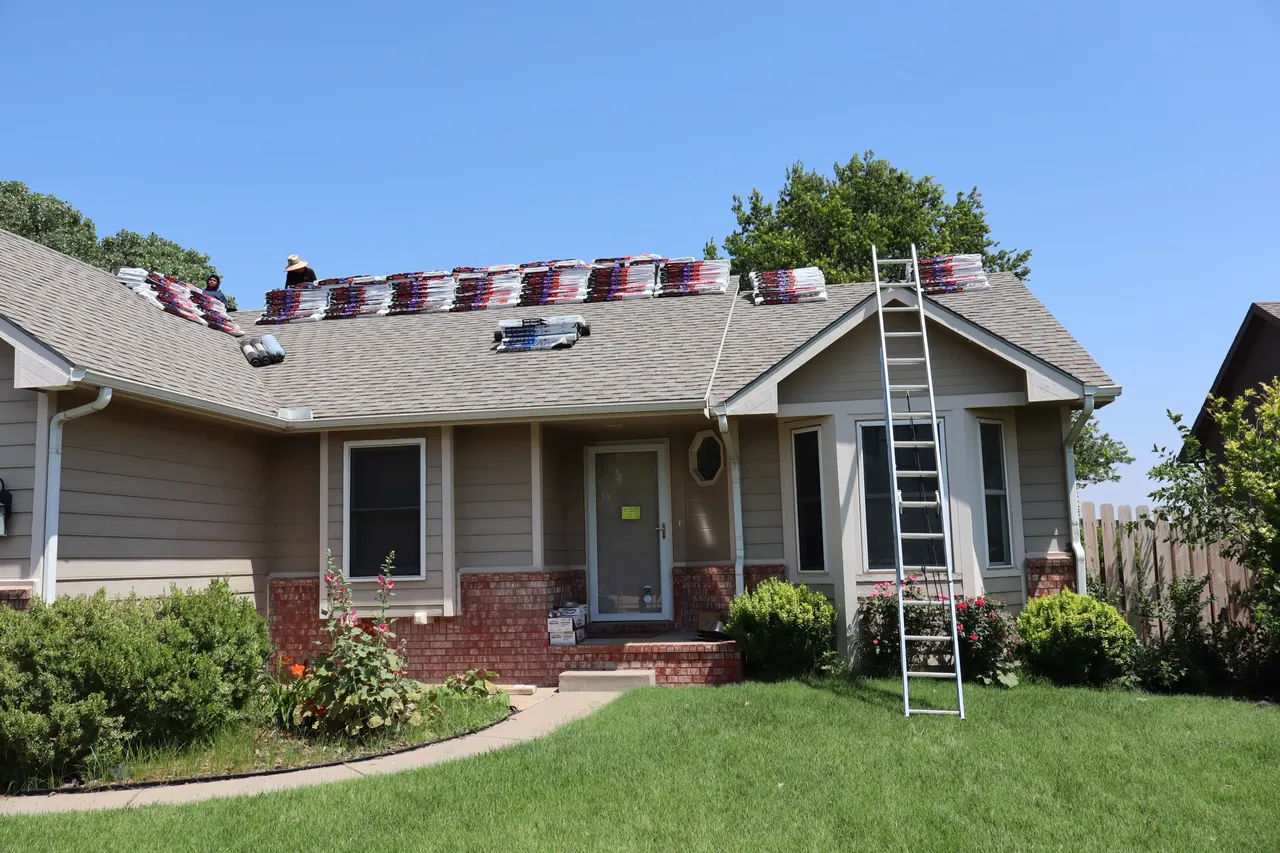
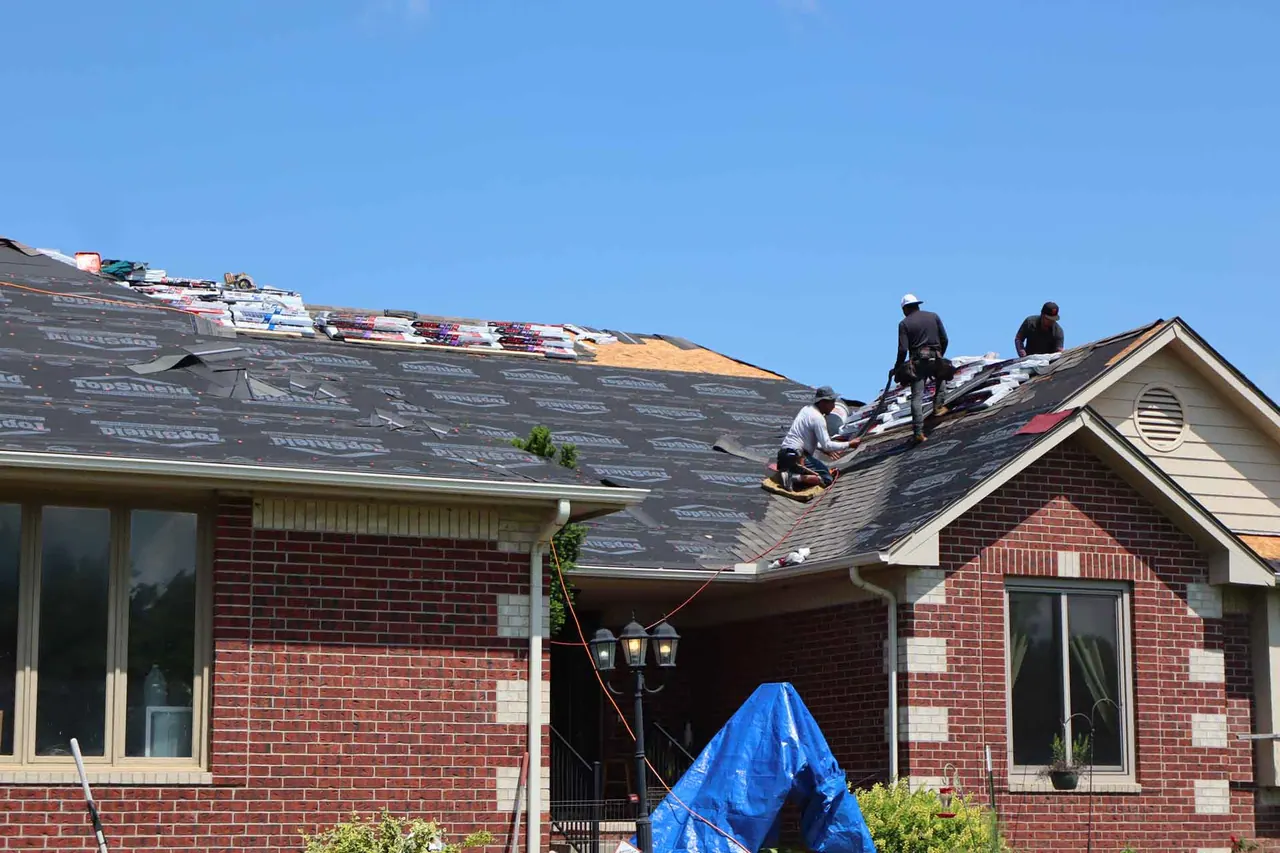
A brick and gray-siding ranch home during replacement: tear-off, crew setup, materials on site and the new architectural shingles going on.
How Do Seamless Gutters Protect Wichita Roof Edges? The honest answer depends on your roof’s age, material and the damage we can document. A free inspection from Wichita Roofing Pros gives you photos, a plain-English explanation and a written next step — with no obligation. Hablamos Español.
Schedule a Free Roof InspectionCall (316) 742-1900Frequently Asked Questions About Seamless Gutter Installation in Wichita
How long do seamless aluminum gutters last in Wichita?
Properly installed seamless aluminum gutters typically last 20 to 30 years in Wichita’s climate with routine maintenance. The primary causes of premature failure are improper slope causing standing water, hanger spacing that allows sagging, and fascia rot that undermines the attachment point. Annual cleaning and inspection after storm season extends service life significantly.
Do I need gutter guards with seamless gutters in Wichita?
Gutter guards reduce but do not eliminate cleaning frequency. In Wichita neighborhoods with mature trees, guards can meaningfully reduce the number of times gutters fill with leaves and debris, but some systems still require annual cleaning to clear fine debris accumulation. The value depends on the tree coverage around your property and how practical it is to clean gutters regularly.
Can seamless gutters be installed in winter in Wichita?
Aluminum gutters can be installed year-round in Wichita, though extremely cold temperatures make sealant curing slower and working conditions less safe. Most installation work is scheduled in spring through fall. If gutters fail before winter, emergency installation is possible, but scheduling during milder weather produces better results for sealant adhesion at end caps and corners.
How much pitch should seamless gutters have?
The standard pitch recommendation is a minimum of 1/4 inch of drop per 10 linear feet of gutter run, directed toward the downspout. Steeper pitch moves water faster but can make the gutter visible from street level if the front elevation is long. On runs longer than 40 feet, installing two downspouts, one at each end with the high point centered, is preferable to a single very steep run that looks visually unbalanced on the facade.
Do seamless gutters require a permit in Wichita?
Gutter replacement typically does not require a separate permit in most Wichita jurisdictions, but requirements vary. If you are replacing gutters as part of a larger roofing or siding project, the general contractor overseeing the work will confirm what permits are required. For any uncertainty, the City of Wichita permits office can provide definitive guidance for properties within city limits.
A seamless gutter system installed correctly is one of the most cost-effective ways to protect your roof edge, fascia, and foundation from ongoing water damage. In Wichita’s storm-active climate, the investment pays for itself by preventing repairs that cost far more than the gutters themselves. Contact Wichita Roofing Pros for seamless gutter installation or to have your current gutter system evaluated as part of a comprehensive roof and exterior inspection.
What are seamless gutters?
Gutters formed on site in continuous lengths, with joints only at corners and downspouts.
Why do my gutters overflow in heavy rain?
Common causes are clogs, poor pitch, too few downspouts or gutters that are too small for the roof.
Can you repair gutters instead of replacing them?
Yes, when the system is sound. Resealing seams and resetting hangers fixes many issues.