
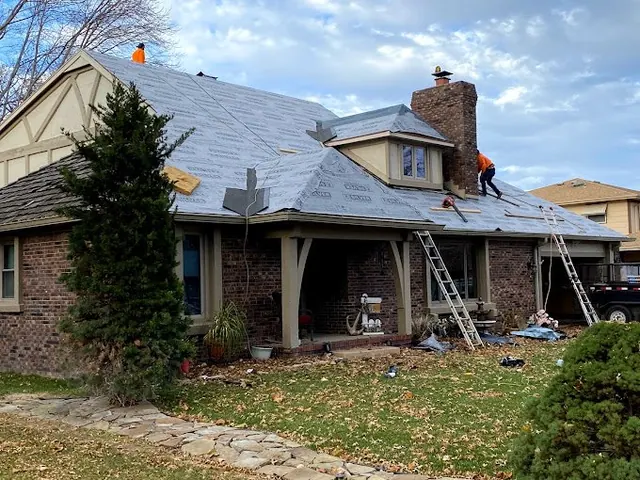
Quick answerSiding damage leads to roof edge leaks when compromised siding panels, failed step flashing, or deteriorated sealants at the siding-to-roof junction allow water to enter the wall assembly above the roof surface and migrate downward, appearing as a leak at the eave or inside the attic near the exterior wall. The roof itself may be entirely intact, but if the siding above a roof section — such as above a porch roof, dormer, or one-story addition — is cracked, split, or missing sections of flashing, water from wind-driven rain will enter the wall and follow framing or sheathing downward until it finds an outlet.
Roof edge leaks are among the most frustrating diagnostic problems in residential construction because the water entry point and the water appearance point are often separated by several feet, connected by a path running through wall cavities, sheathing layers, and framing members that are invisible without destructive investigation. In Wichita and Sedgwick County, a significant percentage of roof edge leaks that present as apparent roofing failures actually originate at the siding-to-roof intersection — a junction that requires precise flashing detailing to remain weathertight and that deteriorates over time through hail impact, UV degradation, caulk failure, and the seasonal expansion and contraction cycles that Kansas temperature extremes impose on exterior materials. Understanding how siding damage drives roof edge leaks is essential for correctly diagnosing the problem, sequencing the repair, and avoiding the costly mistake of replacing roofing when the actual failure is several feet up the adjacent wall.
How Can Siding Damage Lead to Roof Edge Leaks in Wichita?
Siding damage leads to roof edge leaks when compromised siding panels, failed step flashing, or deteriorated sealants at the siding-to-roof junction allow water to enter the wall assembly above the roof surface and migrate downward, appearing as a leak at the eave or inside the attic near the exterior wall. The roof itself may be entirely intact, but if the siding above a roof section — such as above a porch roof, dormer, or one-story addition — is cracked, split, or missing sections of flashing, water from wind-driven rain will enter the wall and follow framing or sheathing downward until it finds an outlet. In Wichita, hail events frequently crack vinyl siding panels and loosen their locking seams, and those damaged sections become persistent water entry points that are easy to overlook when a homeowner’s attention is focused on the roof surface below.
Worried about your roof?Wichita Roofing Pros will check it for free and explain what we find in plain words.Book a Free Inspection or call (316) 742-1900
What Siding Conditions Create Roof Edge Leak Pathways in Wichita?
Several specific siding conditions create the most common roof edge leak pathways in Wichita homes. Cracked or broken vinyl siding panels are the most frequent cause, particularly on west and southwest exposures that receive the highest hail impact frequency during Wichita’s late afternoon severe weather season. Hail-impacted vinyl cracks at the point of impact, and those cracks allow wind-driven rain to enter behind the panel and into the house wrap or building paper beneath it. Fiber cement siding with failed paint or cracked butt joints allows water absorption into the panel and lateral migration to adjacent framing. Wood siding that has checked or split loses its drainage plane function and allows water to track across the back face of the panel toward framing members. At the roof-wall junction specifically, failed or absent step flashing is a major contributor — when flashing is improperly lapped with the siding above it, or when the sealant at the counterflashing joint has dried and separated, every rain event drives water directly into the wall at roof level. The National Weather Service Wichita tracks hail events across Sedgwick County that consistently produce the type of siding damage that initiates these water pathways into wall assemblies.
Hail-impacted vinyl cracks at the point of impact, and those cracks allow wind-driven rain to enter behind the panel and into the house wrap or building paper beneath it.

How Does Step Flashing Failure Contribute to Roof Edge Leaks?
Step flashing failure is one of the most direct causes of roof edge leaks at wall-to-roof intersections because step flashing is the only barrier preventing water from entering the gap between the roof surface and the vertical wall above it. Step flashing consists of individual L-shaped metal pieces installed in alignment with shingle courses, with the vertical leg running up the wall behind the siding and the horizontal leg tucked under the shingle. When installed correctly, each piece directs water onto the shingle below it and away from the wall framing. When step flashing is missing sections, installed without adequate overlap, or has been lifted by wind, water enters the wall cavity at that point and travels down to the roof deck or eave. Caulk-only installations that substitute sealant for proper metal flashing fail within a few years as the sealant cracks under UV exposure and thermal cycling. Our roof repair team corrects step flashing failures across Wichita and distinguishes them from true roof field failures through systematic water testing and close visual inspection of the junction from both the attic and the exterior.
What Are the Signs That a Wichita Roof Leak Is Actually a Siding Problem?
The clearest sign that a roof edge leak is actually a siding problem is that interior water staining appears on walls rather than ceilings, or appears at the intersection of the ceiling and an exterior wall rather than in the center of a ceiling area below the roof field. A second indicator is that the leak appears only during wind-driven rain from a specific direction — siding failures are directional because water must be driven into the compromised panel or junction by wind. A third indicator is that the leak location corresponds to a wall section above the roof line rather than a roof section beneath it. Attic inspection revealing dry decking in the field of the roof but wet wall sheathing or saturated insulation at the top plate line confirms that water is entering the wall assembly rather than penetrating the roof surface. Our free inspection service includes siding and flashing assessment at roof-wall junctions to correctly identify the leak origin before any repair scope is developed or priced.
How Should Siding and Roof Repairs Be Coordinated in Wichita?
Siding and roof repairs at the same location should be coordinated within a single project scope rather than assigned to separate contractors working independently. The most common coordination failure is a roofing contractor who replaces shingles and installs new step flashing, followed by a siding contractor who installs new panels over the existing counterflashing without ensuring correct lapping and overlap with the new step flashing below. The result is new roof and new siding with the same flashing detail failure that caused the original leak. The correct approach strips siding back above the roof-wall junction to expose step flashing, assesses and replaces any damaged flashing, installs new siding panels with proper lap over the step flashing and counterflashing cap, and seals only the top edge of the counterflashing — not the step flashing itself, which must remain free to drain. IBHS FORTIFIED Home standards specifically address wall-roof junction details as a critical resilience component for homes in severe weather regions like Wichita. Our residential roofing services coordinate flashing and siding details so that the roof-wall junction is weatherproofed as an integrated system rather than as two independent trades working past each other.
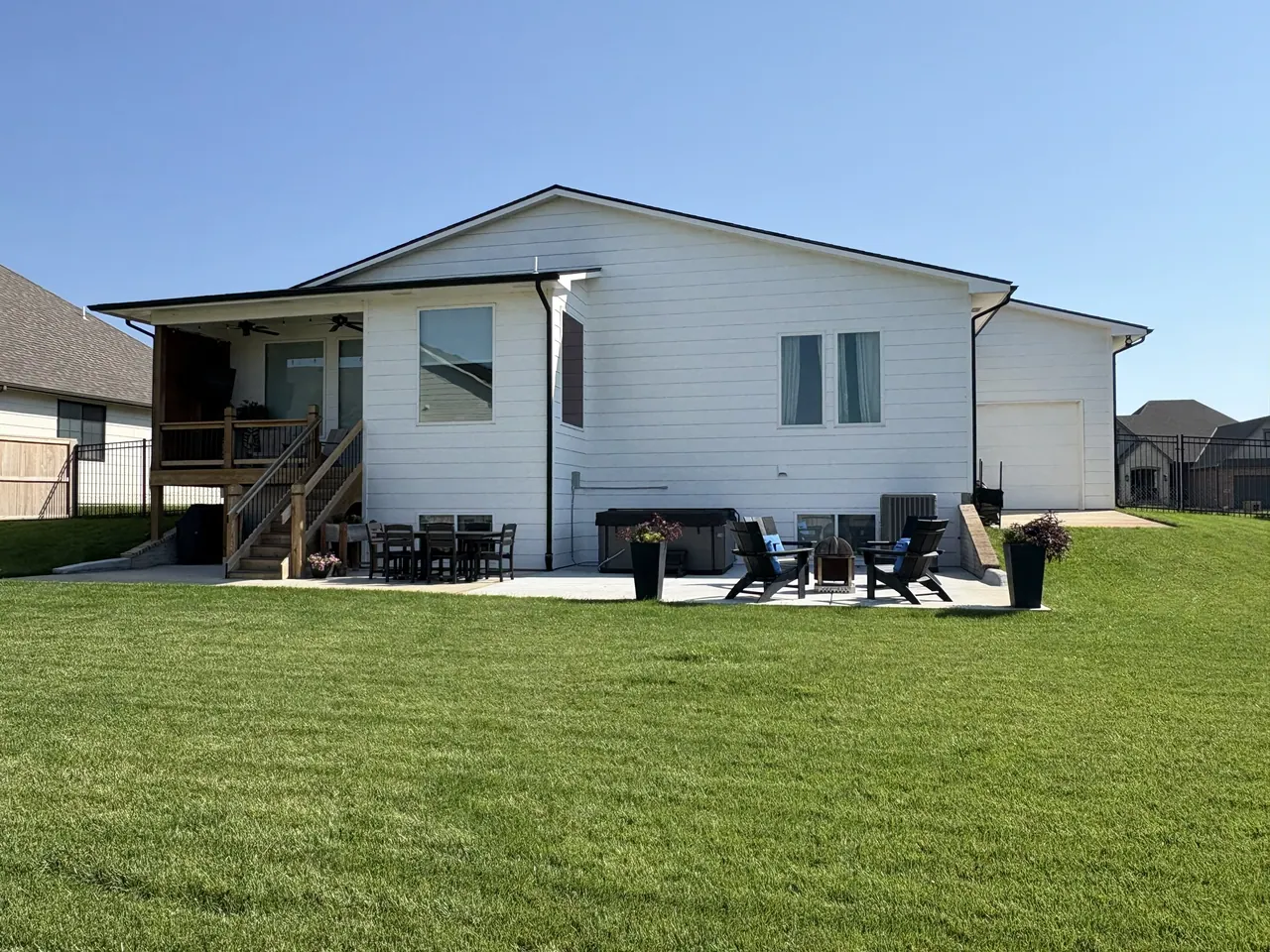
What Wichita Homes Are Most Vulnerable to Siding-Driven Roof Edge Leaks?
Wichita homes most vulnerable to siding-driven roof edge leaks are those with dormers, porch roofs, or low-slope addition roofs that adjoin a two-story wall section. These configurations create large wall surfaces above the roof line that must be correctly flashed and sided to prevent water entry at the junction. Homes with vinyl siding not replaced since the hail events of the past decade are particularly susceptible, as older vinyl becomes brittle and cracks more readily under impact. Homes in Wichita’s older neighborhoods with original wood siding from the 1950s and 1960s often have siding-to-roof junctions detailed with flexible sealant rather than metal step flashing, and those sealant applications have long since failed. Two-story homes where second-floor siding sits directly above a porch or garage roof require careful inspection at that junction after any significant hail event, because the large wall area above maximizes the volume of water that can enter through any gap in the flashing system. Our team’s experience across Wichita and Sedgwick County allows us to recognize the construction patterns and weathering signatures that indicate siding-to-roof junction problems before they progress to interior structural damage.
How Does Hail Damage to Siding Relate to Roof Insurance Claims in Wichita?
Hail damage to siding and roof surface is often caused by the same storm event, and when both occur simultaneously the insurance claim should document damage to both components together rather than treating them as separate claims filed at different times. Adjusters in the Wichita market are familiar with combined siding and roofing hail damage patterns, and a properly documented claim that includes photographs of siding crack patterns, dents in aluminum window trim and gutters, and roof shingle impact marks gives the adjuster the complete picture needed to evaluate both scopes fairly and efficiently. Attempting to file only the roof claim while deferring the siding to a later date can create coverage gaps if the storm documentation window closes before the siding claim is submitted. FEMA’s guidance on storm damage documentation recommends photographing all exterior components within 48 hours of a storm event to preserve evidence for insurance evaluation. Our team assists Wichita homeowners with post-storm assessment and can identify siding-to-roof junction failures as part of a comprehensive inspection that supports a complete and accurate insurance claim. See our Wichita service area page for information on scheduling a post-storm assessment.
How siding and roofing work together
Siding, trim, flashing and the roof edge form one water-shedding system. When we see wall stains near a roof line, we check kick-out flashing, step flashing and siding together before recommending a fix.
Siding warning signs
Look closely at the sides that face prevailing wind and storms.
- Cracked, split or hail-dented panels
- Warped or buckled sections
- Soft or swollen boards near the ground or roof line
- Peeling paint on trim
- Gaps where siding meets windows or roof lines
- Mold or mildew streaks
- Loose or missing pieces after wind
- Interior wall stains on exterior walls
How we evaluate siding damage
We look beyond the panel to the water path behind it.
- Walk every elevation. Note cracks, dents and gaps.
- Check transitions. Windows, doors, roof lines and kick-out flashing.
- Probe soft spots. Look for swelling or rot.
- Review trim and soffit. Ventilation and edge condition.
- Recommend. Patch, section replace or full re-side.
Siding mistakes to avoid
- Patching siding without fixing the flashing behind it
- Mixing panel profiles that do not match
- Ignoring rotted trim before new gutters
- Covering soffit vents
- Waiting until interior walls stain
What affects siding cost
Wall area, material, number of stories, trim and soffit work, and any sheathing repair. Matching existing siding can limit patch options. You receive a written scope and price after the inspection.
From our work: White Lap Siding Exterior
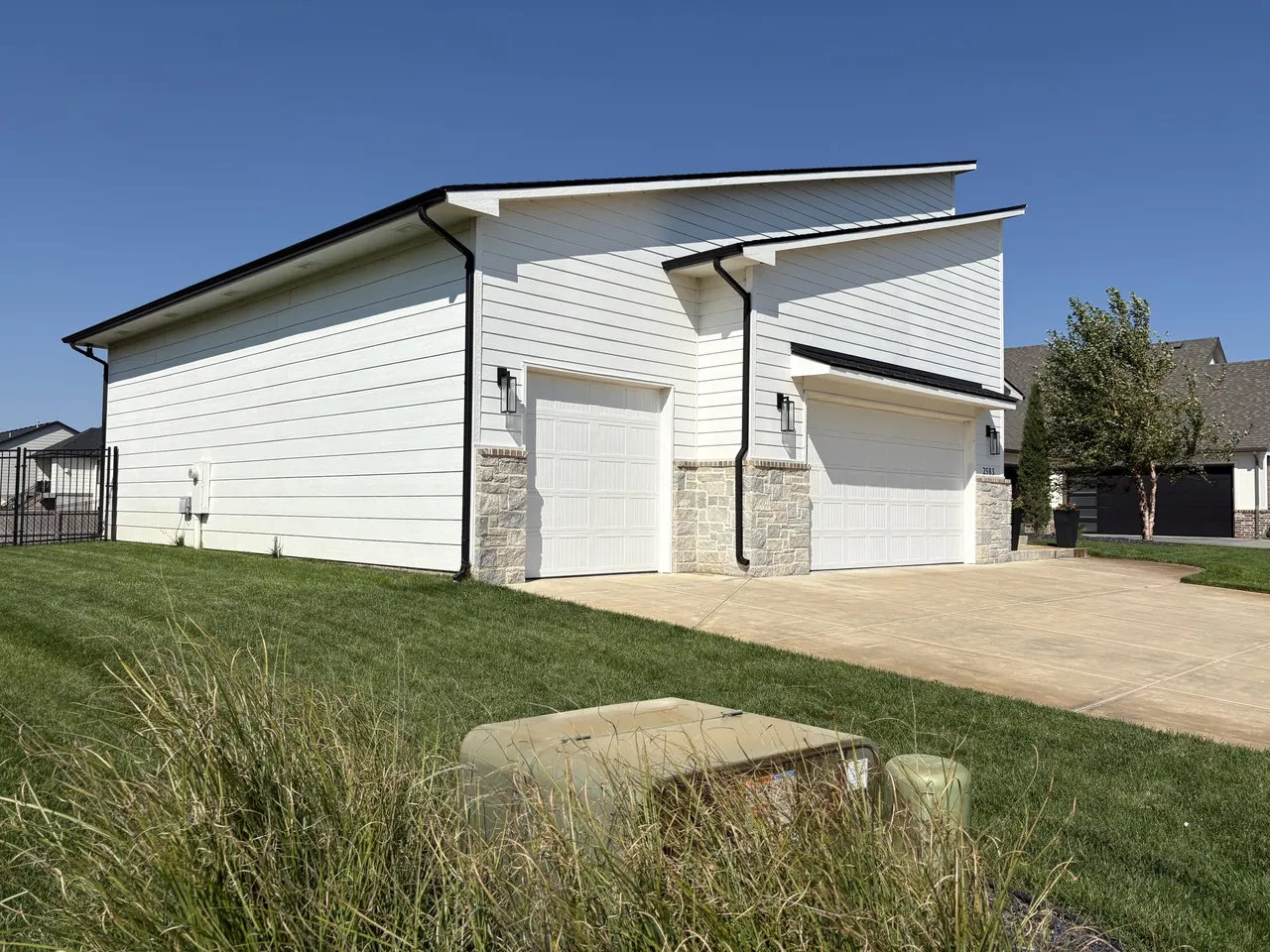
A modern home finished in clean white lap siding, photographed from several angles after completion.
How Can Siding Damage Lead to Roof Edge Leaks in Wichita? The honest answer depends on your roof’s age, material and the damage we can document. A free inspection from Wichita Roofing Pros gives you photos, a plain-English explanation and a written next step — with no obligation. Hablamos Español.
Schedule a Free Roof InspectionCall (316) 742-1900Frequently Asked Questions About Siding Roof Leaks in Wichita
Can I caulk a siding-to-roof junction leak myself as a temporary fix?
Caulk can provide short-term reduction in water entry at a siding-to-roof junction, but it does not address the underlying flashing failure and will crack under UV and thermal cycling within one to two years. Caulk applied over failed step flashing can also trap moisture against wall framing rather than allowing it to drain, accelerating wood decay behind the temporary repair. A professional assessment to identify the actual flashing detail failure is the correct response.
Does hail-damaged siding always immediately cause roof edge leaks?
No. Hail damage to siding creates crack patterns that allow water entry under wind-driven conditions, but not every cracked panel produces immediate interior water staining. Damage accumulates over multiple rain events as water infiltration gradually saturates house wrap, insulation, and framing. Wichita homeowners should not wait for visible interior water damage before addressing hail-cracked siding, because by the time staining appears, moisture has typically been infiltrating the wall assembly for weeks or months.
How do I tell hail damage from age-related siding failure?
Hail damage to vinyl siding produces impact-specific crack patterns — circular or star-shaped fractures at impact points, concentrated on one elevation facing the storm track. Age-related deterioration produces uniform fading, chalking, and crazing distributed across all elevations without impact-specific crack patterns. Dents in aluminum trim, gutters, and downspout elbows that occurred at the same time as the siding cracking are strong indicators of hail impact rather than age-related material failure.
How long can siding damage go unaddressed before causing structural problems?
Siding damage that allows water into the wall assembly can cause structural wood deterioration within one to three years in Wichita’s climate, depending on how frequently wind-driven rain contacts the damaged area and how well the house wrap beneath the siding performs as a secondary drainage barrier. Homes with deteriorated or improperly installed house wrap have essentially no secondary protection once siding panels crack, and moisture damage to sheathing and framing can progress rapidly through multiple storm seasons.
Is it necessary to replace all siding after a major Wichita hailstorm?
Not necessarily. The extent of replacement depends on hail size and storm track, which can produce localized damage concentrated on specific elevations. An independent inspection documenting crack patterns and damage extent on each elevation, combined with an insurance adjuster’s assessment, provides the basis for a repair scope. Full replacement is warranted when damage is widespread and when matching existing panel profiles and colors is no longer feasible — conditions that arise frequently after large-hail events in the Wichita market.
Is LP SmartSide good for Wichita?
It is a popular choice for impact resistance and a wood look. It needs periodic painting.
Can you repair just a few siding panels?
Often, if matching panels are available. We will tell you if a section replacement makes more sense.
Does hail damage siding?
Yes. Hail can crack vinyl and dent or chip other materials. Document it along with roof damage.



